In exactly three days from today, Pakistan’s telecommunications landscape will change forever. On March 10, the Pakistan Telecommunication Authority (PTA) will officially hit the launch button on the nation’s highly anticipated Next-Generation Mobile Services (5G) spectrum auction.
This is not just another routine frequency upgrade. The government views this auction as the ultimate catalyst for the “Digital Pakistan” vision. The PTA expects to generate a minimum non-tax revenue of $630.4 million. However, the true value lies in the massive economic ripple effect.
Here is everything you need to know about what is happening, why it matters, and how it will fundamentally reshape your internet experience.
Why is Pakistan Finally Moving to 5G?
Currently, Pakistan’s digital infrastructure is choking. The nation boasts around 240 million citizens, nearly 200 million cellular subscribers, and over 150 million broadband users. However, all this massive data traffic squeezes through a narrow infrastructural pipeline of just 274 MHz of commercial spectrum. To put this in perspective, regional neighbors like Bangladesh allocate roughly 600 MHz to serve a significantly smaller population.
This severe spectrum deficit causes the dropped calls, painfully slow data speeds, and network congestion that consumers face daily. You simply cannot force eight lanes of heavy traffic through a two-lane highway.
The government desperately needs to fix this bottleneck to hit its macroeconomic targets. Under the “Uraan Pakistan” initiative, the state aims to drive IT exports to $5 billion by FY26 and eventually cultivate a $25 billion digital economy. Economic models project that a successful 5G rollout could inject an additional $4.7 billion into Pakistan’s GDP by 2035. Conversely, further delays could cost the economy up to $4.3 billion in lost output over the next five years. Therefore, the March 10 auction is an absolute economic necessity.
The Bidders & the Build-Up
The competitive field is now officially locked in. On March 3, the PTA formally announced the qualified bidders for the auction. Only the three established national incumbents stepped up, namely Pakistan Mobile Communications Limited (Jazz), CMPak Limited (Zong), and Pak Telecom Mobile Limited (Ufone). No new international operators applied, largely due to the challenging economic climate.
To secure their spot, Jazz, Zong, and Ufone each submitted a mandatory $15 million pre-bid earnest money deposit by the February 27 deadline. This brought the total pre-bid deposits to $45 million, signaling serious intent from the telecom giants.
The regulatory apparatus has been moving quickly. Just two days ago, on March 5, the PTA conducted a mandatory mock auction. This technical rehearsal allowed the operators to stress-test the Electronic Auction System (EAS) and familiarize themselves with the digital bidding interface before the live event.
What Exactly is Up for Grabs?
The upcoming auction represents the largest spectrum release in Pakistan’s history. The PTA is releasing a staggering 597.2 MHz of airwaves across six distinct frequency bands.
Here is the breakdown of the base prices and available blocks:
| Frequency Band | Available Blocks | Base Price |
| 700 MHz | 15 MHz paired | $6.5 million per MHz |
| 1800 MHz | 3.6 MHz paired | $14.0 million per MHz |
| 2100 MHz | 20 MHz paired | $14.0 million per MHz |
| 2300 MHz | 50 MHz unpaired | $1.0 million per MHz |
| 2600 MHz | 190 MHz unpaired | $1.25 million per MHz |
| 3500 MHz | 280 MHz unpaired | $0.65 million per MHz |
- 700 MHz: Great for wide rural coverage and deep indoor penetration.
- 1800 MHz: Essential for stabilizing existing 4G networks.
- 2100 MHz: Boosts general network capacity.
To prevent operators from hoarding spectrum or launching fake, symbolic 5G networks, the PTA made a bold move. The regulator instituted a strict mandatory bidding requirement for the 2600 MHz and 3500 MHz bands. These specific bands deliver the ultra-fast speeds and low latency that define genuine 5G. If operators want to play, they must commit to building real, high-capacity 5G infrastructure.
5G Spectrum Auction: The Financial Reality & Payment Terms
While the base price of $0.65 million per MHz for the 3500 MHz band seems cheap globally, local macroeconomic realities tell a different story. The PTA sets spectrum prices in US Dollars, but operators pay in Pakistani Rupees. Since the last auction in 2021, the Rupee has depreciated significantly. This severe currency devaluation artificially inflates the acquisition cost for operators, squeezing their already tight profit margins.
To ease this financial friction, the government introduced flexible payment terms. Operators will receive a one-year payment moratorium immediately after the 15-year licenses are issued. During this grace period, they pay no fees or interest.
After the first year, operators can either pay the full amount or opt for a five-year deferred installment plan. However, this flexibility comes at a steep cost. Deferred balances attract a heavy annual markup calculated at KIBOR plus 3 percent. Consequently, operators will need to monetize their new 5G services aggressively to service this compounding debt.
5G spectrum auction: What Does This Mean for the Consumer?
The government wants to ensure this auction directly improves your internet experience. Therefore, winning bidders face some of the most aggressive Quality of Service (QoS) and rollout obligations ever mandated.
First, operators must deploy a minimum of 1,000 new cell sites annually for the first ten years. Furthermore, they must upgrade at least 10% of their existing towers to 5G capabilities within the very first year.
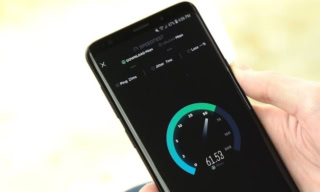
Second, the PTA has overhauled how it measures internet speed. The regulator abandoned “minimum” speed requirements and shifted to “median” speed benchmarks, which accurately reflect everyday user experience. Despite objections from telecom companies, the PTA stood firm on strict phased benchmarks. Under Phase 1 (2026-2028), operators must deliver a median downlink speed of 20 Mbps for 4G and a blistering 50 Mbps for 5G. By 2030, the 5G requirement jumps to 100 Mbps.
Additionally, operators must restructure their scattered spectrum holdings in the 1800 MHz and 2100 MHz bands to create continuous blocks. This process, known as spectrum rationalization, greatly improves spectral efficiency and continuous data throughput for users. Finally, to avoid cross-border signal interference with India, operators deploying networks near the eastern border must follow strict clock synchronization protocols (LTE 4:1 and 5G NR 8:2 frame structures).
Boosting the Ecosystem: MVNOs & Smartphone Manufacturing
A multi-billion-dollar 5G network is useless if consumers cannot afford 5G smartphones. To address this, the government recently introduced the Mobile and Electronic Devices Manufacturing Policy 2026-33.
In a massive policy shift, Pakistan will completely ban the import of used and refurbished mobile phones. The government aims to force local assembly, target a 50% localization rate by 2033, and transform Pakistan into a major electronics export hub. The state also plans to introduce a 30% tariff gap between fully imported phones and locally assembled kits to encourage domestic manufacturing by global brands like Samsung and Xiaomi.
Simultaneously, the PTA approved the Mobile Virtual Network Operator (MVNO) Policy Framework. For a nominal fee of $140,000, private companies can now secure a 15-year license to sell mobile services under their own brand. MVNOs do not need to buy spectrum… they simply lease excess capacity from Jazz, Zong, or Ufone. This asset-light model will inject fierce retail competition into the market, driving down data prices and creating diverse packages for consumers.
Specialized Plans for AJK & Gilgit-Baltistan
Due to the extreme geographic challenges of the Himalayas, Azad Jammu & Kashmir (AJK) and Gilgit-Baltistan (GB) will not participate in the March 10 national auction. Instead, the PTA will hold a separate, dedicated auction for these regions in the coming months.
To offset the massive costs of building infrastructure in the mountains, the PTA prefers to offer the 5G spectrum in AJK and GB completely free of cost. This allows operators to spend their money on physical towers and fiber-optic cables rather than expensive licenses. AJK has already waived Right of Way (RoW) charges and instituted a 15-day automatic approval system to speed up fiber deployment, and GB is looking to follow suit. Furthermore, AJK recently submitted a draft testing policy to enable dedicated 5G trials across multiple bands, ensuring the tech actually works in the rugged terrain before commercial launch.
5G Spectrum Auction: The Bottom Line
The March 10 5G spectrum auction is much more than a telecom upgrade. It is a bold, high-stakes gamble to drag Pakistan’s digital infrastructure into the modern era. By forcing participation in core 5G bands, demanding 50 Mbps speeds, pushing local device manufacturing, and enabling MVNO competition, the government has laid down a comprehensive blueprint.
When the electronic clock starts ticking this Tuesday, the success of the bids will dictate the trajectory of Pakistan’s digital economy for the next decade. The dawn of 5G is finally here.