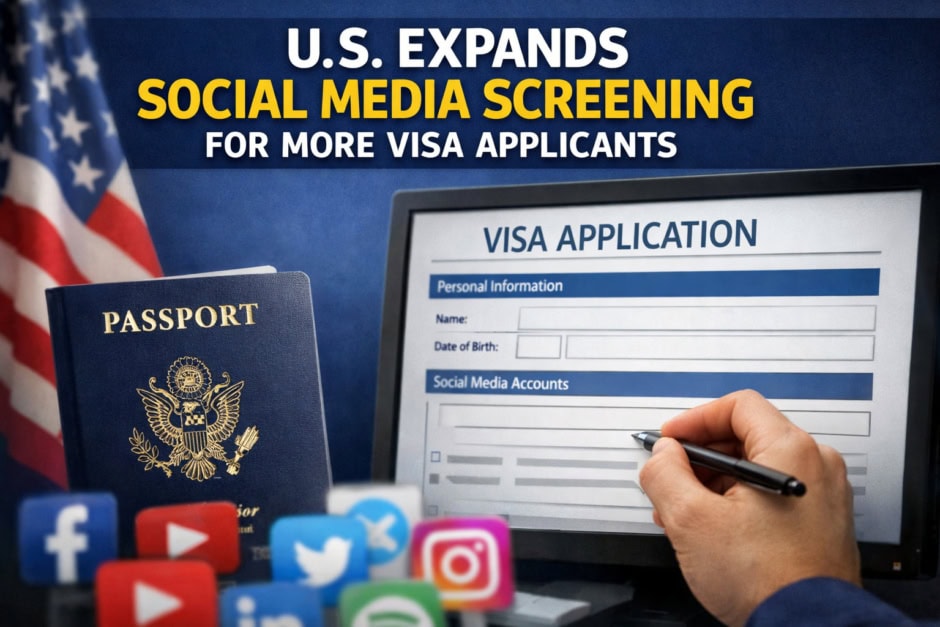
The United States will expand social media checks for visa applicants starting March 30, 2026, requiring many applicants to make their accounts accessible for review by consular officers. The move aims to strengthen security but could result in longer processing times and additional background checks.
Visa Categories Affected:
- Domestic worker visas (A-3, C-3, G-5)
- Student and exchange visas (F, M, J)
- Fiancé, spouse, and dependent visas (K-1, K-2, K-3, H-3, H-4, R-1, R-2)
- Cultural, religious, and crime-related visas (Q, S, T, U)
Applicants in these categories must now allow consular officers to review their social media activity, online profiles, and public digital presence. Content deemed suspicious may trigger further checks or visa refusal.
Previously, social media screening applied mainly to F, M, J, H-1B, and H-4 visas, but the new rule broadens the scope significantly.
Implications for Applicants:
- Expect longer waiting times and fewer available appointment slots
- Review and update public social media profiles to remove sensitive or misleading content
- Apply early to avoid delays
The U.S. government emphasizes that digital footprints are increasingly a part of visa evaluations, alongside traditional documentation and interviews. Travelers, workers, and family members planning relocation are advised to prepare for these updated screening measures.