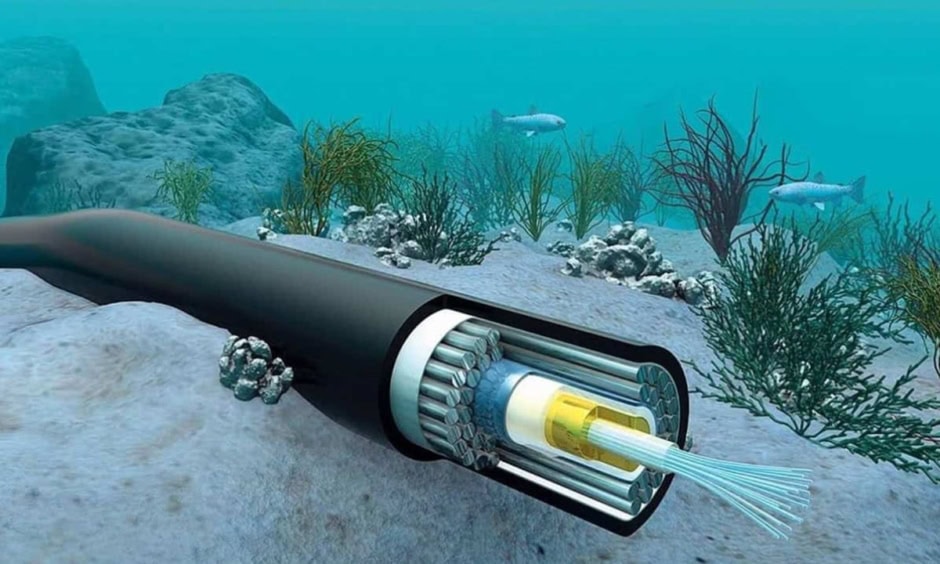
Fibre-optic cables beneath the Strait of Hormuz carry data for hundreds of millions of people across the Gulf region, Asia, Africa, and Europe.
Iran has publicly identified submarine data cables in the Strait of Hormuz as a strategic vulnerability, raising fears of potential disruption to regional and global internet connectivity.
The Strait of Hormuz, already critical to global oil trade, also carries fibre-optic cables linking Southeast Asia, the Gulf states, Egypt, and Europe beneath its seabed.
Any attack on these cables would immediately affect internet speed, e-commerce platforms, cloud services, and financial transactions across multiple countries and continents.
Regions at risk
The cables passing through the Strait of Hormuz serve as primary digital lifelines for a vast area stretching from Asia to Western Europe through the Gulf corridor.
The UAE and Saudi Arabia face the most serious exposure, as both nations have invested heavily in artificial intelligence and digital infrastructure dependent on uninterrupted cable connectivity.
Gulf Bridge International Cable System connects every Gulf country, including Iran itself, making a deliberate attack a risk that could damage Iran’s own digital infrastructure simultaneously.
What the cables carry
Subsea cables currently carry approximately 99 percent of all global internet traffic, according to the International Telecommunication Union, a United Nations agency for digital technologies.
Three major cable networks cross the strait: AAE-1 linking Southeast Asia to Europe; FALCON connecting India and Gulf states; and the Gulf Bridge International system.
Qatar’s state telecoms firm Ooredoo is currently building additional cable infrastructure in the region, which would further increase the digital dependency on these undersea routes.
Conflict raises accident risk
The ongoing war involving Iran has already caused disruption to Amazon Web Services data centres located in both Bahrain and the United Arab Emirates, experts confirm.
Undersea cables have not yet been directly struck, but military operations raise the likelihood of vessels dragging anchors across cables, causing unintentional but serious damage.
A similar incident occurred in 2024, when a commercial vessel attacked by Houthi forces drifted in the Red Sea and severed cables with its anchor.
Between 70 and 80 percent of all cable faults globally result from accidental human activity, primarily fishing vessels and ship anchors, according to the International Cable Protection Committee.
Repairs in conflict zones
Repairing damaged undersea cables in an active conflict zone presents serious logistical challenges beyond the physical task of reconnecting severed fibre-optic lines beneath the water.
Repair vessel owners and insurers may refuse to operate in waters where military fighting continues or where naval mines may have been placed by warring parties.
Obtaining permits to access territorial waters during or after hostilities can significantly delay repairs and frequently becomes the most difficult obstacle in restoring cable connectivity.
After any conflict ends, engineers must re-survey the seabed to locate sunken ships or military debris that could make previously approved cable routes unsafe for vessels.
No satellite replacement
Satellite systems cannot replace undersea cables at scale, as they lack the bandwidth capacity needed to handle the volume of global internet traffic currently transmitted daily.
Land-based alternative routes exist and would prevent a total connectivity blackout, but they cannot fully compensate for the capacity and speed that undersea cables provide.
Low-Earth-orbit networks such as Starlink are considered boutique solutions that remain too limited in scale to serve the millions of users relying on cable infrastructure.