
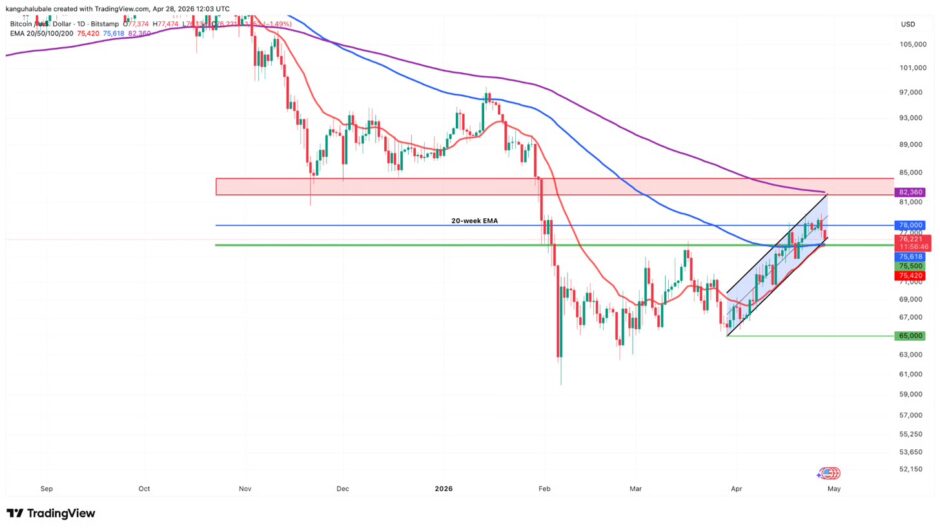
Bitcoin has slipped below the $76,000 mark after failing to break key resistance near $80,000, as the cryptocurrency market reacts to uncertain macroeconomic conditions and mixed onchain indicators.
The world’s largest cryptocurrency came under pressure following its inability to sustain a recovery above the $78,000–$80,000 range, where strong selling activity has been observed. Analysts note that this zone continues to act as a major resistance level, limiting further upside momentum.
Market Trapped Between Key Levels
Bitcoin is currently moving within a tight trading range, with strong support seen around $75,500, while resistance remains firmly positioned near $80,000. Market data shows that buyers are defending lower levels, but selling pressure intensifies near the psychological resistance zone.
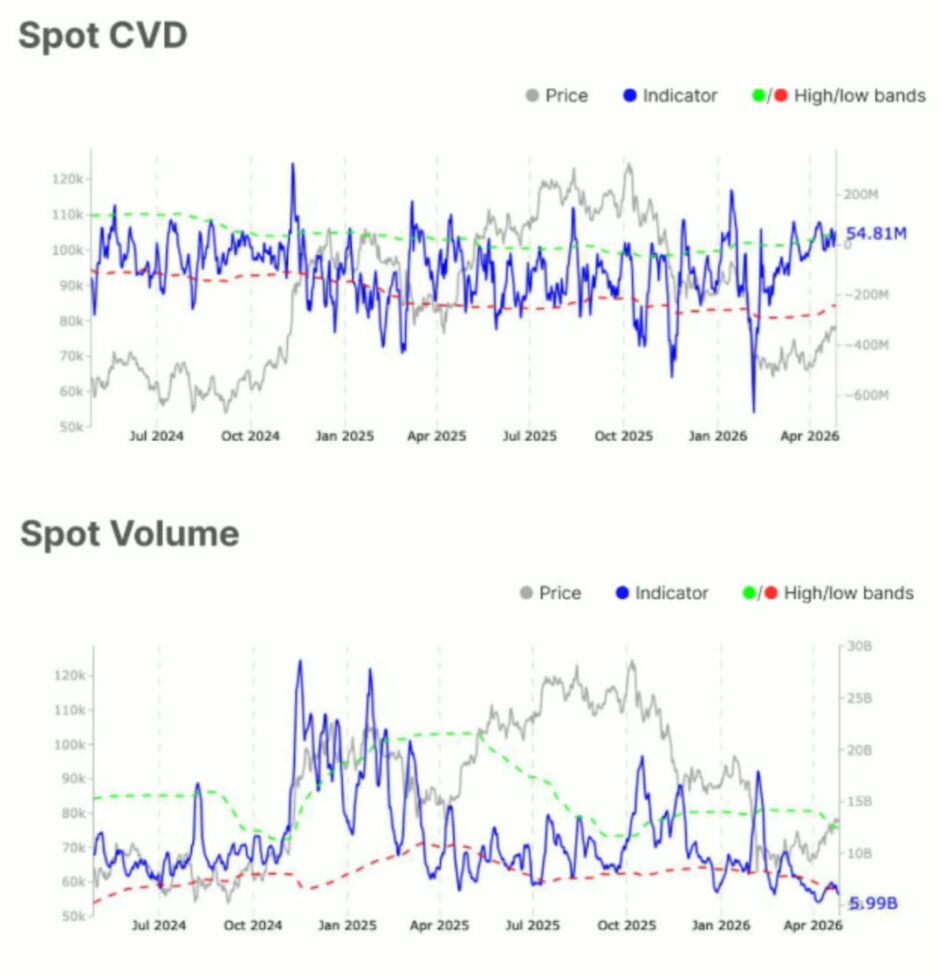
Onchain analysis indicates that investor activity remains uneven. While buying pressure has increased in some segments, overall trading volume and network participation have declined, suggesting cautious market sentiment.
Mixed Onchain Signals
Recent data shows that spot buying activity has improved, but overall market engagement remains weak. Active addresses on the Bitcoin network have also declined slightly, reflecting reduced speculative interest among traders.
Analysts say this combination of rising buy pressure but falling activity suggests that investors are still uncertain about the short-term direction of the market.
Institutional Flows Remain Weak
Institutional demand also appears muted, with recent outflows recorded from U.S.-based Bitcoin exchange-traded funds (ETFs). Although some large corporate holders continue to accumulate Bitcoin, overall capital inflows remain inconsistent.
Outlook Remains Uncertain
Market experts say Bitcoin remains in a consolidation phase, with price action heavily dependent on upcoming macroeconomic developments and liquidity conditions.
While short-term recovery attempts are possible, analysts caution that a stronger upward trend may require improved fundamentals, increased trading activity, and sustained institutional demand.