Israel’s technology sector is experiencing an unprecedented boom, with 2025 marking a record-breaking year for acquisitions of Israeli-founded companies. Global acquisitions totaled an estimated $88 billion, driven by landmark deals from tech giants Google and Apple, signaling renewed confidence in Israeli innovation despite ongoing regional challenges.

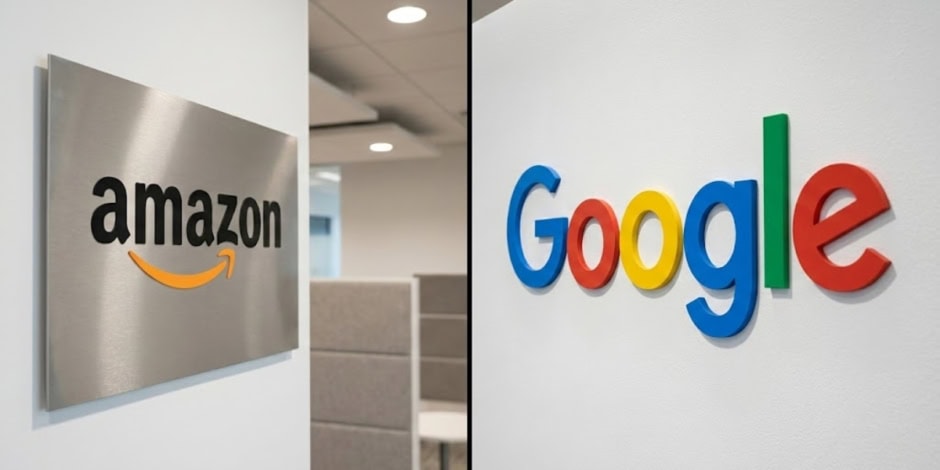
The crown jewel of recent deals is Alphabet’s acquisition of Israeli cybersecurity unicorn Wiz for $32 billion, the largest acquisition of an Israeli company ever and Google’s most expensive deal in history. The European Commission approved the transaction in February 2026, finalizing what was announced in 2025. Wiz, founded in 2020 by IDF Unit 8200 veterans Assaf Rappaport, Yinon Costica, Ami Luttwak, and Roy Reznik, provides cloud security software designed to protect cloud-based applications.
The deal is expected to inject an estimated NIS 10 billion ($3.2 billion) into Israel’s state coffers in tax proceeds. The four founders now each have net worths of approximately $1 billion, earning them entry into Forbes’ roster of the world’s richest people. Wiz will remain independent within Google Cloud, with its 1,800 employees retained.
In a separate major acquisition, Apple announced in late January that it was purchasing Israeli AI startup Q.ai for nearly $2 billion, making it Apple’s second-largest acquisition ever. Q.ai uses a system of optical sensors to detect micro-movements of facial muscles, skin, and the jaw, enabling speech recognition even when a user only moves their lips, whispers, or speaks in a noisy environment. Q.ai was founded in 2022 and backed by Kleiner Perkins, GV (formerly Google Ventures), and other prominent investors.
CEO Aviad Maizels has now sold two companies to Apple: his previous startup PrimeSense, which Apple acquired in 2013 and which was core to developing facial recognition on iPhones.
Beyond the marquee deals, multiple Israeli AI companies were acquired in early 2026. Tavily, an Israeli AI company specializing in search engines for AI platforms, was acquired by Dutch AI company Nebius for between $275 million and $400 million. PayPal acquired Israeli AI company Cymbio, which helps brands sell products across AI-driven platforms, in a deal worth several hundred million dollars. Additionally, CombinAble.AI was purchased by AI therapeutics company Insitro, with the deal transforming CombinAble.AI into an R&D center for Insitro in Israel.
2025 saw global acquisitions of Israeli-founded companies totaling an estimated $88 billion, though some deals only received final approval in 2026. Without the three largest deals, companies spent $17.78 billion acquiring Israeli tech companies in 182 acquisitions, according to research firm IVC and LeumiTech. However, most smaller acquisitions were relatively modest, with many companies selling for less than they had raised from investors.
Critically, 2025 marked a turning point: for the first time in over a decade, more hi-tech startups were established than in the previous year, with between 750 and 800 companies founded in 2025 compared to about 700 in 2024.
Elite IDF units, particularly Unit 8200 (signals intelligence and cybersecurity), have produced founders of major companies including Check Point Software, Waze, NSO Group, Wiz, and hundreds of cybersecurity startups. An estimated 20% of Israeli tech company founders served in these elite units, providing world-class technical training and networks that fuel innovation.