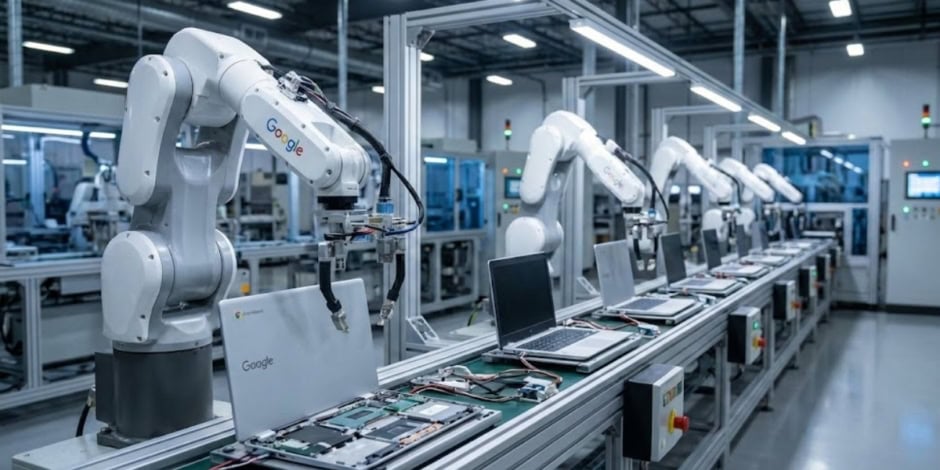
In a nation long starved of tech ambitions, the launch of Pakistan’s first Google Chromebook assembly line feels less like a risky experiment. Instead of taking it as a breath of fresh air, many critics are resorting to critiquing the project, citing environmental hazards and increased dependency on volatile global supply chains.
That might be a sobering reminder that assembly lines are not silver bullets. However, it is also foolish to question the onl good thing coming to Pakistani tech-horizon in maybe two decades. After years of software freelancing and call-center dreams, this is Pakistan dipping its toes into actual tech manufacturing. An opportunity like this does not juts roll in, and we need to realize that it may be the spark we need to ignite something bigger.
We have chased IT exports over the years, hitting $1.4 billion in the first four months, FY2025-26 data shows. In contrast, there is no good track record of hardware manufacture or assembly within Pakistan. Mobile phone assembly kicked off in earnest around 2016, but that’s been mostly low-end smartphones, not the ecosystem-building stuff like laptops or components.
In the cloud of such confusion, we hit nothing less of a great deal with Google’s Chromebook line at NRTC’s Haripur facility. This collaboration is a historic first for Pakistan’s foray into laptop assembly. Deputy Prime Minister Ishaq Dar called it a “defining moment” for digital transformation. Pakistani tech community should see this initiative as a gritty start in Khyber Pakhtunkhwa, creating supply chains where none existed, with a promise in sight at the end of the tunnel.
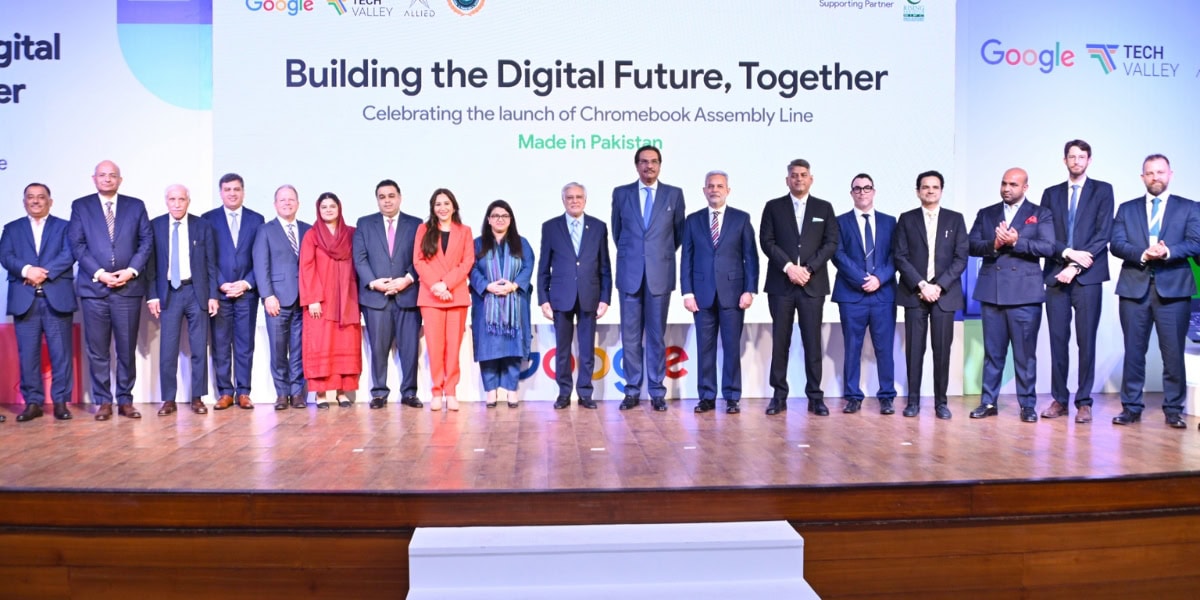
Pakistan’s tech sector is a classic paradox: We criticize when companies such as Microsoft shuts operations or foreign firms flee in between policy whiplash. On the other hand, we also love to point all faults with Google and their Chromebook assembly line. Which is betting high on local assembly to cut costs and build skills: something we cannot say for sure for any other notable tech operative within the country.
With the Special Investment Facilitation Council greasing the wheels, we’re pulling in partners like Google for hardware that could anchor education and exports. As Google’s Farhan Qureshi put it at the launch, this is about “supporting the digital transformations of education in Pakistan,” not overnight riches.
Accepting change is always a difficult step, but we do not need to go far to satisfy our curiosities. Many third world nations benefit from projects such as Pakistan’s ambitious locally-produced laptops. The New Muranga plant, operational since mid-2023, assembles Chromebooks for East African markets and has generated 300 jobs in assembly and quality control, feeding into a manufacturing rebound that lifted GDP growth from 4.6% in 2023 to a projected 6% in 2024 and 7% in 2025 (African Development Bank, July 2024). It’s part of a national employment strategy targeting 1.5 million jobs by 2028, with hardware initiatives like this easing youth unemployment (13.9% in 2023) by injecting $50 million in local procurement for components and packaging (World Bank Uganda Economic Update, December 2023). Exports from the plant hit $10 million in 2024, trimming Uganda’s import bill by 5% for edtech devices.
Even Thailand, a regional heavyweight, started small with electronics assembly in the 2010s before exploding. By 2023, its digital economy hit 6% of GDP ($36 billion), projected to reach 11% by 2027 (U.S. International Trade Administration, 2024). Chromebook and component lines added 20,000 jobs in electronics subsectors from 2023–2025, per Krungsri Research’s Industry Outlook, while R&D spend (1.16% of GDP in 2023) climbed toward 2% by 2027, driving 2.9% overall GDP growth in 2025 (World Bank Thailand Economic Monitor, February 2025). These aren’t fairy tales; they’re blueprints for third-world leapfrogging, where assembly seeds skills and FDI.
Back home, the Chromebook line promises 200–300 direct roles in Haripur alone. These include assembly techs, QA engineers, logistics pros, plus thousands indirect in packaging and transport. In a country with 35,000 annual IT grads but mismatched skills, this builds hands-on expertise, reducing brain drain and boosting remittances ($30 billion yearly). Every manufacturing job creates 2–3 more in services on average, per ILO estimates, injecting $100–150 million annually into local wages and taxes.
Pakistan’s own mobile assembly playbook proves the point. From humble CKD kits in 2016, we’ve scaled to 31.38 million units in 2024 (a 47% YoY surge) meeting 95% of demand and slashing imports from 24.5 million (2020) to 1.58 million (2023) (Topline Securities Research, February 2025).
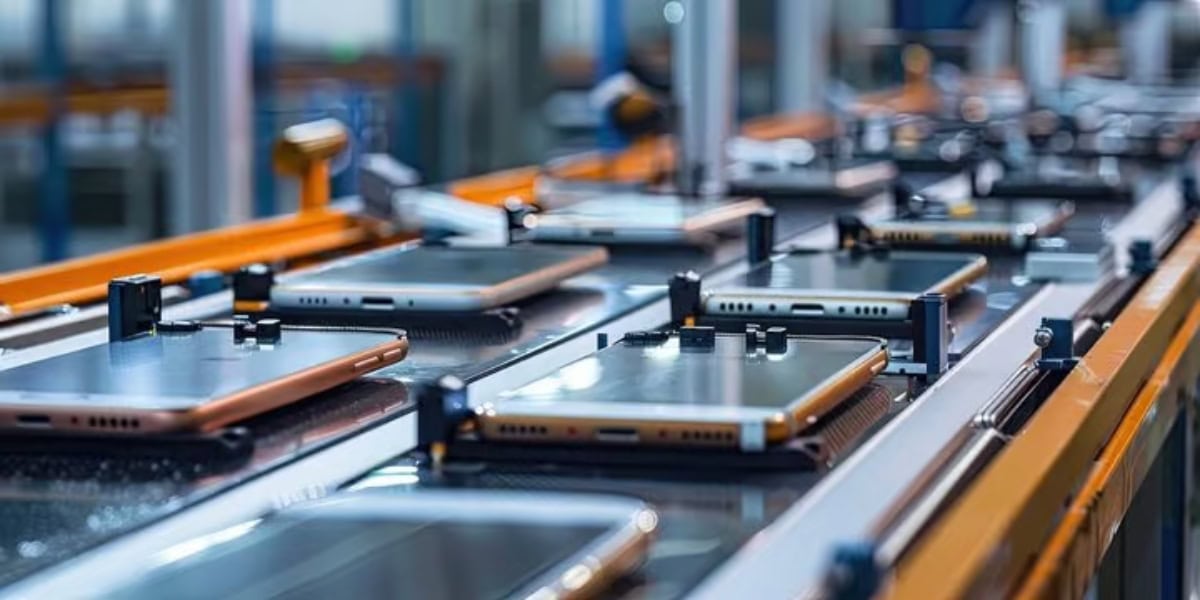
That’s saved $500 million in forex yearly and birthed 60,000 jobs, from welders to marketers (PTA Annual Report, FY2024). Chromebooks will also mirror this: At 20–30% cheaper post-assembly, they’ll arm schools with cloud tools, echoing Kenya’s edtech surge, and normalize laptop ownership beyond urban elites.
The pain points skeptics cite as a means to decry the whole initiative a waste, are all valid. E-waste recycling must be mandated, skills training embedded from day one. But this is where we need to learn to not let caution calcify into paralysis. In years of tech mismatch and a desire to have something “Made in Pakistan”, we should have learned that progress favors the bold, not the backseat drivers. The alternative, however, is nothing but see as our neighbors cash in with what little they have, while we debate where the line is, and who crossed it.