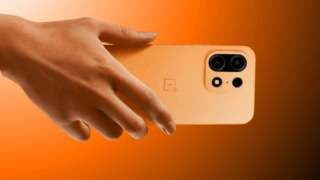
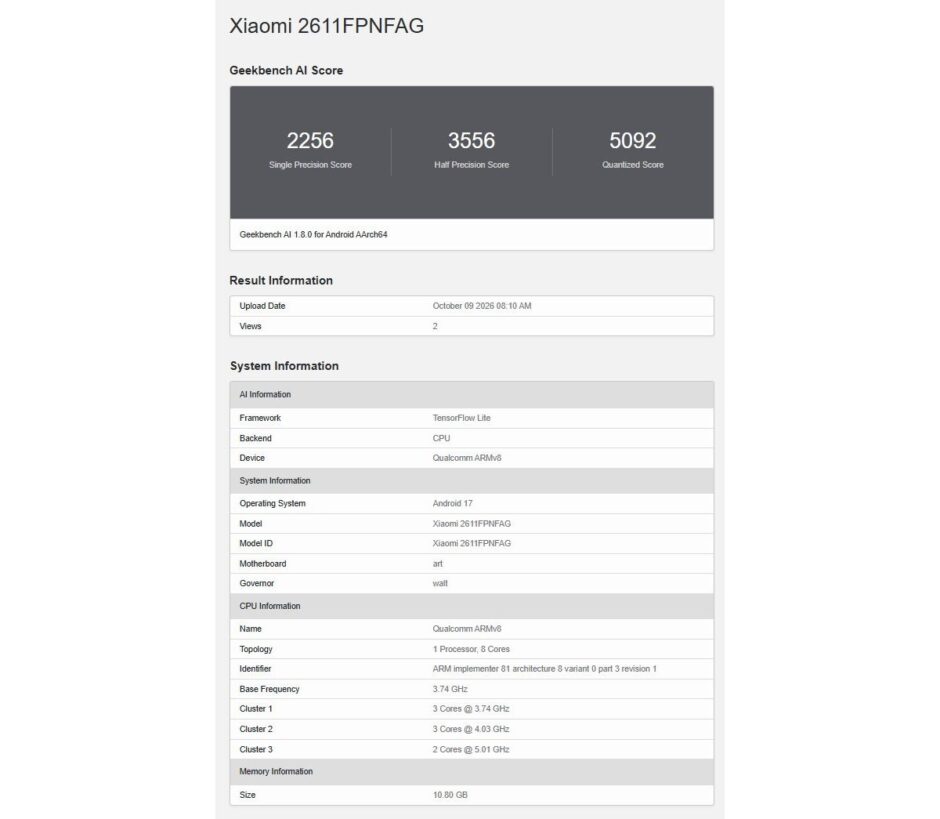
Xiaomi’s upcoming 18 Pro Max has appeared in the Geekbench AI database, offering an early look at its global version. The listing reveals its model number, chipset, and memory configuration ahead of its expected international launch.
The global model carries the number 2611FPNFAG and runs on Qualcomm’s Snapdragon 8 Elite Extreme Gen 6 chipset. The tested prototype also features 12GB of RAM, matching the configuration seen in the benchmark results.
Xiaomi has confirmed that the 18 Pro and 18 Pro Max will launch internationally. Unlike last year’s models, the new phones will reach global markets. Meanwhile, reports suggest the Xiaomi 18 Ultra may have been canceled, potentially leaving the Pro Max as the company’s flagship phone for 2027.
However, the global model’s final specifications remain unclear. Xiaomi also offers the Chinese version with 16GB of RAM, but it is unknown whether this option will reach international markets.
Battery capacity is another key detail to watch, particularly for European models. The Chinese Xiaomi 18 Pro packs a 7,000mAh battery, while the 18 Pro Max features an 8,500mAh cell. It remains to be seen whether these capacities will stay the same globally.
Both phones are expected to run Android 17 with Xiaomi’s HyperOS 4 interface. However, Xiaomi has yet to confirm their final global specifications.
The Chinese Xiaomi 18 Pro Max features a 6.9-inch LTPO AMOLED main display with a 1208 × 2624 resolution, a 120Hz refresh rate, and 4,000-nit peak brightness. It also includes a 2.9-inch LTPO AMOLED cover screen with a 596 × 976 resolution, a 120Hz refresh rate, and 4,000-nit peak brightness.
Storage options include 256GB, 512GB, and 1TB. The camera setup features a 200MP main sensor with OIS, a 200MP periscope telephoto camera with OIS and 3.2x optical zoom, and a 50MP ultrawide camera. For selfies, the phone includes a 50MP front camera.
More details about the global Xiaomi 18 Pro Max should emerge as its launch approaches. Until then, its memory options, battery capacity, and other regional differences remain unconfirmed.