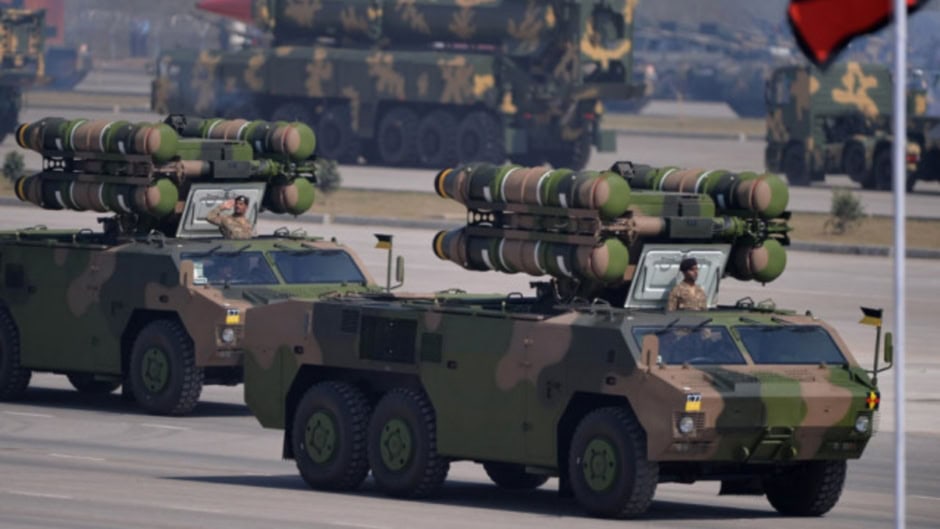
The Tariff Policy Board (TPB) has reportedly decided to exempt all defense imports from customs duty. The Minister for Commerce heads this inter-ministerial body. Currently, the government imposes a 15% customs duty on these critical defense imports. However, this new decision will eliminate that tax entirely.
Initially, the Ministry of Defence moved a summary for the Prime Minister on November 13, 2025. The proposal explicitly aims to provide financial relief to the defense services. Consequently, it creates additional fiscal space for critical operational requirements. The Prime Minister approved the summary. Furthermore, he directed the Finance Division and the Federal Board of Revenue (FBR) to meet all codal and procedural formalities.
Implementation Timeline & the IMF Factor
Following the Prime Minister’s directive, a high-level meeting took place under the chairmanship of Federal Minister for Finance and Revenue, Senator Muhammad Aurangzeb. Secretary Commerce Jawad Paul, the Secretary Finance, the Secretary Defence, and the Chairman of the FBR all attended the session.
However, the attendees decided that procedural technicalities prevent immediate implementation. Therefore, the government cannot grant the customs duty exemption within the current financial year. Instead, the tax relief will officially take effect on July 1, 2026, through the upcoming Finance Act 2026-27.
To fulfill the necessary formalities, Secretary Commerce Jawad Paul requested the TPB to formally recommend the change. After a detailed discussion, all board members unanimously recommended the exemption. This change requires necessary amendments to the 5th Schedule of the Customs Act, 1969. Meanwhile, the Ministry of Finance holds the sole responsibility for seeking IMF approval regarding this specific duty exemption.
Alcohol Duties Deferred & EV Decisions Pending
Besides defense changes, the board debated other highly sensitive tariff updates. For instance, an insider revealed that the board deferred a proposal to lower the import duty on alcohol. Secretary Commerce Jawad Paul suggested this delay to avoid a negative media impression. Board members confirmed that they feared negative propaganda in the media. This hesitation remains despite the fact that alcohol is a banned item and only diplomats import it.
In addition, the board addressed tariff reductions on imported Electric Vehicles (EVs) and Hybrid Vehicles. However, the board has transferred final authority on this matter to Deputy Prime Minister and Foreign Minister Ishaq Dar. He previously presided over a dedicated meeting on this issue this past Monday, June 8, 2026.
Internal Clash Over the National Tariff Policy
Finally, the meeting exposed a policy rift regarding local industry protections. Special Assistant to the Prime Minister on Industries and Production, Haroon Akhtar, suggested deviating from the National Tariff Policy (NTP) to support local manufacturers.
Conversely, the TPB strongly rejected this proposal. The board argued that the government must implement the NTP in letter and spirit. This strict compliance is mandatory under the current agreement with the IMF. Ultimately, the Prime Minister and the federal cabinet will make the final decision during the upcoming meeting to approve the federal budget.