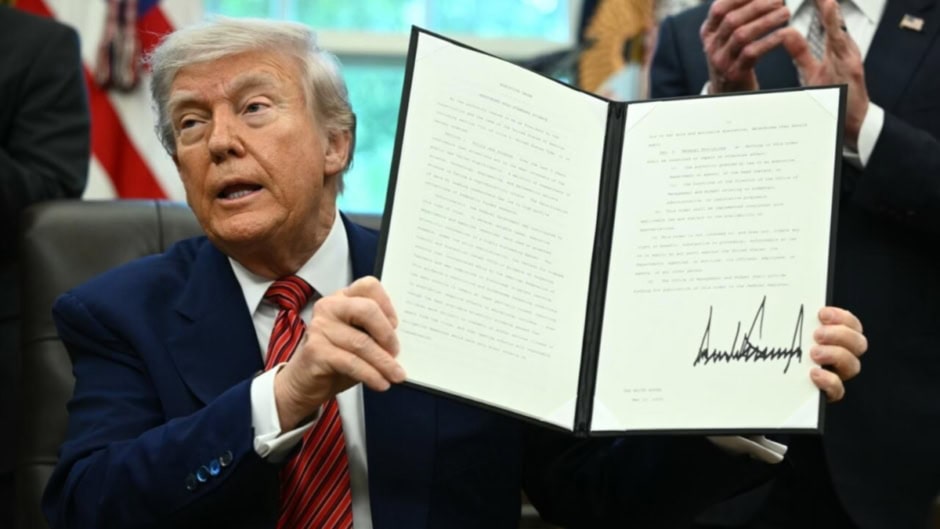
In a bold bid to reshape America’s energy future, President Donald Trump has signed sweeping directives under the banner of Trump nuclear executive orders, aimed at revitalizing the long-dormant U.S. nuclear sector and restoring scientific trust across federal institutions.
The newly announced Trump nuclear executive orders task the Department of Energy (DOE) with fast-tracking next-gen nuclear innovation. These include authorizing advanced reactor testing at National Laboratories, fast-tracking federal land usage for construction, and directing the Nuclear Regulatory Commission (NRC) to speed up licensing. These moves aim to remove decades-old regulatory obstacles and ignite a new era in clean energy.
This renewed focus comes as global energy demand intensifies. The administration is promoting advanced nuclear tech not only for its climate benefits but also for its reliability and role in energy security. The orders also stress the importance of a domestic nuclear fuel supply chain to reduce dependency on foreign sources.
Science Reforms to Reinforce Public Trust
In tandem with the energy shift, the Trump nuclear executive orders introduce a “Gold Standard Science” initiative to restore credibility in government-funded research. This directive requires all federally supported science to uphold transparency, peer-review rigor, and clarity in results, prioritizing objectivity over political bias.
White House Science Director Michael Kratsios emphasized this shift, stating: “President Trump is making Gold Standard Science the cornerstone of the federal science enterprise.”
The move is expected to encourage collaboration across academia, industry, and government while preventing conflicts of interest.
Together, these executive orders signify a dramatic pivot in U.S. energy and science policy—reviving innovation, supporting AI and industry power needs, and setting a new benchmark for integrity in federal research.