In recent days, reports have surfaced on social media suggesting that certain non-PTA-approved smartphones, including iPhones and Google Pixel devices, are unexpectedly connecting to Pakistani mobile networks.
Users claim previously blocked handsets are once again able to make calls and use data, sparking questions about whether the Pakistan Telecommunication Authority (PTA) has temporarily relaxed its restrictions.
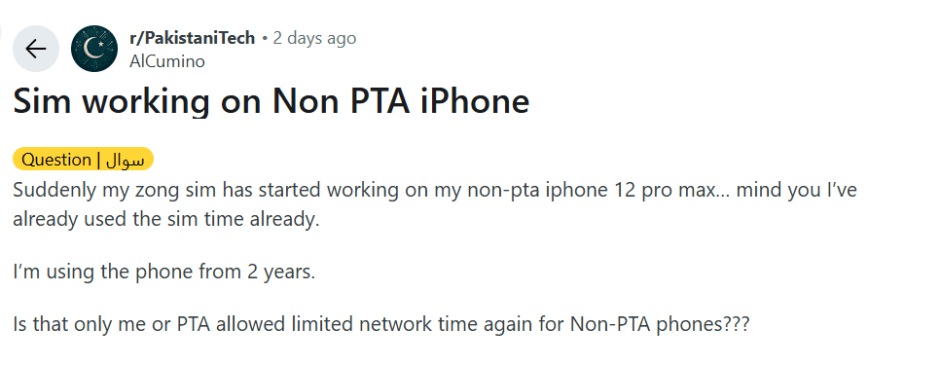
One user reported that his iPhone 12 Pro Max, inactive on local networks for nearly two years, suddenly began operating on a Zong SIM. Others shared similar experiences with Ufone, where non-PTA devices reportedly gained network access for two to three months before being disconnected again.
Mobile retailers have reported that factory-locked iPhones occasionally connect to local networks before their service is discontinued. Many shop owners have shared their experiences regarding non-PTA phones, stating, “We have seen some factory-locked phones work briefly with local SIMs, but this is not a reliable occurrence. We cannot confirm that it will happen consistently, and we advise caution when using non-PTA devices.” They emphasize that while there may be isolated cases of functionality, it cannot be counted on as a regular phenomenon.
Possible Reasons Behind Sudden Connectivity
According to various reports and industry discussions, there may be several explanations for why non-PTA phones occasionally regain network access:
- Temporary grace periods: Some devices may operate for short durations through visitor-based temporary registrations, which can last up to 120 days.
- System optimizations or data cleaning: Periodic offloading or purging of older IMEI records could create short windows where previously blocked phones reconnect before being restricted again.
- Cloned or duplicate IMEIs and auto-pairing quirks: In certain cases, cloned IMEIs or auto-paired devices from earlier compliance checks may lead to inconsistent network behavior.
PTA’s Official Response:
The PTA states that it has offloaded older IMEI records as part of routine DIRBS maintenance to enhance system responsiveness for both the regulator and Mobile Network Operators (MNOs). The authority emphasized that this is a technical optimization, not a rollback of enforcement. It urged users to register devices and pay the applicable Federal Board of Revenue (FBR) duties and taxes. PTA didn’t provide any clear stance, but the statement explains that the offloading might have triggered the older phones into the grace period again.
Important Enforcement Details:
- Any unregistered mobile device may continue to operate for only 60 days.
- After this period, if the duties or taxes remain unpaid, the device will be re-blocked, in line with DIRBS regulations.
Rumors of non-PTA phones quietly regaining access have created confusion among users. However, the evidence suggests these cases are rare glitches, not a policy shift. PTA’s latest clarification makes the position clear: without paying the required duties and taxes, non-registered devices cannot remain on local networks beyond the grace period.
For users, this means one thing: there are no shortcuts. To keep a device active in Pakistan, registration is the only reliable path forward.