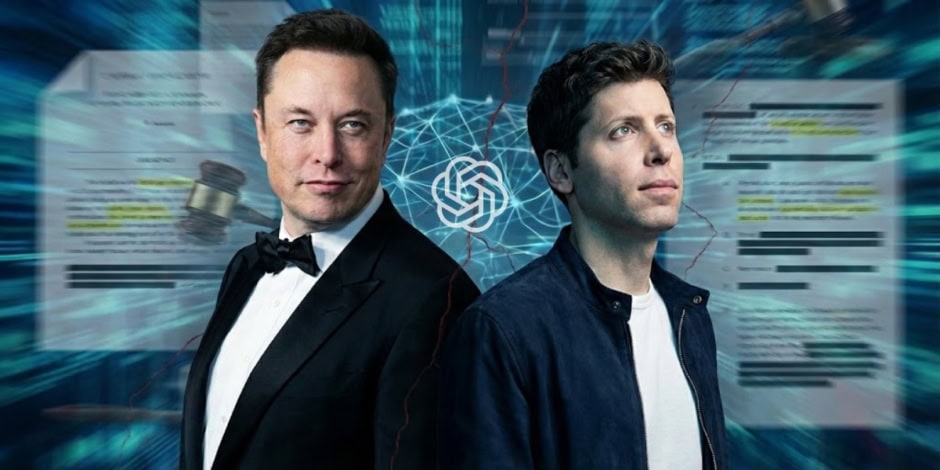
Elon Musk has filed a high-stakes lawsuit against OpenAI and Microsoft, seeking up to $134 billion in damages by arguing the companies received “wrongful gains” from his early involvement in the artificial intelligence company’s development, according to court filings and legal analysis. The dispute centers on claims that Musk’s seed funding and strategic contributions to OpenAI laid the groundwork for its meteoric rise and that both OpenAI and Microsoft benefited financially from that foundation.
In a federal court filing ahead of an April jury trial in Oakland, California, Musk’s legal team quantified the alleged gains. They estimate that OpenAI earned between $65.5 billion and $109.4 billion connected to his early funding and influence, while Microsoft, which has deep financial ties to OpenAI, gained between $13.3 billion and $25.1 billion through its partnership and equity stake.
“Just as an early investor in a startup company may realize gains many orders of magnitude greater than the investor’s initial investment, the wrongful gains that OpenAI and Microsoft have earned – and which Mr. Musk is now entitled to disgorge – are much larger than Mr. Musk’s initial contributions,” Musk argues.
Musk, who co-founded OpenAI in 2015 before departing in 2018, contributed approximately $38 million (accounting for roughly 60 percent of the early seed round) and asserts that his recruitment of talent, connections, and credibility were essential to the organization’s early credibility and scaling.
“Without Elon Musk, there’d be no OpenAI,” said lead trial lawyer Steven Molo, framing the claim in terms similar to how early startup investors often see outsized returns relative to their initial contributions.
At the heart of Musk’s argument is that OpenAI’s transition from a nonprofit research lab into a for-profit entity valued at roughly $500 billion constituted a deviation from its stated mission and unfairly enriched both organizations at his expense.
Musk’s expert witness, financial economist C. Paul Wazzan, was enlisted to calculate the value of those alleged gains using methods he says are consistent with startup compensation norms.
OpenAI has always responded to any criticism or legal challenge by Musk as “unserious” and part of what it described as Musk’s broader “harassment campaign” against the company.
Microsoft’s legal team has similarly argued that there is no evidence it “aided and abetted” wrongdoing by OpenAI, and both companies have filed motions to limit the expert testimony Musk intends to present, labeling some of the calculations “made up,” “unverifiable,” and “unprecedented.”
OpenAI published a blog with their response called “The truth Elon left out:”
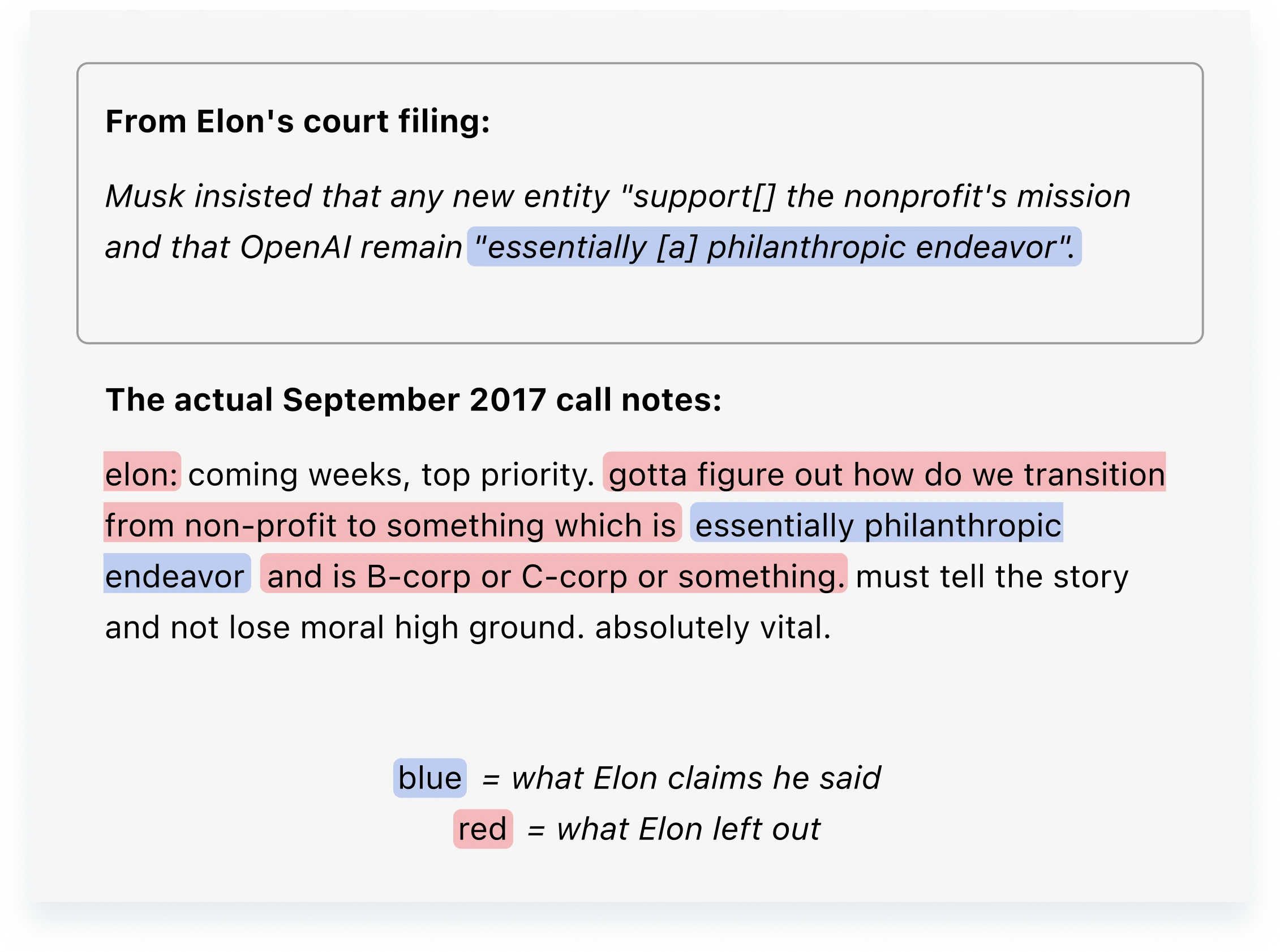
Explaining the image, they wrote:
Elon did not think that OpenAI needed to remain solely a non-profit. As the context shows, he agreed that OpenAI needed both a non-profit and a for-profit entity—the exact structure OpenAI has today, and that Elon is now suing OpenAI over. At the time, he said only that the non-profit should continue to exist “in some form.” Ilya, not Elon, suggested that the for-profit should have a connection to the OpenAI mission. Shortly after this call, Elon actually created an OpenAI PBC (or “B-corp”).
Anyone following AI journey would know that Musk has long been critical of the decision to restructure OpenAI into a profit-oriented organization. His stance has always been that the world’s most valuable private company has strayed from the original nonprofit vision to focus on broad societal benefit. His lawsuit essentially stresses that the transformation enabled significant capital inflows, including Microsoft’s strategic investment, but also changed the incentive dynamics that should have guided the company’s growth.
Microsoft’s multi-billion-dollar integration of OpenAI technology into products such as Azure, Microsoft 365, and Bing has positioned it financially and operationally to OpenAI’s success. Musk’s inclusion of Microsoft in the suit drags in early innovation partnerships years later in unexpected legal contexts.
The trial is expected to begin in April, and both sides are intensifying preparations. Musk’s team may seek punitive damages or even structural remedies if liability is established, while OpenAI and Microsoft aim to narrow the case before it reaches a jury.