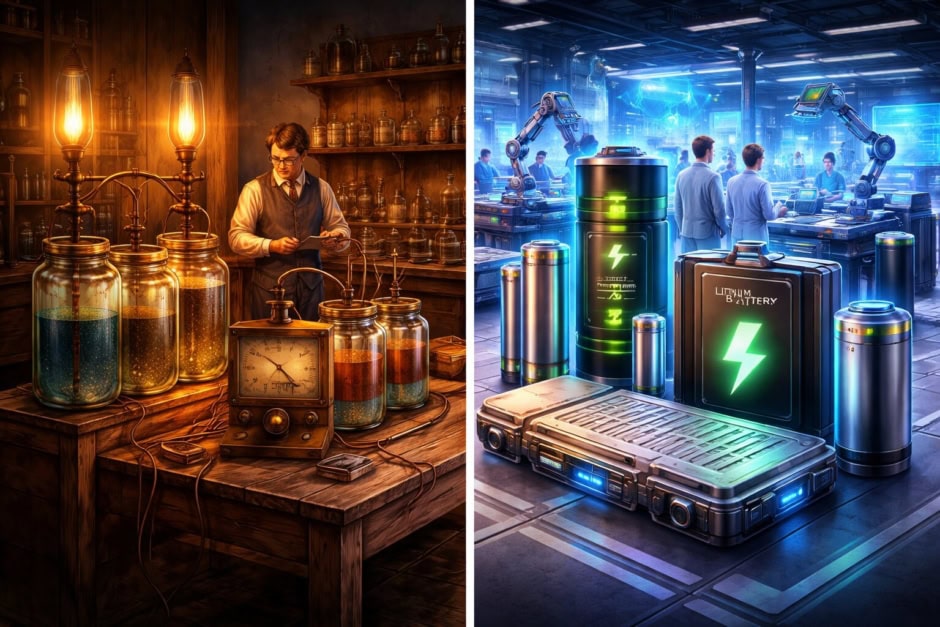
On March 20, 1800, Italian scientist Alessandro Volta introduced the world to a groundbreaking invention: the voltaic pile. In a letter to the Royal Society of London, Volta described a stack of metal discs separated by cloth soaked in saltwater, a simple device that could produce a steady, continuous electric current.
It may have looked modest, but this was the first practical battery, and it set the stage for everything that followed in electrical energy storage.
Fast forward 226 years to 2026, and batteries are no longer just curiosities for scientific experiments. They power our smartphones, electric vehicles, satellites, and even entire cities. The journey from Volta’s hand-built pile to today’s lithium-ion and solid-state batteries shows just how far technology has come.
Then: A Simple Stack That Shocked the World
Volta’s voltaic pile was simple in concept but revolutionary in effect. Before this invention, electricity could only be generated momentarily through static machines, like friction-based devices, which were unreliable and inconsistent.
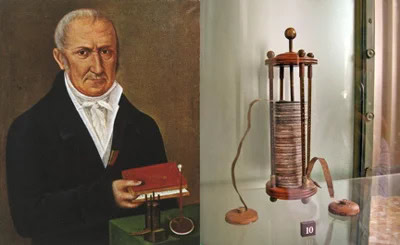
Volta’s stack produced a continuous electrical current, the first time anyone had achieved such a feat. It allowed scientists to experiment with electricity in ways that were impossible before. Suddenly, it was no longer just a spark: it was a controllable, usable flow of energy.
This innovation sparked curiosity across Europe. Scientists and inventors began exploring electrochemistry, electric motors, and the potential of electricity to transform society.
Now: Batteries Powering the Modern World
Today, batteries are everywhere, and they are far more powerful, compact, and efficient than Volta’s first stack. Consider:
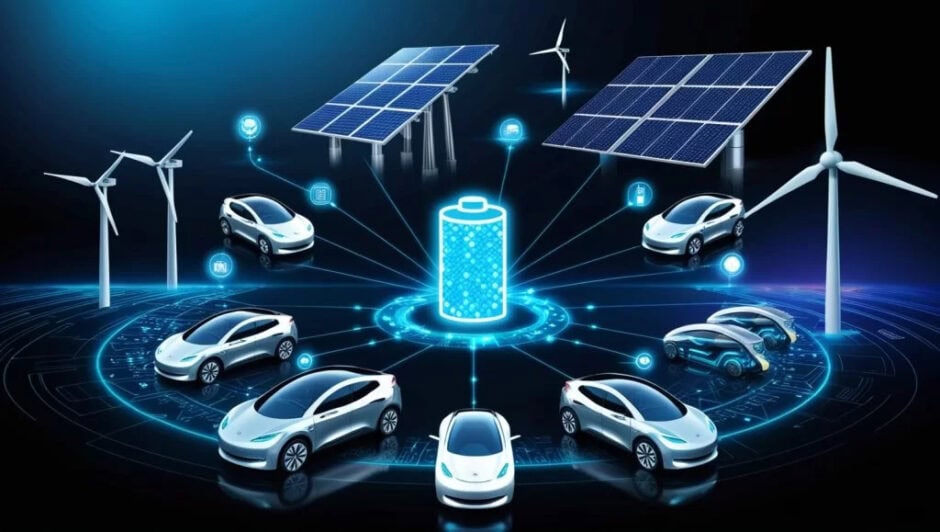
- Smartphones and laptops rely on tiny lithium-ion batteries that store thousands of times more energy than a single voltaic pile.
- Electric vehicles use high-capacity battery packs capable of powering cars for hundreds of kilometers on a single charge.
- Grid-scale energy storage now allows renewable sources like solar and wind to supply consistent electricity even when the sun isn’t shining or the wind isn’t blowing.
The evolution of batteries has made energy portable, reliable, and scalable, a concept that Volta could only have imagined in theory.
Then: Experiments and Limitations
Volta’s first battery had its limitations. The voltaic pile could only generate small amounts of current. It corroded quickly, and producing large-scale electricity was impossible.
Yet it laid the fundamental principle of electrochemical energy storage: converting chemical reactions into usable electrical energy. This principle remains at the core of every battery today, even the most advanced lithium-ion, nickel-metal hydride, and emerging solid-state cells.
Now: Innovation Accelerates
Modern battery technology is no longer just about storing energy. Researchers are exploring innovations like the following:
- Solid-state batteries that promise higher capacity and safety.
- Graphene-based supercapacitors for ultra-fast charging.
- Flow batteries that could store massive amounts of energy for entire cities.
Each step builds on the foundation that Volta laid over two centuries ago, transforming human life in ways unimaginable in 1800.
Then & Now: From Curiosity to Essential Technology
Volta could not have foreseen a world powered by rechargeable energy. His voltaic pile was a curiosity for scientists, yet it set in motion a revolution.
In 2026, batteries are essential to modern life, influencing everything from communication to transportation, healthcare, and renewable energy systems. They enable technologies that define the 21st century, proving how a single innovation can ripple across centuries.
Looking Ahead
From a hand-stacked pile of metal discs in 1800 to high-tech energy solutions today, the story of batteries is one of human ingenuity and relentless innovation.
As researchers push the boundaries of energy storage, the principles Volta discovered continue to guide them. The humble voltaic pile was the first step, but it started a journey that will continue to power humanity for generations to come.