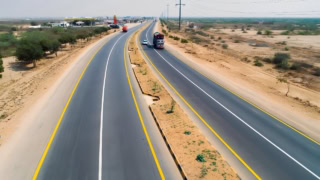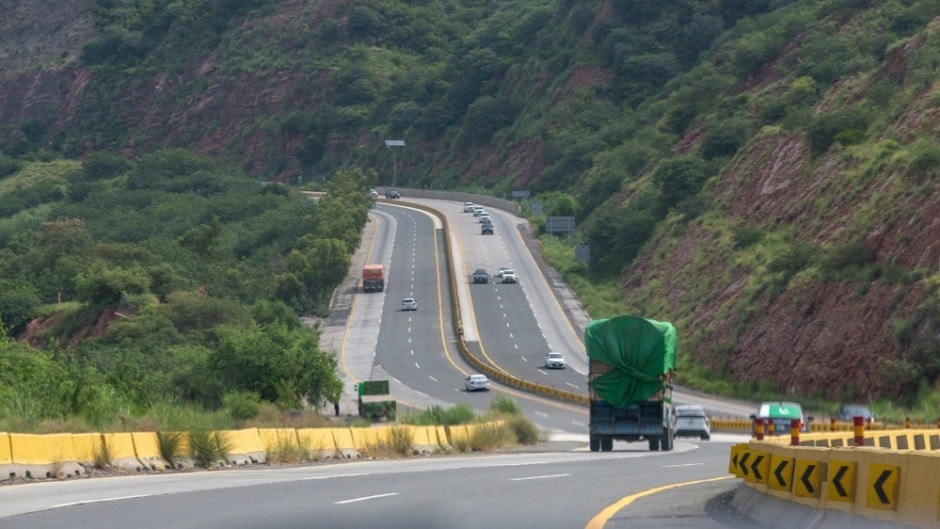
The National Highway Authority (NHA), operating under Ministry of communications has issued a notification announcing revised toll rates for all major national highways and motorways across Pakistan. The new rates will come into effect from April 5, 2026, under the provisions of the NHA Act, 1991, as amended in 2024.
According to the notification, toll charges have been increased across all vehicle categories. On national highways, cars will now be charged Rs. 100, while wagons will pay Rs. 200 and buses Rs. 300. Heavier vehicles such as 2 and 3 axle trucks will be charged Rs. 350, and articulated trucks Rs. 700. Specific routes like the Kohat Tunnel (N-55) and the Islamabad–Muzaffarabad Motorway (E-75) have higher toll rates compared to standard highways due to route-specific infrastructure and operational costs.
The revised toll structure also reflects significant increases on major motorways. On the M-1 Islamabad–Peshawar motorway, cars will be charged Rs. 700, while on the M-3 Lahore–Abdul Hakeem motorway the car toll has been set at Rs. 1000. Similarly, commuters traveling on the M-4 Pindi Bhattian–Faisalabad–Multan motorway will pay Rs. 1300 for cars, and those using the M-5 Multan–Sukkur motorway will face a toll of Rs. 1500 for cars. Other routes, including the M-14 D.I Khan–Hakla motorway and the E-35 Hassanabdal–Havelian–Mansehra Expressway, also fall under the revised toll system with updated charges for all vehicle types.
The increase in toll rates is expected to affect daily commuters as well as the transport and logistics sector, potentially increasing travel and goods transportation costs. However, officials from the NHA state that the revision is necessary to meet rising maintenance expenses and to ensure the continued development and sustainability of Pakistan’s road infrastructure network.
The authority has advised commuters to review the updated toll schedule and plan their travel accordingly once the new rates are implemented.