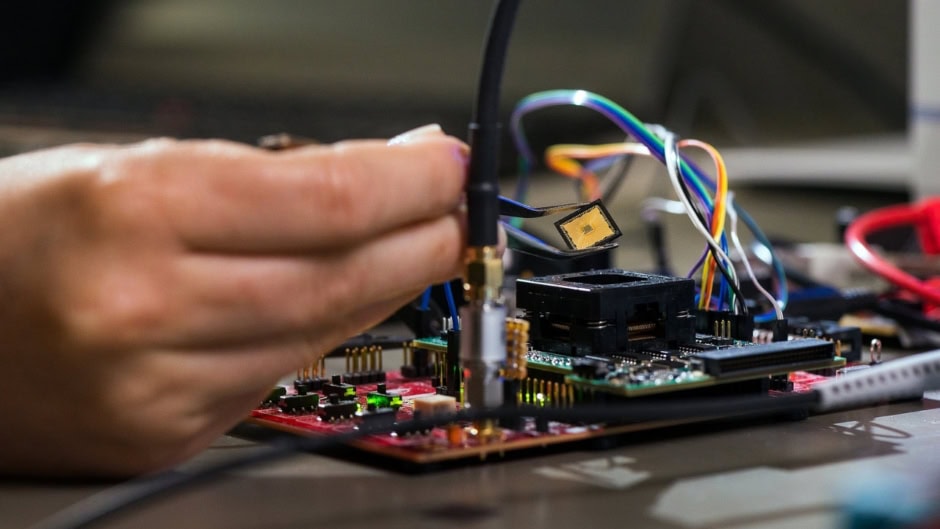
Researchers have developed what is being described as the world’s first open-source quantum-resistant chip, designed to protect digital systems from future threats posed by quantum computing. The chip focuses on embedding security directly into hardware, rather than relying only on software-based encryption.
Engineers built the processor on the open-standard RISC-V architecture, allowing developers and organizations to study, modify, and deploy the design freely. Teams based in Singapore developed this open-source approach with the involvement of the Technical University of Munich (TUM) to improve transparency and reduce reliance on proprietary security systems.
TUM’s Executive Vice President for Research and Innovation, Prof. Gerhard Kramer emphasizes:
At a time of rapidly changing cyber and civil-society threats, we must ensure the resilience of critical systems as a shared priority for Germany and Singapore. Our world will continue to need robust and trustworthy digital systems in the future.
The key goal of the chip is to defend against quantum-enabled attacks. As quantum computers evolve, they will expectantly break many of today’s encryption methods, including widely used public-key systems. This has led researchers to explore post-quantum cryptography and hardware-based protections.
By integrating quantum-resistant algorithms directly into the chip, the system aims to secure sensitive operations such as authentication, data encryption, and system integrity. Embedding these protections at the hardware level can reduce vulnerabilities that may arise in software layers.
The project is part of a broader effort by international research groups to prepare for the next generation of cybersecurity challenges. Similar initiatives are exploring open-source hardware to ensure greater trust and collaboration in building secure systems.
Quantum computing remains in development, but experts widely recognize its potential to disrupt current security systems. If quantum attacks become practical, they could affect technologies such as encryption, banking systems, particularly crypto, and digital communications.
An open-source chip could help organizations test and adopt quantum-resistant solutions earlier. It may also lower costs and make advanced security tools more accessible to researchers, startups, and governments.
While the chip is still in early stages, it reflects growing urgency around quantum-safe security. Further testing and real-world deployment will determine how effective such hardware solutions are in addressing emerging threats.