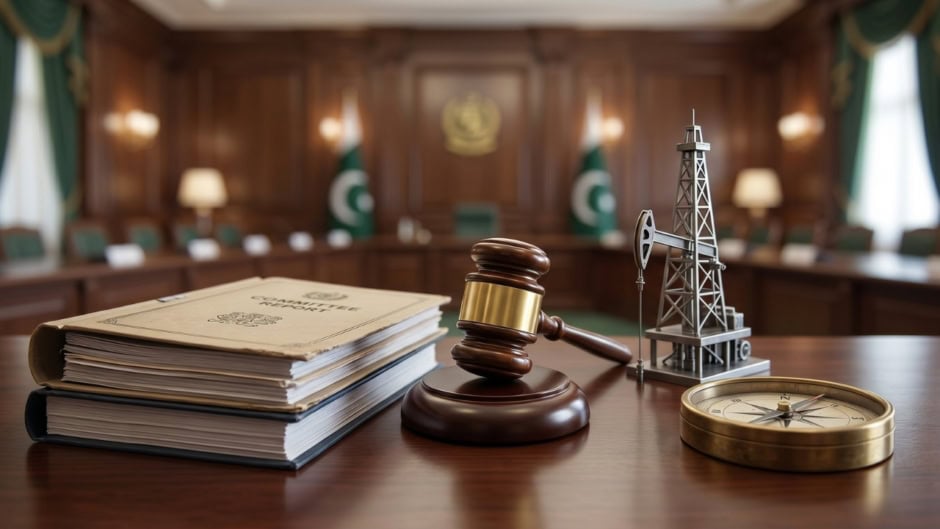
The Senate Standing Committee on Petroleum today uncovered significant governance failures within Pakistan’s energy and petroleum sector. Senator Manzoor Ahmad Kakar convened a sub-committee meeting at Parliament Lodges to review the legal framework governing board appointments. The findings reveal a disturbing lack of oversight in key public entities.
Scandal Hits PPL Board Appointments
During the briefing, the Ministry of Energy (Power Division) revealed that it shortlisted seven candidates for the Board of Pakistan Petroleum Limited (PPL). However, Senator Kakar raised immediate alarms regarding the integrity of these nominees.
Specifically, the Committee highlighted that some shortlisted individuals were previously on the Exit Control List (ECL). Furthermore, other candidates are currently serving on multiple boards while facing unresolved audit objections. Consequently, the Ministry removed one officer from the shortlist following an internal inquiry.
The Committee reviewed several entities, including:
- Pakistan Petroleum Limited (PPL)
- Oil and Gas Development Company Limited (OGDCL)
- Sui Southern Gas Company Limited (SSGC)
- Pakistan State Oil (PSO)
- Pak-Arab Refinery Limited (PARCO)
- Pakistan LNG Limited and others.
Proposed Legal Shift: Restoring Government Authority
The Sub-Committee identified a massive gap in how Managing Directors (MDs) and Chief Executive Officers (CEOs) are appointed. Currently, the authority rests with individual Boards of Directors. However, the Committee now recommends amending the State-Owned Enterprises (SOEs) Act, 2023.
The proposed amendment seeks to restore appointment authority to the Federal Government. This move aligns with Articles 90, 91, and 99 of the Constitution. While Boards will retain an advisory role, the government wants to establish a structured performance evaluation mechanism to ensure accountability and national policy alignment.
Energy Security: A Fragile Petroleum Sector Supply Chain
The Ministry also provided a sobering update on Pakistan’s energy reserves. Currently, the country maintains petroleum reserves for only one month. This comes at a time when oil consumption has increased compared to last year.
Pakistan’s energy security remains highly vulnerable to external shocks. Key facts include:
- 90% of petroleum supplies arrive from Gulf countries via the Strait of Hormuz.
- Shipments typically take eight days to reach Pakistan.
- Pakistan shares this volatile route with India (60% of their supply), China (45%), and Japan (80-90%).
Regarding gas, imported supplies from Qatar face delays. Recent attacks on two major Qatari refineries have disrupted the flow. However, the Committee noted a positive development: significant gas reserves were recently discovered in the Tal Block.
Additionally, the LPG sector remains dependent on imports. Iran provides 50% of the country’s LPG, while local production and other imports cover the remainder. Senator Kakar concluded by demanding strict adherence to merit to protect national resources from inefficient management.