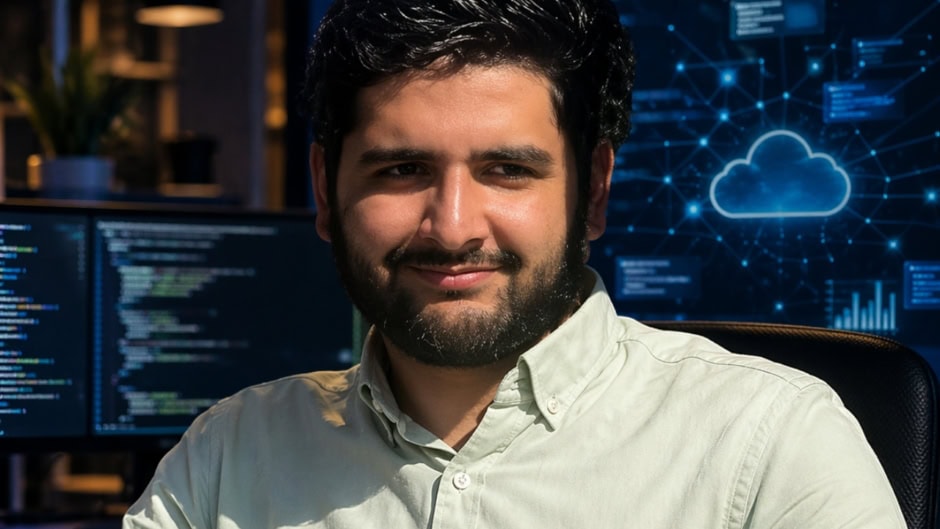
Sualeh Asif, a 26-year-old from Karachi who represented Pakistan at international math olympiads before studying at MIT, has become a billionaire after his AI coding startup Cursor reached a $29.3 billion valuation. His success offers a rare story of a self-made Pakistani tech entrepreneur.
Record-Breaking Funding Round
Anysphere, the parent company of AI coding tool Cursor, raised $2.3 billion in a Series D funding round in December 2025. Accel and Coatue led the investment with participation from Thrive Capital, Andreessen Horowitz, DST Global, Nvidia and Google. The startup secured its third funding event of 2025, elevating its valuation to nearly 12 times the January level.
From Math Olympian to Billionaire
Sualeh Asif now serves as Chief Product Officer. He holds a 4.5% stake in the company worth at least $1.3 billion according to estimates. This makes him Pakistan’s first dollar billionaire startup founder. The same stake value applies to each of the other three co-founders: Michael Truell, Aman Sanger and Arvid Lunnemark. All four attended MIT and are in their mid-twenties.
Journey From Karachi Streets
Asif’s journey began in Karachi where he spent his early years navigating the city’s busy streets on a motorcycle. His exceptional aptitude for mathematics emerged during high school. He represented Pakistan at international math contests, earning honorable mentions at the 2017 and 2018 Asian Pacific Mathematical Olympiads. He also taught at Pakistani math camps, showing early drive and technical skills.
MIT to Silicon Valley
His academic journey took him to MIT where he joined the prestigious Neo Scholars program. He dropped out to found Anysphere in 2022 with fellow MIT students. Asif leads development on core features like the Tab function. This speculative-editing tool anticipates multi-line code changes.
What Cursor Does
Cursor serves as Anysphere’s sole product. It functions as an AI-powered code editor used by millions of developers. Teams at Nvidia, Adobe, Uber, Shopify, PayPal, OpenAI, Stripe and Midjourney use the tool. It enables users to access AI models from OpenAI, Anthropic, Google and xAI for writing, editing and debugging code.
Rapid Growth Trajectory
Cursor attracted early attention from the OpenAI Startup Fund. The startup secured an $11 million seed round in late 2022. The OpenAI fund co-led it alongside backing from Nat Friedman, former GitHub CEO, and Dropbox’s Arash Ferdowsi. A $60 million Series A followed in mid-2023 under Andreessen Horowitz and Thrive Capital. This assigned a $400 million valuation. A $100 million Series B then pushed valuation above $2.4 billion.
Impressive Revenue Numbers
The startup’s growth has been remarkable by every standard. Cursor now supports over one million users. Subscription revenue reportedly climbed from $4 million in April 2024 to $48 million by year-end. Anysphere reported annualized revenue exceeding $1 billion. Annual recurring revenue expanded from $1 million in 2023 to $100 million within approximately 12 months.
Technical Innovation
Anysphere introduced its own model called Composer in October 2025. The company trained it for faster code generation and tasks such as file and codebase modifications. Cursor’s competitive advantage lies in deep codebase awareness. It maps not just current code but structure, commit history and past debugging.
The system orchestrates models like OpenAI’s GPT-4 and Anthropic’s Claude Sonnet through an in-house Model Context Protocol. This optimizes performance. Asif described Cursor’s Tab feature in a Lex Fridman podcast as predict and apply entire code edits. It guides the cursor across files, jumps contextually and even proposes terminal commands.
A Different Kind of Success Story
Asif represents a different kind of Pakistani success story. His wealth comes from technical innovation, software development and building a product used by developers at leading technology companies. This contrasts with traditional wealth accumulated through property dealing, inheritance or rent-seeking.
The Brain Drain Question
However, his success also highlights the brain drain challenge facing Pakistan. Asif studied at MIT, raised funds in Silicon Valley and built his company in the United States rather than Pakistan. His story demonstrates what Pakistani talent can achieve when provided with supportive innovation ecosystems. Access to venture capital and world-class educational institutions made the difference.