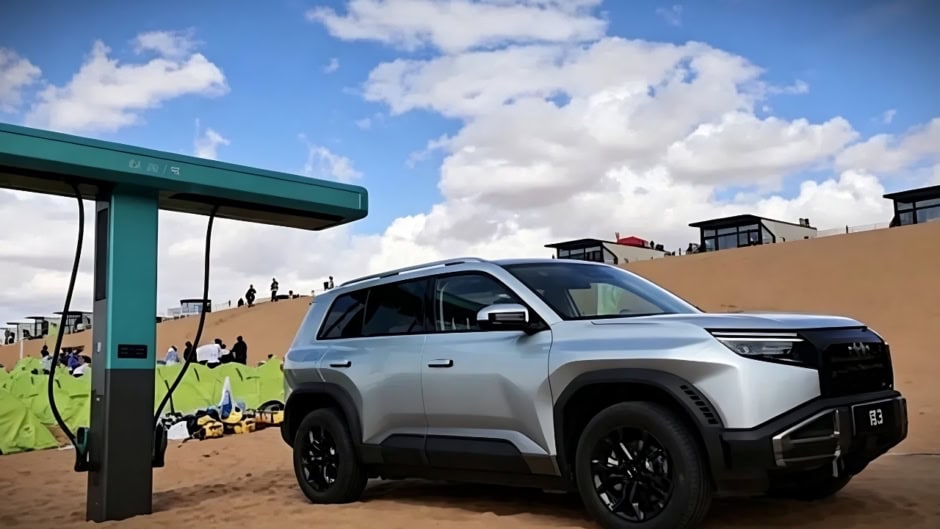
An automotive blogger conducted a real-world charging test on BYD’s second-generation Blade Battery installed in a Fangchengbao Leopard 3. And the whole internet erupted due to the results.
The battery temperature reportedly climbed to 169.6°F during an ultra-fast Megawatt Flash Charge session. However, this exceeded China’s recommended safety threshold of 149°F for lithium iron phosphate battery cells.
The test quickly fueled debate among electric vehicle enthusiasts and industry observers about megawatt-level charging systems. These ultra-fast charging technologies are designed to dramatically reduce charging times. Meanwhile, they aim to bring EV refueling closer to the convenience of gasoline-powered vehicles.

Battery specialists raised concerns about the stability of the Solid Electrolyte Interphase layer at elevated temperatures. This protective barrier separates the electrolyte from the anode while allowing lithium ions to move between them. Consequently, experts claim the layer can begin degrading at temperatures above 158°F potentially accelerating battery wear.
Meanwhile, on Reddit, people tried to rationalize the news as:
Comment
by
u/UnusualLeadership408 from discussion
in
electricvehicles
EV battery cells typically operate within a temperature range of roughly 68°F to 86°F under normal conditions. Furthermore, many vehicles begin issuing overheating warnings once temperatures exceed 140°F. As a result, the 169.6°F reading drew significant attention from the electric vehicle community.
As another user said on Reddit:
Comment
by
u/UnusualLeadership408 from discussion
in
electricvehicles
BYD PR director Li Yunfei responded on Weibo with a tongue-in-cheek suggestion for users to test Megawatt Flash Charge. Nevertheless, the industry tension between ultra-fast charging speeds and battery longevity remains unresolved. Companies including Contemporary Amperex Technology and Sunwoda are also advancing ultra-fast charging technologies with charging rates of 10C to 15C.