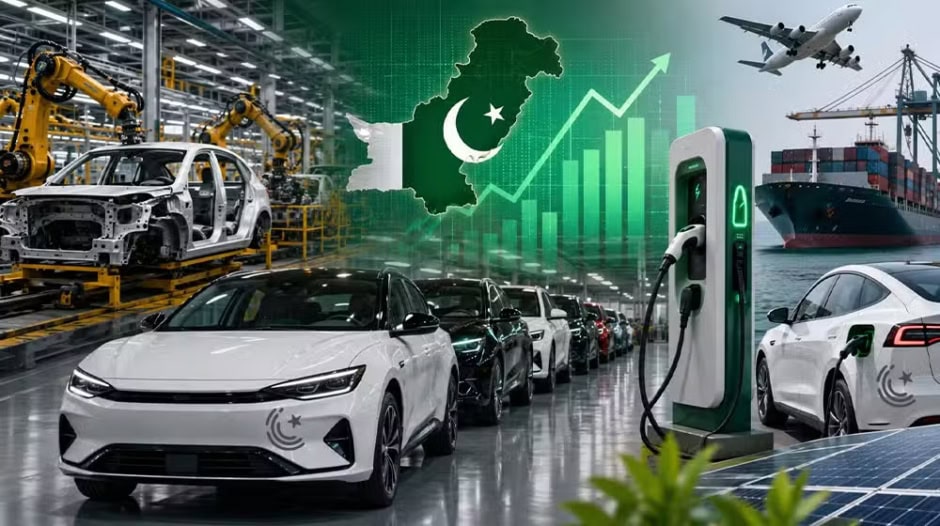
The federal government is preparing an ambitious revival strategy for Pakistan’s automobile sector under the draft Auto Policy 2026–31, aiming to significantly increase local vehicle production, expand exports, and accelerate electric vehicle adoption over the next five years.
According to officials, the government plans to raise annual vehicle production to more than 500,000 units by 2031, compared to just 56,000 units recorded during FY2022-23 after the industry experienced one of its sharpest downturns in recent years.
The proposed policy also sets a target of generating $1 billion in automotive exports, marking a major shift for Pakistan’s traditionally domestic-focused auto industry.
Authorities believe the strategy could help rebuild manufacturing capacity, attract investment, and improve the country’s industrial competitiveness in regional markets.
A major focus of the draft policy is the promotion of New Energy Vehicles (NEVs), including electric and hybrid vehicles. Under the proposed framework, NEVs are expected to account for 30 percent of all new vehicle sales by 2031.
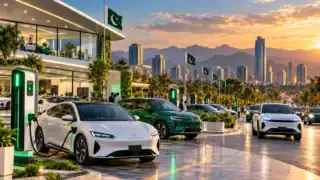
To support the transition toward cleaner transportation, the government plans to establish 3,000 electric vehicle charging stations across the country.
Officials said the policy also includes measures to promote localization, encourage sustainable transportation, and modernize Pakistan’s automotive ecosystem.
The agriculture sector has also been incorporated into the roadmap, with the government targeting annual production of 100,000 tractors to support mechanization and improve farm productivity.
The draft policy is currently under review and is expected to undergo further consultations before final approval. Authorities say the broader objective is to restore growth in the auto industry while creating employment opportunities, supporting exports, and reducing dependence on imported fuel through greater electric vehicle adoption.