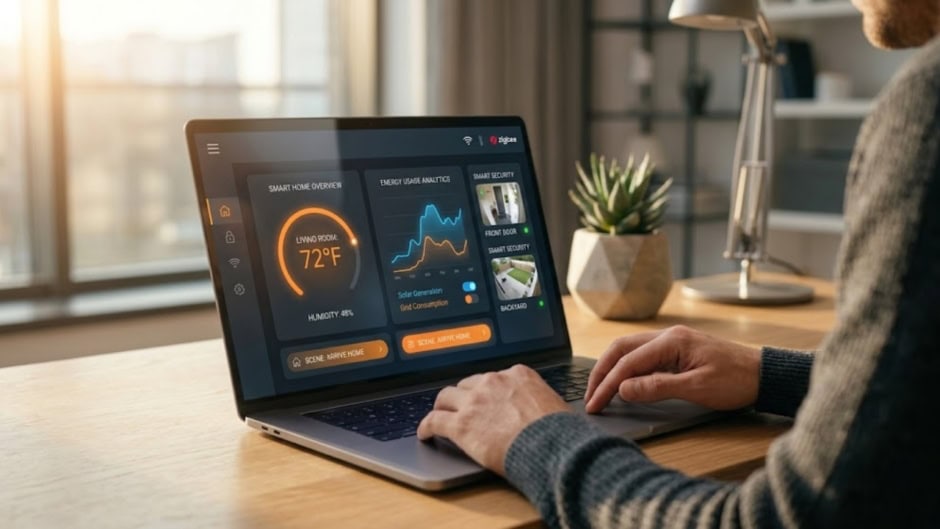
The global smart home market is on track to reach $180.12 billion in 2026, up from $147.52 billion in 2025, according to Fortune Business Insights. The numbers look healthy. The products do not.
Hundreds of smart home devices have stopped working in recent years, not because of hardware failure, but because the companies behind them shut down their cloud servers. When the server goes, the device goes with it. Users who paid $50 to $100 for a connected light switch, thermostat, or lock suddenly own an expensive piece of plastic.
Why the Cloud-First Model Is Failing
This is the structural crack running through the smart home industry right now. Maintaining cloud servers, security updates, and customer support for low-cost hardware requires margins that most startups cannot sustain. When funding runs out, the service disappears, and so does every device tied to it.
Privacy is accelerating the breakdown. Industry reports from 2026 consistently rank privacy and security as the top barriers to smart home adoption. Users are increasingly reluctant to send every movement, temperature setting, and door unlock event to an external server they do not control and may not trust.
The fragmentation of standards has made things worse. Startups like Matter, Zigbee, and Z-Wave all compete for dominance, while Amazon, Google, and Apple each push closed ecosystems that lock users in and lock competitors out. Devices that work with one platform often fail to communicate with another, and users who switch ecosystems sometimes lose access to products they already own.
Local-First Is Gaining Ground
A counter-movement is now gaining traction. Platforms like Home Assistant let users run smart home automation entirely on local hardware, with no cloud dependency at all. Two million households now use Home Assistant globally, despite a steep learning curve that still excludes most non-technical users. That gap between demand for local control and accessible products is where the next opportunity sits.
In Pakistan, smart home adoption is still early, but the underlying dynamics are identical. Local internet reliability issues, privacy concerns, and tight household budgets all push against cloud-dependent products. Pakistani consumers who invest in smart home technology need solutions that work without a stable cloud connection and do not disappear when a startup in San Francisco runs out of runway.
As the experts and moguls suggest, the market is shedding a broken model and looking for a replacement. The companies that build for local control, transparent data practices, and hardware that works indefinitely will capture what comes next. Those that rely on subscription gates and server-dependent features will keep contributing to the graveyard.