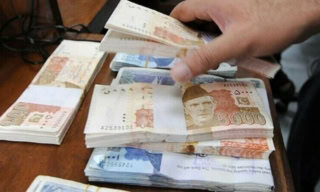
The Ministry of Information Technology and Telecommunication (MoITT) wants a massive budget hike. Officials have officially proposed a Rs. 71.84 billion allocation for 20 development projects under the Public Sector Development Programme (PSDP) for the upcoming 2026-27 fiscal year.
Consequently, this proposed amount represents a massive threefold increase. For comparison, the government earmarked only Rs. 22.227 billion for the current fiscal year. The MoITT plans to fund both ongoing work and brand-new initiatives.
Overview of the proposed PSDP 2026-27 portfolio:
| Project Type | Number of Schemes | Proposed Allocation |
| Ongoing Projects | 12 | Rs. 32.13 billion |
| New Initiatives | 8 | Rs. 39.71 billion |
| Total | 20 | Rs. 71.84 billion |
Among the executing agencies, the MoITT itself demands the largest share. The ministry proposed Rs. 37.79 billion for five distinct projects. Furthermore, this includes two massive new initiatives worth Rs. 33.8 billion.
Meanwhile, the Pakistan Software Export Board (PSEB) proposed Rs. 24.39 billion. This entire amount targets seven ongoing projects. Interestingly, the PSEB pitched absolutely no new projects for the upcoming budget.
Several other key agencies also submitted their funding requests for the upcoming year:
| Executing Agency | Proposed Budget | Project Details |
| NTISB | Rs. 3.24 billion | 1 ongoing project |
| IGNITE | Rs. 3.00 billion | 1 new initiative |
| NITB | Rs. 743 million | 3 projects |
The Tale of Two IT Parks
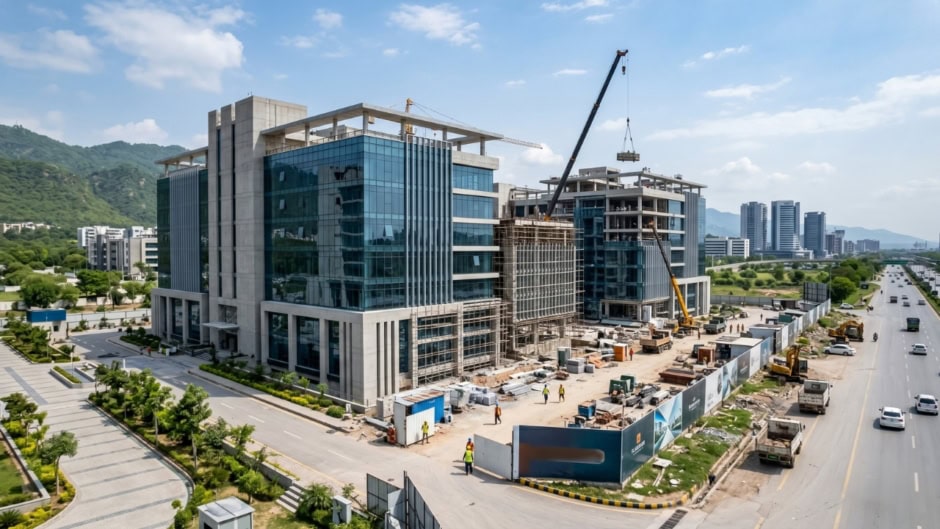
Currently, the flagship IT Park project in Islamabad shows excellent progress. The project has reached 72% physical completion. Furthermore, it boasts over 62% financial utilisation. So far, the government has spent Rs. 14.5 billion against the total project cost of Rs. 23.3 billion. Therefore, officials have demanded Rs. 6.730 billion for the next fiscal year. Once completed, this facility will significantly boost IT exports. Officials expect it to generate over 5,000 direct and indirect jobs.
However, the Karachi IT Park paints a very different picture. Progress remains painfully slow. Physical progress stands at just 10%. Similarly, financial progress trails at a mere 5%. The estimated cost for this project is Rs. 31.2 billion. Consequently, officials proposed only Rs. 11.500 million in the upcoming PSDP. Ultimately, this project aims to establish a 111,000 square metre technology facility. It will directly support SMEs, startups, and technology workers in the city.
MoITT Fuelling Startups & Semiconductors
The government is actively scaling up funding across Pakistan. To support the startup and venture ecosystem, officials proposed Rs. 1.802 billion.
Currently, the Pakistan Startup Fund has operationalised its advisory structure. It has also finalised its grant disbursement mechanism. The fund is already putting applications under due diligence. Parallel to this, Bridge Start Pakistan is building strategic partnerships. This program works closely with incubators and accelerators to strengthen the national innovation pipeline.
Separately, the MoITT proposed an additional Rs. 1.017 billion. This specific fund will directly drive the National Semiconductor HR development programme.
A Push for Better Connectivity by SCO
The Special Communications Organisation (SCO) also laid out its expansion plans. The agency sought Rs. 2.67 billion for four distinct projects. This total includes Rs. 298.75 million for one ongoing project and Rs. 2.371 billion for three new initiatives.
According to official documents, the SCO is focusing on the following four areas:
- Cellular Expansion Phase (2024-2027):
This project carries an estimated cost of Rs. 1.997 billion. Currently, physical progress has reached about 40%. Meanwhile, financial utilisation stands near 19%. The SCO projected its FY27 demand at nearly Rs. 298.9 million.
- Unserved and Underserved Areas (2026-2029):
This major new initiative costs Rs. 2.5 billion. The SCO plans to install 32 new cellular sites. This project will expand service availability in key tourist and remote locations.
- New Convergent Billing System (2025-2028):
This system carries an estimated cost of Rs. 1.888 billion. It aims to enable unified billing across cellular, WLL, LDI, cloud, and FTTH services. Ultimately, it will support up to four million subscribers.
- Hybrid Power Solution (2024-2028):
Valued at Rs. 870 million, this project will reduce overall operational expenditure. More importantly, it will ensure uninterrupted telecom services in far-flung areas.