
Bitcoin (BTC) has returned to a critical long-term support level after falling to a four-month low, reigniting debate among traders over whether the world’s largest cryptocurrency is nearing a rebound or facing further downside.
According to TradingView data, Bitcoin has revisited its 200-week simple moving average (SMA) for the first time since October 2023. The indicator, currently positioned near $61,626, is widely regarded as one of the most important long-term trend lines in Bitcoin’s market history.
During the 2022 bear market, the 200-week SMA acted as a major resistance level before Bitcoin eventually regained bullish momentum. Its latest retest has drawn significant attention from analysts monitoring historical market patterns.
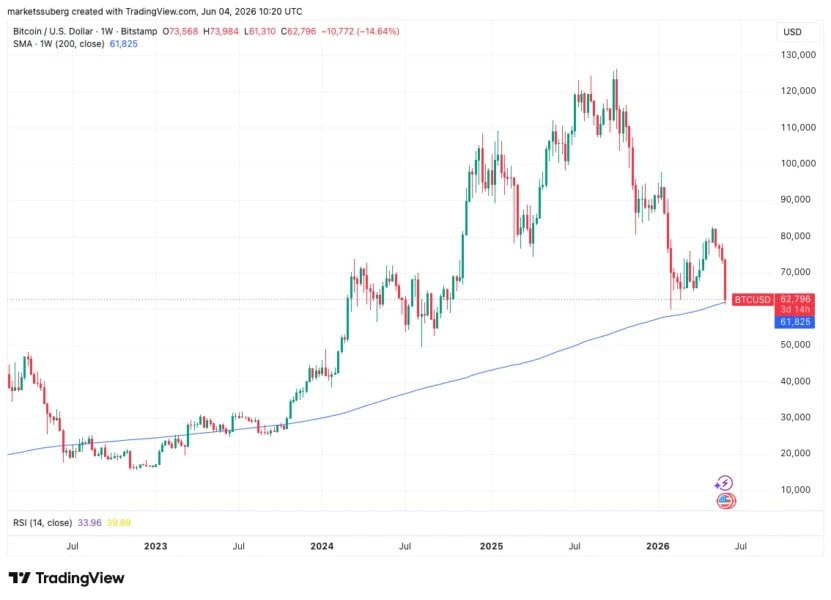
Crypto analyst CollinTalksCrypto described the return to the 200-week SMA as a “key milestone,” noting that Bitcoin may have a reasonable chance of bouncing after its recent sharp decline. However, he cautioned that short-term price direction remains uncertain.
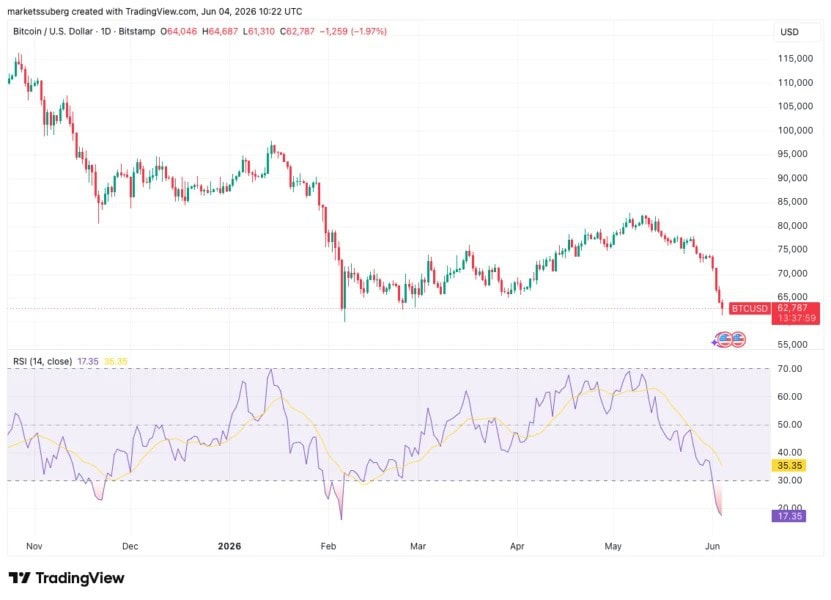
The latest drop has also pushed Bitcoin’s Relative Strength Index (RSI) into deeply oversold territory. On the daily chart, RSI fell to approximately 17.35, one of its lowest readings since 2020 and comparable to levels seen during previous major market corrections.
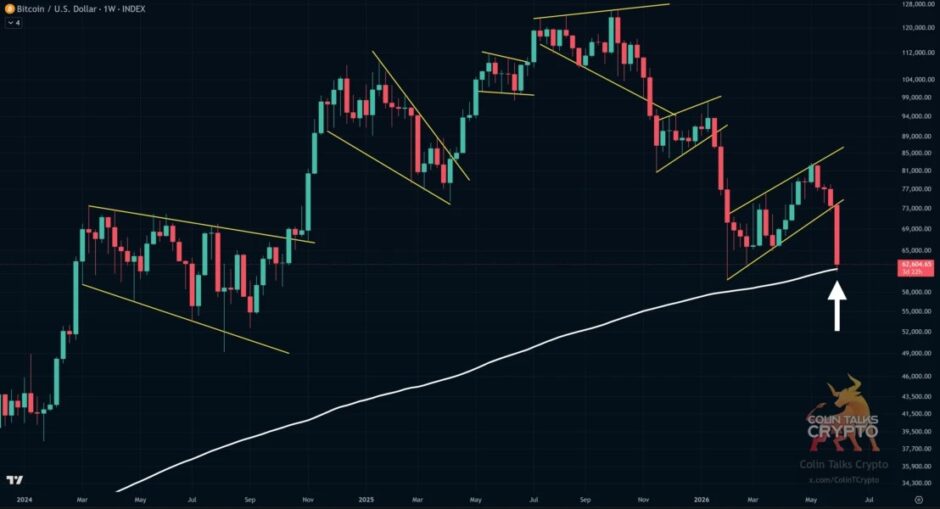
Several market observers argue that such extreme oversold conditions could present accumulation opportunities for long-term investors. Crypto analyst Michaël van de Poppe suggested that the combination of the oversold RSI and the retest of the 200-week SMA could support a recovery if broader market conditions improve.
Despite the optimistic outlook from some analysts, concerns remain about potential downside risks. Van de Poppe noted that continued weakness in market sentiment and broader crypto-related factors could push Bitcoin below the $60,000 mark if selling pressure persists.
With Bitcoin now testing one of its most historically significant support levels, traders and investors will be closely watching whether the cryptocurrency can replicate previous rebounds from the 200-week moving average or extend its current correction.