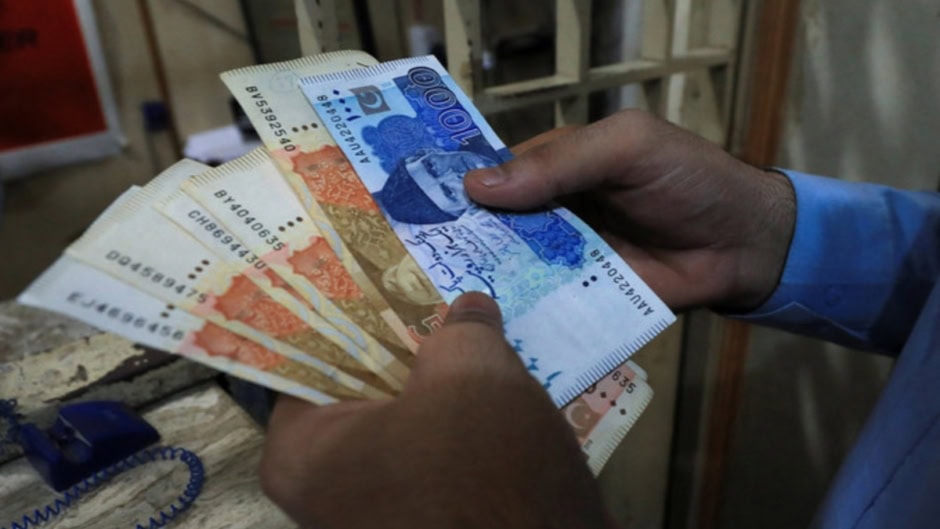
The federal government borrowed Rs3.5 trillion from commercial banks in the first 11 months of fiscal year 2026, State Bank of Pakistan (SBP) data revealed this week.
The borrowing has continued despite International Monetary Fund (IMF) pressure on Islamabad to reduce public expenditure and create more space for private-sector credit.
Financial sector sources warn the figure will rise further as June closes out the fiscal year and the government meets outstanding payment obligations.
Private sector crowded out
Commercial banks extended just Rs986 billion to the private sector during the same 11-month period, compared with the Rs3.5 trillion in borrowings of the government.
The disparity underscores a persistent crowding-out problem that economists say undermines the government’s stated goal of accelerating private-sector-led economic growth.
Credit to small and medium enterprises and non-bank financial institutions recorded a net repayment of Rs362 billion, against fresh borrowings of Rs423 billion in the same period last year.
Revenue shortfall and the borrowing compulsion
Total revenue collection reached Rs11.232 trillion in the first 11 months of FY26, falling short of the revised period target of Rs11.257 trillion by a narrow margin.
The shortfall is being partly offset by higher petroleum levy receipts, which are not shared with provinces and are easier to collect than broadening the formal tax base.
A senior banker described June as the month when all pending dues are settled and vast liquidity is required, leaving the government with no alternative but to borrow more from banks.
Banks profit; IMF notes surplus
For commercial banks, government borrowing provides a risk-free source of windfall profits that has persisted for several consecutive fiscal years without interruption.
The government borrowed Rs5.434 trillion from banks in FY25, down from Rs8.519 trillion in FY24, indicating that room for further borrowing remains relative to those peak years.
The State Bank reduced the cash reserve requirement from 6 to 5 percent, effective 30 January, to encourage greater bank lending to the private sector and SMEs.
However, private businesses continued to draw primarily on short-term working capital facilities rather than long-term investment financing, limiting the policy measure’s broader economic impact.
The third review of IMF under the Extended Arrangement, issued on 14 May, noted that the end-December primary balance target was met with a comfortable margin by the government.
A primary surplus of Rs4.1 trillion, equivalent to 3.2 percent of GDP, was recorded in the first half of FY26, exceeding the adjusted programme target of Rs3.3 trillion, or 2.5 percent of GDP.
The Fund attributed the surplus mainly to expenditure compression, suggesting the government has restrained some spending while continuing to rely heavily on bank borrowing for cash needs.