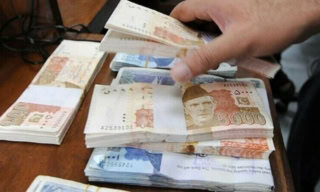
Pakistan is projected to spend nearly Rs. 45 trillion on interest payments over the next five fiscal years, highlighting the growing burden of public debt on the country’s finances and fiscal planning.
According to official budget documents, debt servicing costs are expected to remain one of the largest components of federal expenditure, consuming a substantial share of government revenues in the coming years.
For FY2026-27, interest payments are estimated at Rs. 7.824 trillion. The annual debt servicing bill is projected to rise steadily to Rs. 8.273 trillion in FY2027-28, Rs. 8.681 trillion in FY2028-29, and Rs. 9.365 trillion in FY2029-30.
By FY2030-31, annual interest payments are expected to exceed Rs. 10 trillion for the first time, reaching a record Rs. 10.322 trillion.
The cumulative cost of debt servicing over the five-year period is estimated at approximately Rs. 44.5 trillion, reflecting the increasing pressure of both domestic and external borrowing obligations.
Budget documents indicate that the government plans to finance these payments through a combination of tax and non-tax revenues. Analysts note that rising debt servicing costs continue to limit fiscal space available for development spending, infrastructure projects, social welfare programs, and public sector investments.
The documents further reveal that Pakistan’s total external debt and liabilities have surpassed $104 billion, while the federal government’s direct external debt stands at more than $82 billion.
Meanwhile, total public debt in local currency terms exceeded Rs. 97 trillion as of March 2026, underscoring the scale of the country’s debt obligations.
Economists emphasize that sustained economic growth, higher exports, improved revenue collection, and prudent fiscal management will be crucial for reducing the long-term debt burden and maintaining fiscal stability.