The government has introduced massive changes to the Finance Bill 2026 to reduce the financial burden on consumers. Following strong recommendations from the National Assembly (NA) Standing Committee on Finance, authorities have approved significant tax reliefs and industrial tax restructurings.
Most importantly, the government has decided to reduce penalties and prosecution regarding digital non-compliance.
Installment Plans for Mobile Taxes & Huge Relief for EVs
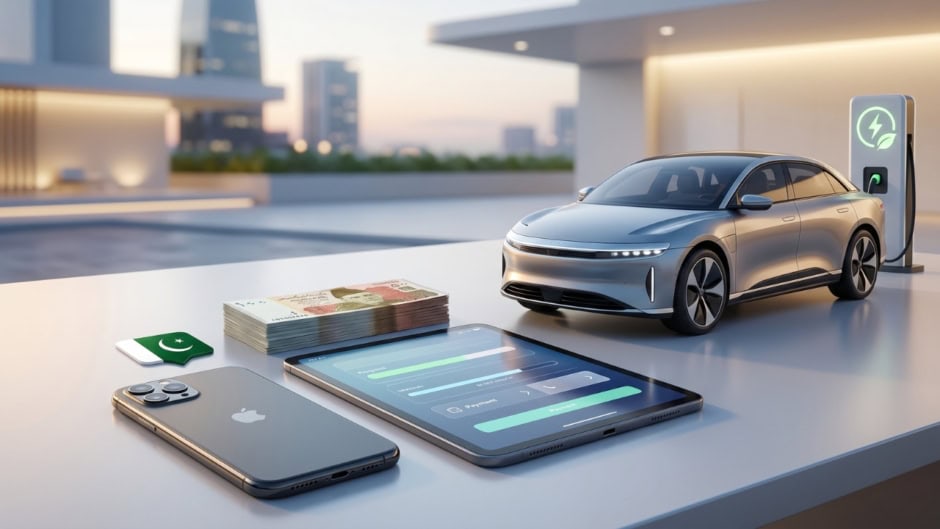
Individuals can now pay heavy taxes on imported mobile phones in easy installments. This new provision applies to devices registered through the Device Identification, Registration and Blocking System (DIRBS) of the Pakistan Telecommunication Authority (PTA).
However, there is a strict condition attached to this relief. You must pay all installments in full before the end of the financial year in which you import the device.
Additionally, lawmakers have proposed a 0% excise duty on electric cars and electric SUVs. This exemption applies to electric vehicles imported in Completely Built Up (CBU) condition. To qualify, the vehicle’s value must not exceed $75,000, as determined under Section 25 of the Customs Act, 1969.
Conversely, the government will impose massive taxes on higher-capacity vehicles. An 86% special excise duty will apply to imported motor cars, SUVs, station wagons, 4-wheeler EVs, 4×4 double cabins, and racing cars. This applies to vehicles with an engine capacity between 2000cc and 3000cc. Auto rickshaws and transport vehicles under heading 87.02 remain excluded from this specific tax bracket.
Meanwhile, vehicles with an engine capacity exceeding 3000cc will face an even higher special duty of 92%.
Industrial Tax Restructuring
Furthermore, the government has adjusted tax policies for the industrial sector. The state will no longer charge excise duty on the import or supply of white spirit and solvent oil. However, companies must purchase these strictly for in-house consumption. Both the importer and the recipient must also hold a valid Form-L license issued by the Department of Explosives.
Next, the government will change how it collects taxes from the steel industry. Authorities will now charge sales tax from steel melters, steel re-rollers, and composite units based on their per-unit electricity consumption.
The Legislative Process of Finance Bill 2026
The National Assembly Standing Committee on Finance finalized these massive federal tax law changes late Monday night at the Parliament House. Throughout Monday, the Federal Board of Revenue (FBR) team remained stationed at the Parliament House to review every single proposal recommended by the committee. Finally, the FBR team also attended a special meeting at the Ministry of Finance to officially review the amendments to the Finance Bill 2026.