
Meta has rolled out a set of new performance metrics that finally let brands see whether their AI chatbots are actually working.
Built into Meta Business Suite, the tools track how custom chatbot agents perform across Messenger and WhatsApp. Their purpose is giving businesses the hard data they have been missing since these agents first launched.
As Meta puts it:
With these metrics, you’ll be able to assess how well your Meta Business Agent is performing, identify opportunities for improvement and make informed decisions to boost customer engagement and sales.
Meta’s AI chatbots for business handle customer queries around the clock, letting brands offer support without paying staff to work overnight. When the company expanded access to these agents last month, it left an obvious gap in its wake, because businesses could deploy a chatbot but had no clear way to measure whether it delivered results. These new metrics were built to close exactly that gap.
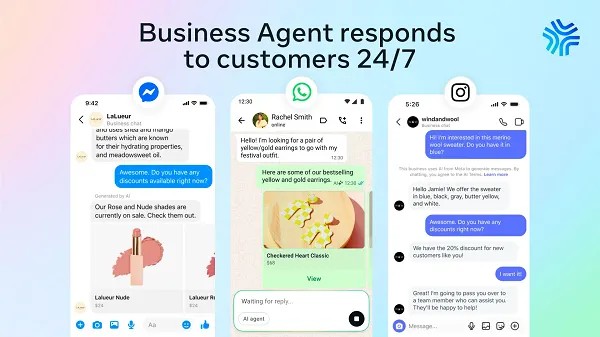
Three key measurements sit at the center of the update. The first, AI conversations, counts every interaction an agent handles. Also, any chat resuming after 24 hours of inactivity is logged as a fresh one. On its own it reveals the sheer workload a chatbot absorbs, yet its real value only emerges once brands read it alongside the metrics that follow.
The second and arguably most commercially important measurement is contact with intent to buy. Instead of simply counting conversations, it tracks how often a chat signals genuine purchase interest. This places the chatbot directly inside the sales funnel. Armed with that insight, brands can sharpen their messaging and interaction flows to convert more casual browsers into paying customers.
Rounding out the trio is containment rate, which answers the question every operations team cares about. More particularly, how often the bot resolves an issue without escalating to a human. A higher containment rate signals that the AI is shouldering more of the support burden, which translates directly into lower costs and faster service for customers.
Taken together, these metrics point toward Meta’s larger strategy, since the company has already signaled it may eventually charge for these agents. That prospect turns early adoption into a genuine advantage, letting brands optimize their chatbots and prove their value well before any pricing kicks in.