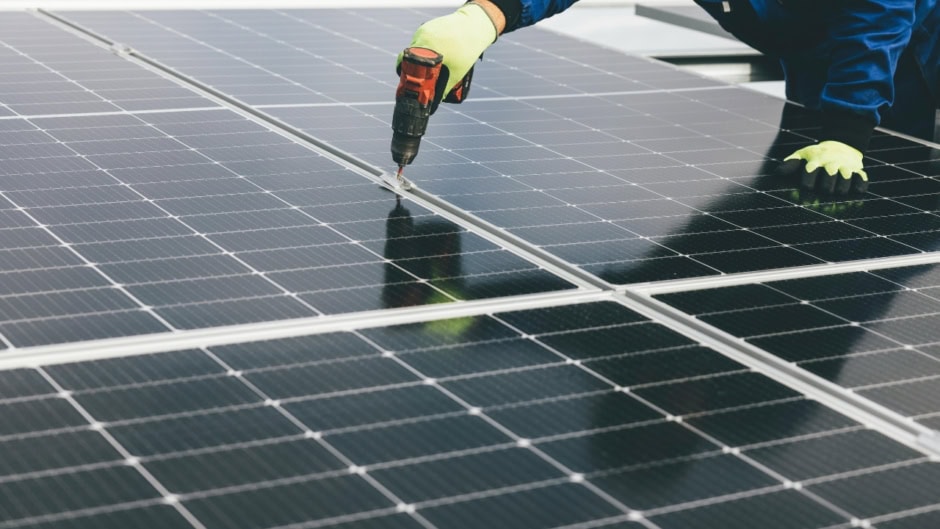
Pakistan has become the third-largest importer of solar panels in the world, according to a new government report that also lays out a long-term roadmap for renewable energy expansion.
The findings are contained in the Climate Prosperity Plan (CPP), prepared jointly by the Ministry of Finance and the Ministry of Climate Change.
The report states that Pakistan imported 17 gigawatts of solar power systems in 2024, twice the volume imported the previous year, placing the country among the top three global importers of solar panels. It attributes the surge in imports to a decline in panel prices over the same period.
The CPP outlines a series of targets for the coming decades. These include achieving a 60 percent share of clean energy by 2030, raising renewable capacity to generate 50 percent of total electricity by 2035, and increasing renewable sources to 95 percent of total electricity generation by 2040.
Additional targets include phasing out or converting 14,000 megawatts of fossil fuel plants by 2035, reducing transmission and distribution losses from 19 percent to 8 percent, and achieving full electricity coverage across the country.
The plan also calls for installing rooftop solar systems in all government secondary schools by 2035 and generating carbon credits equivalent to 200 million tonnes of annual carbon emissions by 2030 for revenue purposes.