The Pakistan Stock Exchange (PSX) took a massive hit this week as the KSE-100 index snapped its winning streak. The market closed at 182,242 points, shedding 3,130 points overall, losing 1.69% of its value week-on-week. Investors panicked over severe geopolitical jitters. Escalating tensions between the US and Iran triggered a sharp sell-off. Furthermore, US President Trump announced an abrupt end to a regional ceasefire. This news sent shockwaves through the trading floor. Consequently, Brent crude prices surged 4.7% to $75.5 per barrel.
A Rollercoaster Trading Week for PSX KSE-100
The market actually started with strong momentum. On Monday, the index gained 2,083 points. However, Tuesday brought consolidation as the market dipped 1,199 points. Then, Wednesday witnessed a total bloodbath. The index plunged by a massive 4,626 points in a single bearish session. Thursday saw mixed trading, declining another 370 points. Finally, Friday offered slight relief. The market gained 982 points to close the week on a positive note.
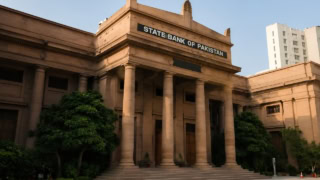
Despite the market crash, Pakistan achieved a major economic milestone. The country recorded its highest-ever yearly remittances. Inflows hit $41.6 billion in FY26, marking a solid 9% year-on-year growth. June 2026 alone brought in $3.5 billion. However, the State Bank of Pakistan (SBP) discontinued incentive payments to banks on home remittances effective this July.
Additionally, gross Roshan Digital Account (RDA) inflows reached $13.365 billion by June. Expats utilized $8.435 billion locally and repatriated $2.093 billion. Meanwhile, total liquid foreign exchange reserves climbed to $24 billion. The SBP holds $18.5 billion of these reserves. Unfortunately, this amount provides an import cover for just 2.9 months.
On the fiscal side, the central government debt continues to balloon. It reached Rs. 82 trillion by May 2026. This represents a 7.8% increase compared to last year.
Sector Outputs & Future Outlook
Industrial output showed mixed signals this week. Cement dispatches jumped 18% in June to 4.33 million tons. Total FY26 cement dispatches grew 8% to 50.58 million tons. Similarly, oil production rose 6% to 70,157 barrels per day. Gas production also improved by 4.2%. Conversely, overall power generation fell 0.9% in May. National Electric Power Regulatory Authority (NEPRA) expects power demand to grow by a mere 1% in CY26.
Furthermore, the Asian Development Bank (ADB) delivered a harsh reality check. The ADB lowered Pakistan’s FY27 GDP growth forecast from 4.5% to 3.7%. They also revised the inflation outlook upwards. Regional conflicts and higher energy prices drove this downgrade.
Finally, the government executed a massive T-bill auction where yields dropped across all tenors. Interestingly, financial reports show a discrepancy in the exact raised amount. Arif Habib Limited reported the government raised Rs. 2,068 billion, while JS Global noted the raised amount as Rs. 1.92 trillion. Looking ahead, Pakistan plans to issue new Eurobond and Sukuk offerings. The country will also launch its first dollar-settled, rupee-linked bonds. Meanwhile, officials continue to negotiate a crucial reciprocal trade agreement with the US in Washington.