Pakistan faces a severe setback in its development financing pipeline. The World Bank has officially dropped four proposed projects. These initiatives carried a massive combined commitment of approximately $1.128 billion. Official documents from the Bank confirm this abrupt halt.
Consequently, the World Bank marked these projects as “dropped” in its records. Furthermore, some of these initiatives failed to advance beyond the concept review stage. This failure occurred even though authorities had them under active preparation.
The Shelved World Bank Projects at a Glance
The World Bank targeted critical sectors across Sindh and Punjab. However, these specific initiatives will no longer move forward.
| Project Name | Dropped Funding | Target Region | Core Objective |
| STAR-WASH-1 | $400 million | Rural Sindh | Increase access to safely managed water, sanitation, and hygiene. |
| Punjab Agri-Food Modernisation | $300 million | Punjab | Boost agricultural productivity, climate resilience, and farmer revenues. |
| Child Stunting Reduction | $273 million | Rural Punjab | Improve dietary diversity for women and children under two. |
| Integrated Flood Resilience | $155 million | 2022 Flood Areas | Rebuild livelihoods, essential services, and flood protections. |
What Did Pakistan Lose?
Each dropped project aimed to resolve critical regional issues. Here is exactly what the World Bank shelved.
1. Sindh Transformational Accelerated Rural Water Supply, Sanitation & Hygiene Services Project (STAR-WASH-1)
This project planned to increase access to safely managed water supply, sanitation, and hygiene services in rural Sindh. Specifically, authorities designed it to use the Multiphase Programmatic Approach (MPA). Its total estimated envelope stood at $2.55 billion. The World Bank planned to finance $1.4 billion through IDA/IBRD funds. Meanwhile, counterpart funding and co-financing from other development partners would cover the remaining $900 million. Additionally, the implementation timeframe stretched from FY26 to FY35. This timeline perfectly coincided with the CPF’s timeframe.
2. Punjab Agri-Food Modernisation & Competitiveness Program
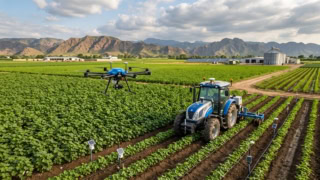
This program aimed to increase agricultural productivity, resilience, and revenues for smallholder farmers. The project targeted specific value chains in Punjab. Furthermore, the overarching ambition sought to sustainably boost agricultural growth. It also aimed to create more and better jobs in Punjab’s agri-food sector. Consequently, this required enhancing the competitive position of Punjab’s agri-food production. It aimed to meet global and domestic market demand while increasing private investments in agribusiness. In the medium term, the program planned to promote stronger inclusion of smallholder farmers into value chains. Simultaneously, it sought to enhance the climate resilience of their farming systems and ensure sustainable management of natural resources. The project heavily prioritized soil health alongside surface and groundwater management.
Health & Climate Initiatives Halted
3. Improving Dietary Diversity & Quality to Address Child Stunting
High child stunting levels affect roughly 40 percent of Pakistani children under the age of five. Therefore, the World Bank developed an integrated cross-sectoral “convergence” approach. This pilot project aimed to improve household dietary diversity and quality in selected rural Punjab villages. It focused heavily on households with children under two years of age, newly married women, and pregnant and lactating women. The convergence approach geographically co-located multiple interventions. These included safely managed water and sanitation, primary health care, nutrition, early childhood development, and social protection. In rural Punjab, authorities were rolling out this approach in selected tehsils. These tehsils belonged to sixteen areas participating in the Punjab Rural Sustainable Water Supply and Sanitation Project (PRSWSSP).
4. Integrated Flood Resilience & Adaptation Project
Finally, this project aimed to improve livelihoods and essential services. Moreover, it sought to enhance flood risk protection in selected communities. These specific communities suffered heavy damage from the devastating 2022 floods.