Pakistan will showcase its robotics ambitions at the Indus RAS Expo in Islamabad next week, and the demonstrations deserve a fair hearing. Yet the wider picture is worth stating honestly, since Pakistan has struggled for years to turn robotics research into robotics products.
The burning question remains: if the infrastructure genuinely exists, what is holding Pakistan back? The National Centre of Robotics and Automation, which co-organizes the expo, has run since 2018 as a consortium of 11 labs across 13 universities, headquartered at NUST’s College of Electrical and Mechanical Engineering with PSDP funding through the Higher Education Commission. That is a serious national commitment, spread across the country rather than hoarded in one city.
NCRA set out to solve local problems and take solutions to market through commercialization and licensing. It built a research fund explicitly to move technology from research into business, and it assembled a committee of Pakistani industrialists to steer labs toward products with real market value. So nobody can claim the goal was merely academic.
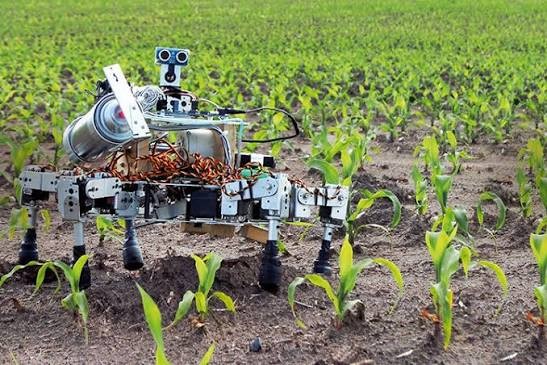
The results, however, have been slow to arrive, with the clearest success sitting at LUMS, where the Agriculture Robotics Laboratory prototyped a precision seed planter with Agriculture University Peshawar, now moving toward commercialization with KP government backing. That is a genuine win, yet it stands largely alone in the public record after eight years.
The reason matters more than the scorecard. Pakistani labs face a brutal chain, since prototypes need manufacturing partners, patient capital, and buyers willing to gamble on local machines over imported ones. Break any link and good engineering dies at the demonstration stage. That is exactly where most robotics work here stalls.
So the expo’s real value is not the spectacle. It is whether industrialists, investors, and ministers walk out having committed to buy something Pakistani rather than admire it.