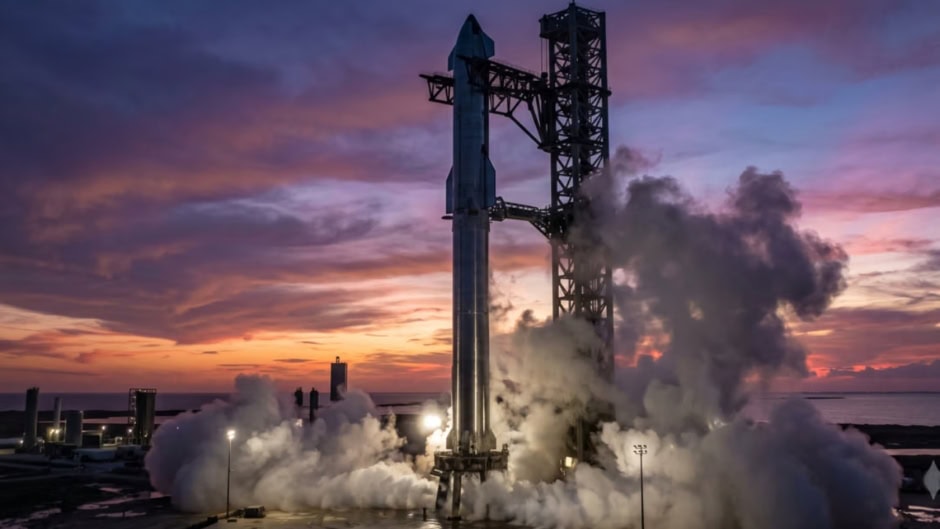
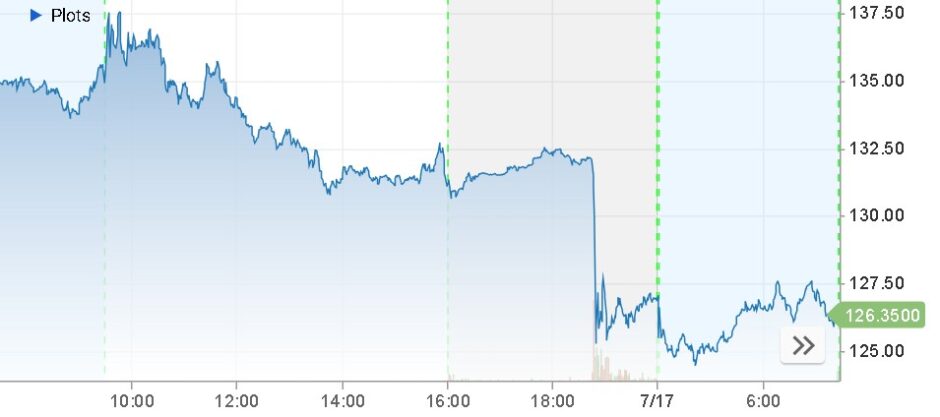
SpaceX has learned what every newly public company learns eventually, since its rockets now move a stock price. The firm aborted Thursday’s Starship launch after some engines failed to ignite, triggering an automatic hold with the vehicle standing ready at Starbase in South Texas. Shares promptly slid more than 3% in after-hours trading.
Elon Musk explained on X that some of the engines didn’t start, which triggered the automatic abort.
To be confident of a good flight, 2 Raptors will be removed & replaced. Most probable launch timing is early next week.
— Elon Musk (@elonmusk) July 17, 2026
The engine shut down right as they were starting to ignite, which is precisely what an abort system exists to do. Musk said two Raptors will be removed and replaced to be confident of a good flight, adding that early next week is the most probable launch timing. That is a repair rather than a redesign, so the delay looks short.
SpaceX closed at $131.11, sinking further below its $135 IPO price and marking a fifth straight losing session. The company raised a record $85.7 billion last month, so every scrub now carries a public scoreboard it never had before.
This would have been the first test flight of Starship V3, carrying 20 next-generation Starlink satellites. A May V3 attempt failed when engines would not reignite for descent, dropping the vehicle into the Gulf of Mexico. The FAA blamed heat effects on propulsion components and faulty engine alarm settings, then cleared flights again on Monday after SpaceX outlined four fixes.
NASA is watching most closely of all. The Artemis programme depends on Starship for crewed moon landings, so every abort compounds a schedule that already slipped.