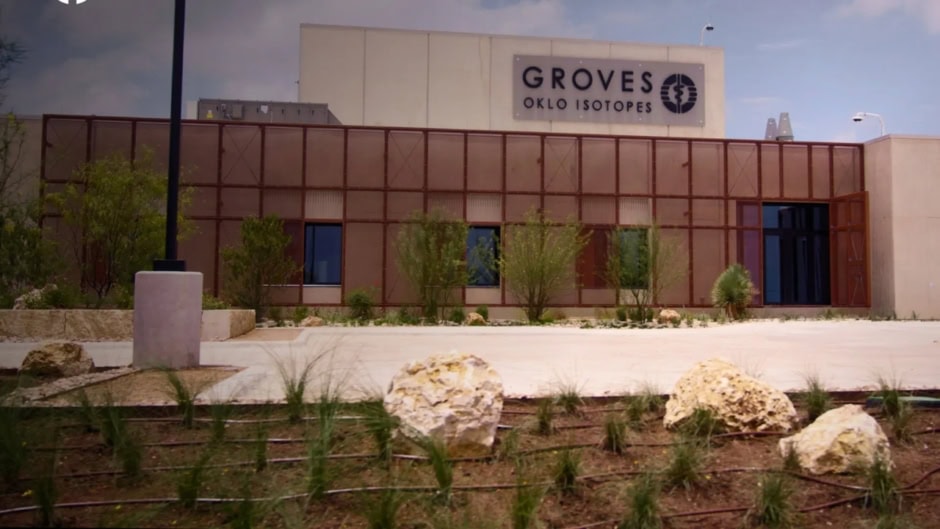
Oklo, a California-based advanced nuclear company, achieved first criticality at its Groves Isotope Test Reactor in Texas on August 6, reaching the milestone less than one year after breaking ground on a completely empty site. The reactor is the first under the US Department of Energy’s Reactor Pilot Program to reach criticality on private land, and its timeline challenges every conventional assumption about how long nuclear projects take.
First criticality means the reactor has established a controlled, self-sustaining nuclear chain reaction. That is the foundational proof point for any nuclear system. In an industry where projects routinely span a decade from approval to operation, Oklo went from greenfield excavation to a functioning chain reaction in months. The company handled engineering, construction, procurement, operating programs, and startup preparation internally, with all components including fuel either manufactured or commercially procured.\

The speed came partly from the DOE’s Reactor Pilot Program structure, which allowed construction, regulatory review, and safety authorization to proceed in parallel rather than sequentially. Traditional nuclear development forces each phase to complete before the next begins, creating timelines that stretch across administrations. The Reactor Pilot Program compressed that sequence, and Groves now serves as the program’s first real-world proof that the approach works.
Groves is not a commercial power reactor. It is a low-power test facility designed to anchor Oklo Isotopes’ domestic isotope production business. Medical imaging, cancer treatment, industrial testing, space applications, and national security all depend on specific radioactive isotopes that the United States currently struggles to produce domestically. Oklo is building the capability to supply those isotopes from American soil rather than relying on aging foreign reactors and fragile international supply chains.

Oklo co-founder and CEO Jacob DeWitte framed the milestone as a new benchmark for the entire program.
“Oklo developed Groves from a greenfield site on private land, completed full-scale civil excavation and construction, manufactured or commercially procured all components, including fuel, and developed its operating programs in-house,” he stated.
“Taken together, we believe these accomplishments establish a new benchmark for the Reactor Pilot Program and set the stage for the future of advanced nuclear deployment at scale,” DeWitte said.
The company views the engineering practices, training programs, and commissioning experience from Groves as directly transferable to future facilities.
Oklo is also developing fast-fission power plants and nuclear fuel recycling technologies alongside the isotope business. The Groves achievement reduces uncertainty and execution risk across all three tracks by proving the company can actually build, commission, and operate nuclear infrastructure within aggressive timelines. Whether that speed translates to commercial-scale power reactors remains an open question, but the isotope test reactor gives Oklo something most nuclear startups lack: operational credibility backed by a functioning chain reaction.