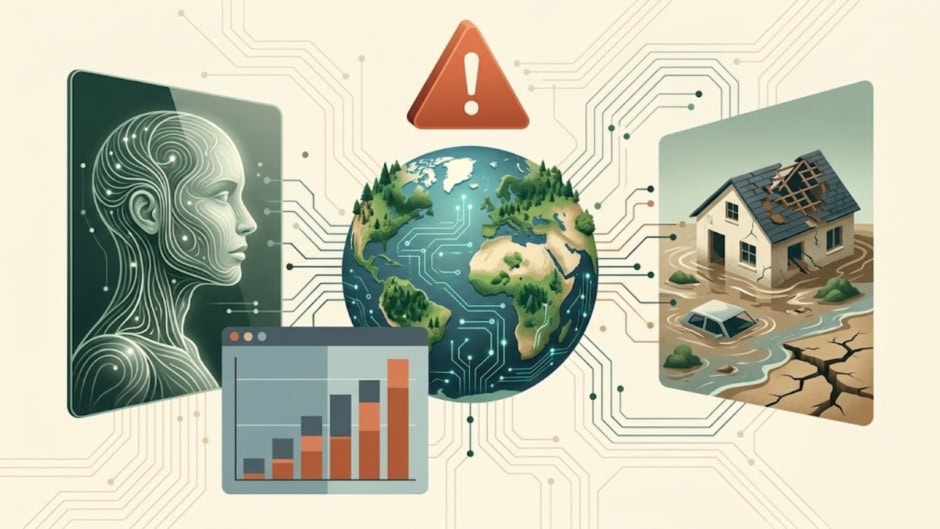
Climate vulnerability places Pakistan among the ten most at-risk countries globally. Since 2010, flood events alone have killed upwards of 4,500 individuals, injured roughly 18,000, and uprooted nearly 40 million people.
Yet, in the immediate aftermath of a crisis, citizens routinely struggle to locate dependable information promptly. Hospital addresses shift unpredictably, weather bulletins arrive too late, and crucial safety protocols remain buried across government web portals that nobody visits during an urgent situation.
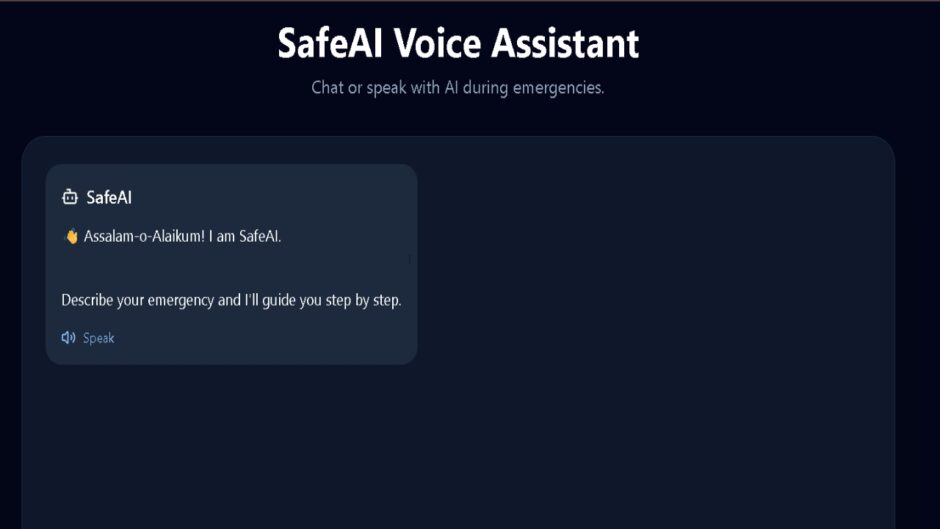
Spotting this critical deficiency, AI Automation Specialist Najeeb Zahra created SafeAI as a direct remedy. The platform is an intelligent disaster-response assistant built specifically with Pakistan’s unique vulnerabilities in mind, consolidating vital crisis data and practical utilities into a single, accessible hub.
How SafeAI Operates in a Crisis
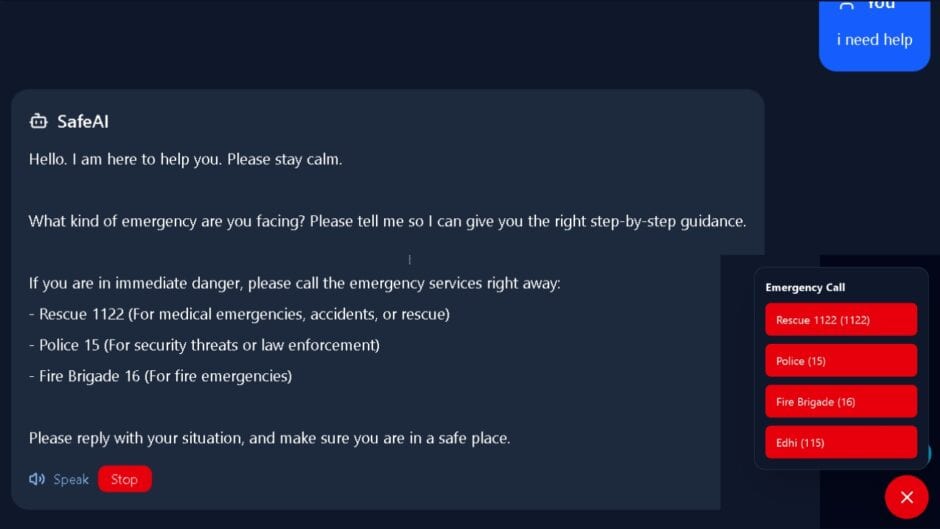
At the heart of the system sits an AI Emergency Assistant driven by Google Gemini technology. Individuals facing crises can pose questions and instantly receive clear, sequential instructions.
“The main purpose of the application is to provide users with essential emergency information and practical tools through a single platform, especially during situations where quick and reliable guidance is needed,” Zahra said, while talking exclusively to TechJuice.
Beyond conversational AI, the platform packs several utilities essential for real-world crises. A hospital finder uses live data to locate the closest medical center. Live meteorological updates deliver current alerts and conditions, while an emergency directory keeps vital phone numbers handy.
Standardized disaster manuals provide pre-drafted steps for earthquakes, floods, and similar emergencies. Additionally, an emergency toolkit features live location sharing so rescuers can track coordinates, battery diagnostics to check remaining phone charge, and a digital compass for orientation when the power grid fails.
The Creation Process
Zahra’s approach to development highlights a mature perspective on leveraging AI to augment human skill without substituting for it. She pins it as:
During the development of SafeAI, I used AI not only for generating code but also as a development assistant for planning, debugging, improving code, understanding implementation approaches, and building different features.
This distinction is vital. While many programmers view AI merely as a shortcut for writing code, Zahra treated his tool as a partner in education and troubleshooting.
“I used AI as a learning and problem-solving partner while making sure I understood and implemented the features myself.”
Consequently, the software displays authentic technical proficiency. Zahra acquired hands-on mastery of React, TypeScript, Tailwind CSS, API connections, GitHub version control, and Vercel hosting, which are industry-standard technologies rather than basic academic exercises. The application is hosted on Vercel, the same infrastructure relied upon by major technology firms.
SafeAI and Pakistani Disaster Management
Historically, Pakistan’s emergency protocols have been reactive, with authorities scrambling only after rivers breach their banks or structures collapse. Technology offers a pathway toward proactive preparedness.
“The idea behind SafeAI was to explore how technology and AI can make emergency information more accessible, organized, and easier to use when people need it most,” Zahra said.
Many state and field experts emphasize that modern solutions, such as real-time flood prediction, hydrological modeling, artificial intelligence tools, satellite telemetry, and unified data networks, are indispensable for modern crisis response.
SafeAI mirrors this exact evolution by pulling fragmented state data into one portal, deploying instant AI guidance, and operating smoothly on mobile devices that Pakistanis carry everywhere.
The Learning Curves
Moreover, it was also a journey for the developer herself to integrate AI to real-world problems, in a country where opportunities are already limited, especially for women.
“Through this project, I gained practical experience with React, TypeScript, Tailwind CSS, API Integration, GitHub, Vercel Deployment, and AI Integration… More importantly, the project helped me understand how AI can be combined with web technologies to create solutions focused on real-world problems.”
Real-world challenges require utilities that perform under duress. When floods hit, users cannot wait for slow cloud synchronization. During such natural disasters, information must load over sluggish 2G networks. SafeAI has engineered around these very limitations.
Presently functioning as a web-based app hosted via Vercel, SafeAI’s next hurdle is widespread adoption. State institutions acknowledge the necessity of upgraded emergency tech, creating a clear opening for SafeAI to integrate directly into Pakistan’s official disaster relief framework, despite not having a widespread network of their own.
Which is why achieving this demands institutional partnerships, administrative integration, and continuous data updates. Success hinges on ensuring that emergency services adopt the platform and maintain accurate, real-time information feeds. It remains to be seen how the institutes use raw talent such as Zahra and SafeAI, coming out of Pakistan, for the betterment of Pakistan.
In the meanwhile, you can try SafeAI here.