Josh Mackanic spent a decade as an engineer at Pacific Gas and Electric before a costly excavation mistake changed his career trajectory entirely. Since a construction job shut down after crews discovered an unknown pipe during excavation, Mackanic spent three days determining ownership and safety details, a delay that ultimately cost $60,000.
That frustrating experience revealed a deeper industry problem. Even though PG&E ranks among America’s largest utility companies, the company only maintains visibility into its own electric and gas lines. Because pipes carrying water or sewage belong to entirely different companies, this fragmented ownership creates dangerous blind spots. Consequently, roughly 200,000 utility strikes occur annually across the United States.
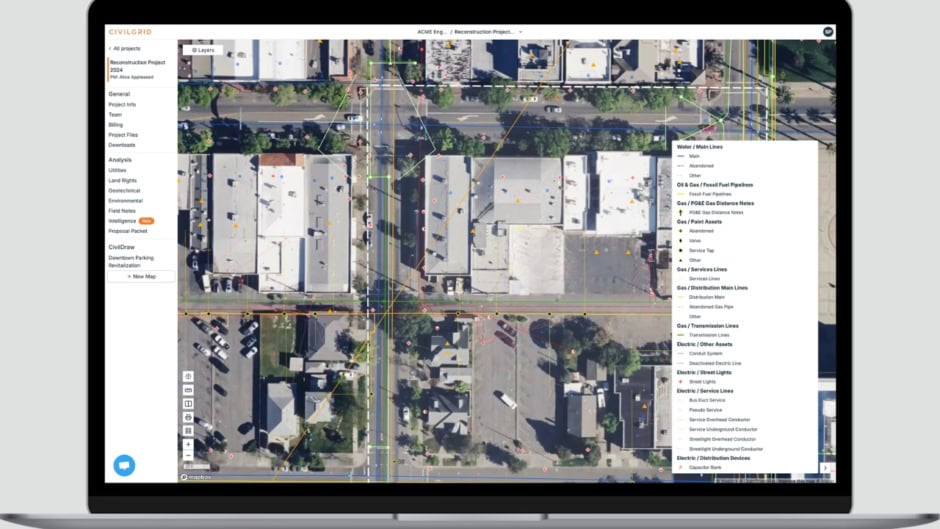
Mackanic founded CivilGrid in 2020 to address this exact problem. The startup aggregates scattered data covering utility assets, property ownership, and environmental regulations into what Mackanic calls “Google Maps for what’s underground.” CivilGrid then sells platform access to governments, civil engineering firms, and utility companies, including his former employer PG&E.
“I had a job that got shut down because a pipe was in the excavation [that] we didn’t know about. Fortunately, we saw it before we impacted it,” Mackanic said. “But then there was this three-day ordeal of running around [asking] like: ‘Whose pipe is this? Can we tap it? Can we not? What’s in it?’”
CivilGrid just raised $26 million in Series A funding led by Spark Capital, with additional backing from Afore, A*, Ford Street Ventures, and SNR. Since Energy Impact Partners also participated, and that fund counts numerous utility companies as limited partners, the investment signals meaningful industry confidence in CivilGrid’s approach.
PG&E has already validated CivilGrid’s impact through internal analysis. Christine Cowsert, senior vice president of enterprise business and technology modernization at PG&E, explained that smarter planning tools help teams identify risks earlier while building more efficiently. A case study conducted by PG&E identified $60 million in avoidable paving costs across 1,600 planned gas distribution projects after implementing CivilGrid’s platform.
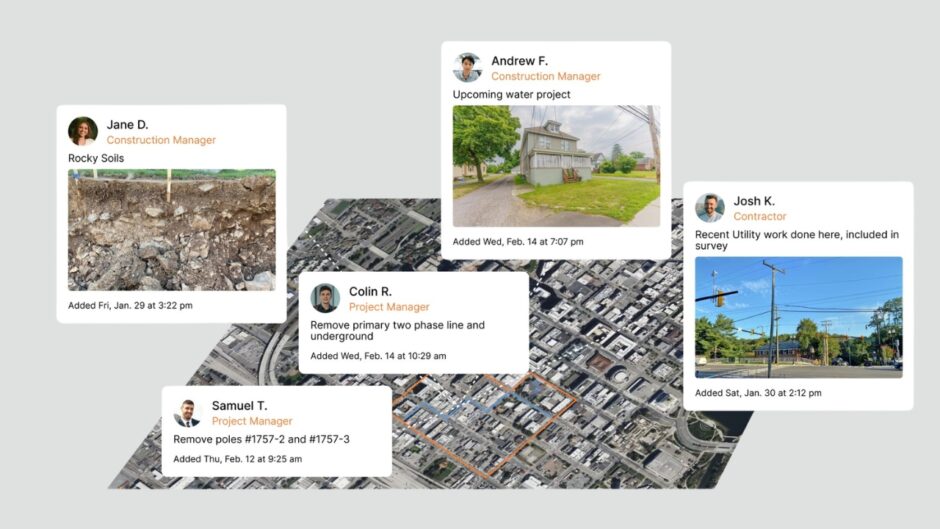
Mackanic envisions expanding CivilGrid’s capabilities considerably beyond basic data access. Because the platform has already captured core users making early infrastructure decisions, he believes automation could soon extend into permit filing and pipe placement recommendations. Rather than simply providing data, CivilGrid could eventually guide engineers through complete regulatory workflows from planning through construction approval.
Mackanic left PG&E believing this problem required an outside perspective rather than internal utility solutions, since utilities historically operate with lean budgets and limited appetite for additional costs.
“One of the reasons I left PG&E to start CivilGrid was because I felt like this was a problem that was going to be better solved from the outside in than the inside out, and not because there’s [a] lack of awareness of the problem or even interest in solving it,” he said. “Utilities, they run relatively lean, right? Nobody wants to pay more for their gas bill than they have to.”
His engineering background, though originally aimed toward aerospace, ultimately led him toward solving America’s underground infrastructure visibility crisis instead.