
Bitcoin came under renewed selling pressure on Tuesday as rising tensions in the Middle East weighed on global risk assets and pushed crude oil prices sharply higher.
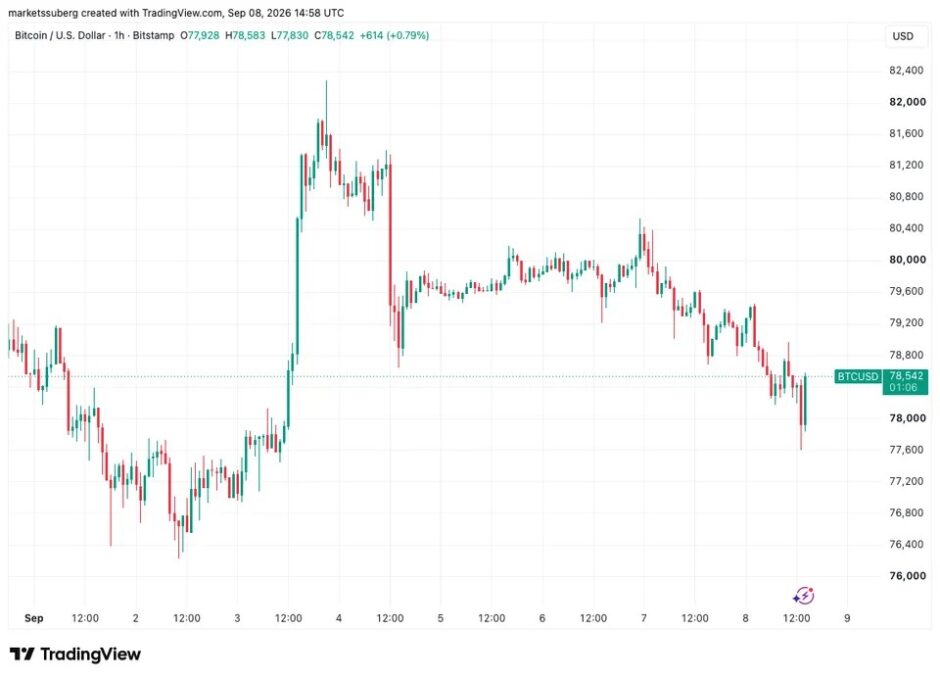
Bitcoin (BTC) fell below $78,000 during the opening of Wall Street trading, reaching an intraday low of around $77,600 before recovering slightly. The decline marked Bitcoin’s lowest level since September 3.
The broader financial market also came under pressure. The S&P 500 and Nasdaq Composite were both trading lower as investors reacted to renewed geopolitical concerns following reported Houthi strikes on Saudi Arabian cities and energy infrastructure.
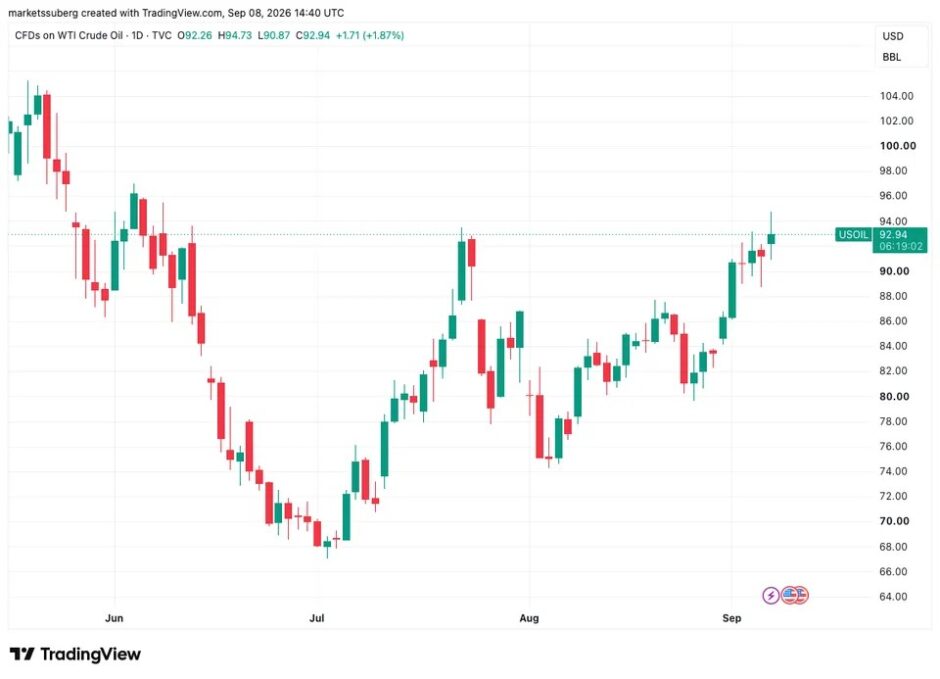
Oil prices recorded a stronger reaction to the escalating tensions. US West Texas Intermediate (WTI) crude climbed toward $95 per barrel, reaching its highest level since June 8. Brent crude also moved toward the $100 mark, hitting levels not seen since July 24.
The sharp increase in oil prices has raised concerns about renewed inflationary pressure. Higher energy costs could further influence expectations surrounding US monetary policy, adding another source of uncertainty for risk assets such as Bitcoin.
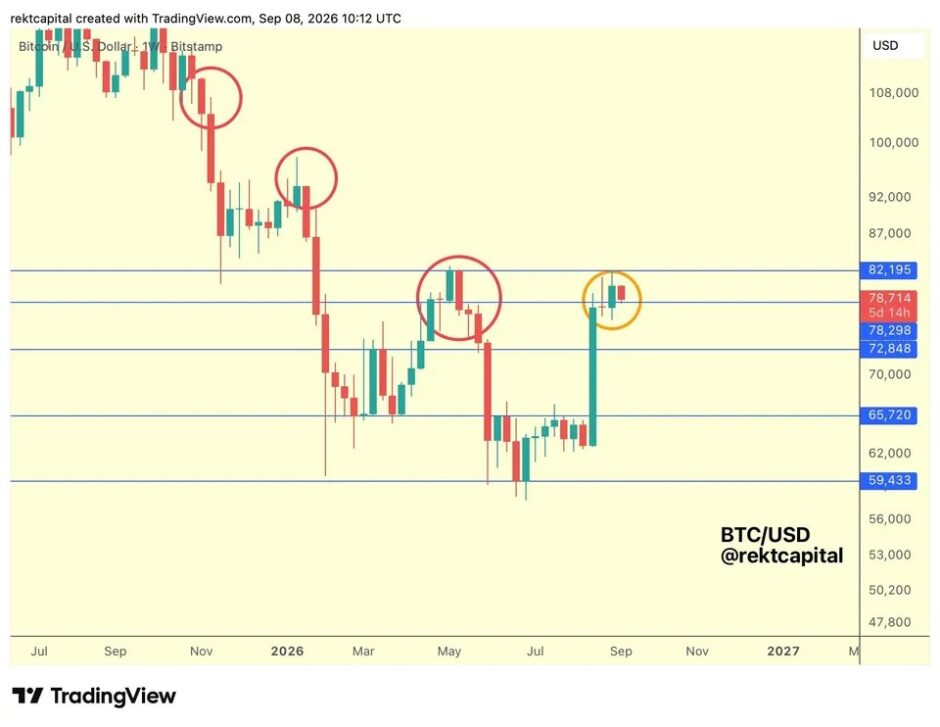
Market analysts are closely watching the $78,300 level, which has emerged as a key support zone for Bitcoin.
Trader and analyst Rekt Capital compared the current price action with Bitcoin’s failed breakout in May. During that period, BTC climbed to approximately $82,800 before reversing and later consolidating around $78,300.
Bitcoin subsequently broke below the support area and eventually fell toward approximately $57,000.
According to the analyst, the current retest of the $78,300 region could become an important test for Bitcoin’s near-term direction. A weekly close below this level followed by a bearish retest could signal a further breakdown.
A sustained failure to defend the support zone could also reinforce the broader bearish trend that has been developing in Bitcoin since late 2025.
Renewed military tensions in the Middle East have increased volatility across global markets, with investors becoming more cautious about riskier assets.
The rise in crude oil prices has added to concerns over inflation and economic stability, while falling US equities have placed additional pressure on cryptocurrencies.
Bitcoin has increasingly traded alongside broader risk assets during periods of heightened market uncertainty. As a result, investors are now monitoring both geopolitical developments and movements in energy markets for potential signals about Bitcoin’s next major move.
For now, the $78,300 support level remains a critical technical area. Whether Bitcoin can regain and hold this level could determine whether the cryptocurrency stabilizes or faces another significant decline.