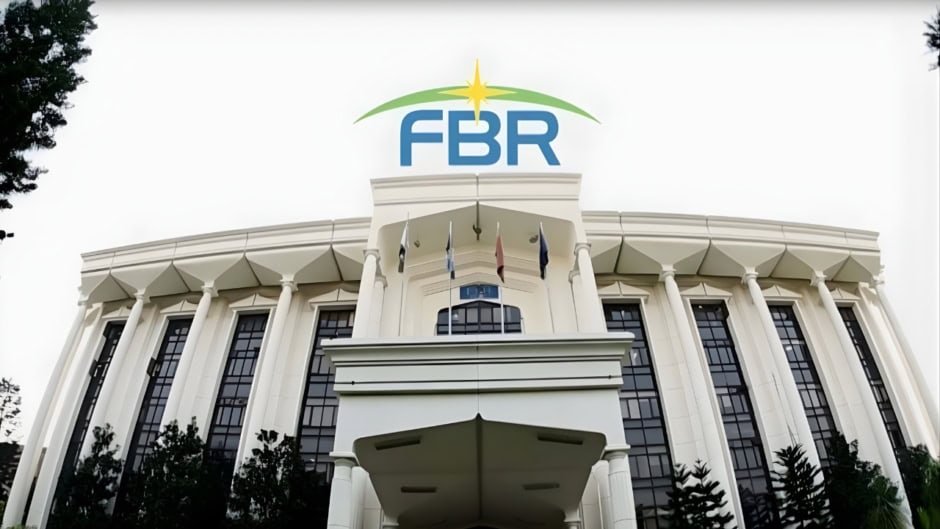
The Federal Board of Revenue (FBR) has overhauled how it monitors non-financial businesses and professions for money laundering and terrorism financing risks, amending its 2020 regulations to extend enforcement powers to officers across Pakistan’s tax offices.
Designated Non-Financial Businesses and Professions (DNFBPs), a category that includes real estate agents, jewellers, lawyers, accountants, and other professionals who handle large transactions outside the formal banking sector have long been considered vulnerable to exploitation for illicit financial flows. The FBR’s revised framework is aimed at closing gaps in oversight of this sector.
Under the new structure, the Director General of DNFBPs now holds nationwide monitoring authority, with directors, additional directors, deputy and assistant directors, and inspectors granted powers within newly defined regional jurisdictions. This marks a shift from a more centralized approach, pushing enforcement responsibility down to officers stationed closer to where DNFBP activity actually occurs.
The FBR has divided the country into five monitoring zones. The Islamabad zone covers the Large Taxpayers Office (LTO) Islamabad along with Regional Tax Offices (RTOs) in Rawalpindi, Islamabad, and Gilgit-Baltistan. Karachi’s zone brings together LTO Karachi, corporate tax offices, and the city’s RTOs.
The Lahore zone is the most expansive, spanning Lahore, Sialkot, Gujranwala, Faisalabad, Sargodha, Multan, Sahiwal, and Bahawalpur. Quetta’s jurisdiction is limited to cases under RTO Quetta, while Khyber Pakhtunkhwa’s covers RTOs in Peshawar and Abbottabad.
Beyond assigning regional jurisdictions, the FBR has also distributed specific supervisory responsibilities among officer ranks, and has reserved the right to assign any officer a particular charge on an as-needed basis, giving the tax authority flexibility to redeploy oversight resources where risks emerge.
The move comes as Pakistan continues efforts to reinforce its anti-money laundering and counter-terror financing controls, a priority that has drawn sustained international scrutiny in recent years.