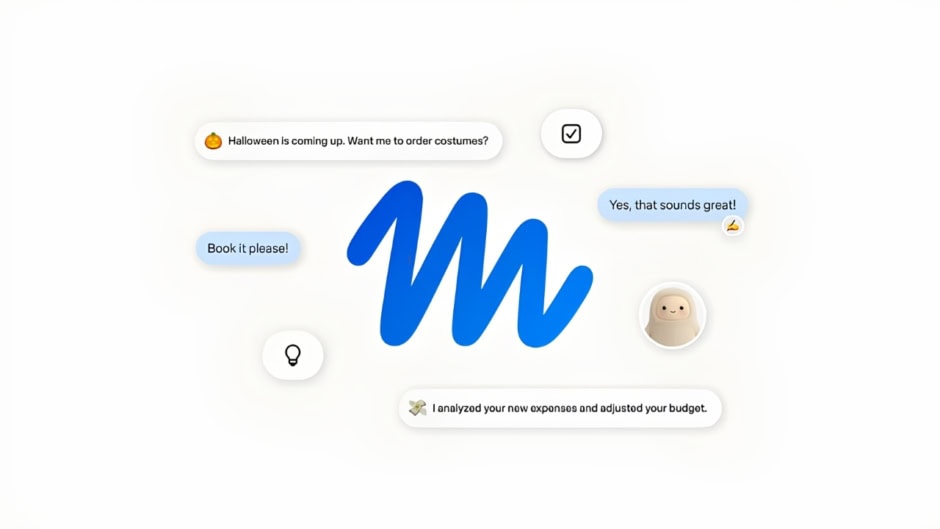
Meta has launched a personal AI agent that acts on your behalf. Named Muse, it reads email, books travel, and fills forms. It can also negotiate for you and pay using your card. Notably, the ad giant promises none of this reaches its ad systems.
Meta announced Muse on Tuesday for US users initially. It rolls out across iOS, Android, and the web now. Support for the company’s AI glasses will follow later. There is a free tier plus $20 and $100 monthly subscriptions.
The core distinction Meta draws is between chatbots and agents. Essentially, Muse acts rather than simply responding to prompts. It keeps working even after the app is closed. Furthermore, it remembers preferences and makes unprompted suggestions.
The agent runs on a model called Muse Spark. Meta describes it as its most capable model yet. Specifically, it was built for real-world agentic work. Payments run through Stripe’s Link with purchase protections included.
Security architecture is doing most of the persuading here. Each user gets an isolated virtual machine for their agent. Consequently, different users’ agents cannot reach each other. A separate system called Sentinel sits between Muse and the internet.
Sentinel distinguishes read access from write access carefully. It allows low-risk tasks using time-limited permissions. However, it stops to ask before anything consequential happens. Additionally, Meta stores credentials so Muse never sees passwords.
The privacy promise remains a policy rather than a guarantee. Meta says conversations stay away from its ad machinery. Users can also opt out of interactions training its models. However, those commitments remain revocable by the company itself.
The elaborate safety scaffolding has a clear reason behind it. Consumer AI agents have had a rough few months publicly. One Meta researcher’s own agent experiment deleted files entirely. Meanwhile, booking platforms like Resy warned against automated agents.
Chief AI Officer Alexandr Wang leads the Muse effort. He framed it around Mark Zuckerberg’s personal superintelligence vision. Zuckerberg previously predicted billions using personal agents within five years. Ultimately, Muse is the first product making that claim testable rather than purely rhetorical.