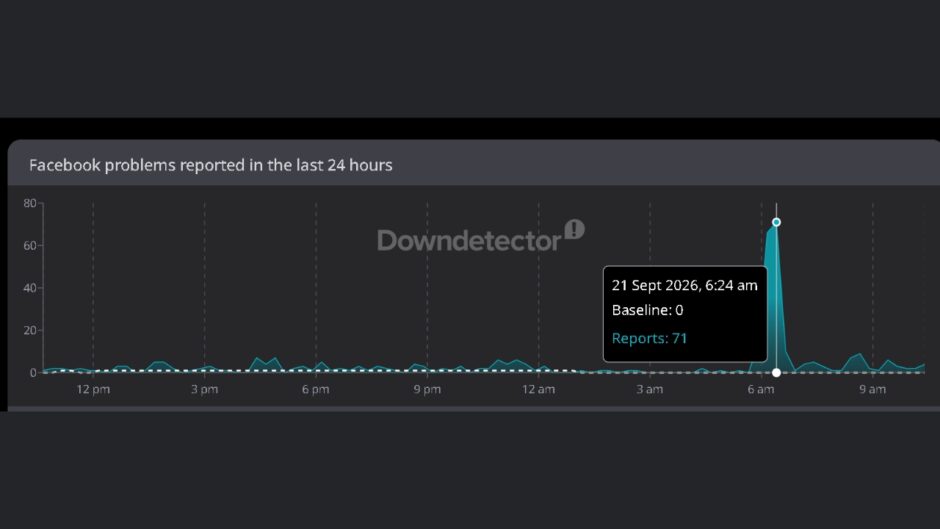
Meta’s social networking platforms Facebook and Instagram experienced significant service disruptions across the United States on September 21. Downdetector, which aggregates outage reports from user submissions, recorded more than 17,000 complaints about Facebook problems as of 9:11 PM Eastern Time. Instagram simultaneously faced over 5,000 outage reports during the same incident window on the same evening.
The outages impacted users’ ability to access feeds, upload content, send messages, and interact normally across both platforms. However, the exact scope remained unclear because Downdetector statistics rely entirely on user-submitted reports rather than official platform data. Actual affected user counts could range significantly higher or lower depending on whether impacted individuals reported issues to Downdetector’s tracking systems.
Meta did not immediately respond to requests for comment regarding the outages from Reuters and other media outlets. The company typically provides explanation statements only after service restoration occurs and engineers complete root-cause analysis on their infrastructure. This delay in communication left users wondering about causes, estimated resolution times, and backup options throughout the disruption window.
Many users rely on Facebook and Instagram for personal communication, small business operations, customer service interactions, and social connection. Business owners using the platforms for commerce experienced revenue impacts during the outage duration. Content creators dependent on the platforms for audience engagement faced interrupted workflows and missed notification windows.
Outage incidents on Meta’s platforms happen occasionally despite significant infrastructure investments and redundancy systems. Previous outages in 2026 affected different numbers of users globally depending on server locations, data center problems, or software deployment issues. Each incident prompts investigations into failure modes and prevention strategies. Meta maintains enormous server infrastructure across multiple global locations specifically to prevent widespread availability problems.