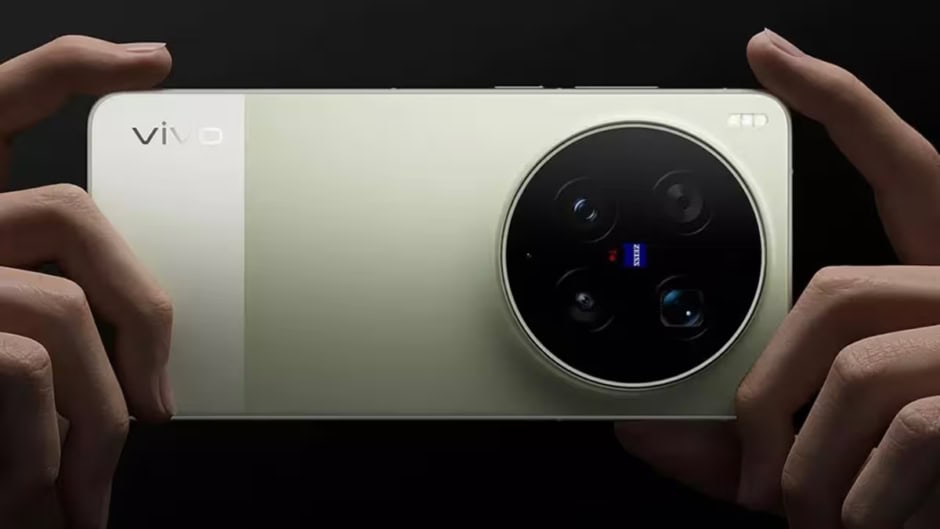
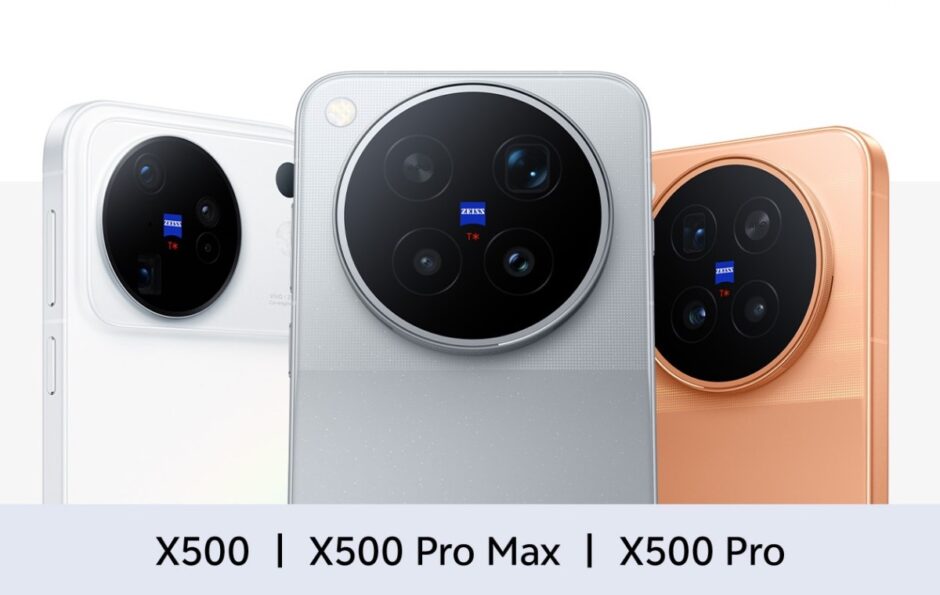
Vivo has officially launched its X500 series in China with three new smartphones. The lineup includes the X500, X500 Pro, and X500 Pro Max. The Pro Max sits at the top of the new series with the strongest hardware.
The X500 Pro and X500 Pro Max are the first phones with MediaTek’s Dimensity 9600 Pro chipset. Meanwhile, the standard X500 uses the Dimensity 9600M. The latter is essentially a rebadged version of last year’s Dimensity 9500.
Cameras remain the main focus of the new X500 lineup. The X500 Pro and Pro Max share a custom 24mm equivalent 50MP main camera. It uses Sony’s LYTIA L910 sensor with a 1/1.28-inch size. The sensor was developed with vivo and also gets Zeiss T* coating. It has a fixed f/1.57 aperture and supports up to 17 EV dynamic range. The Pro Max adds “gimbal-grade” 3-degree OIS for improved image stability.
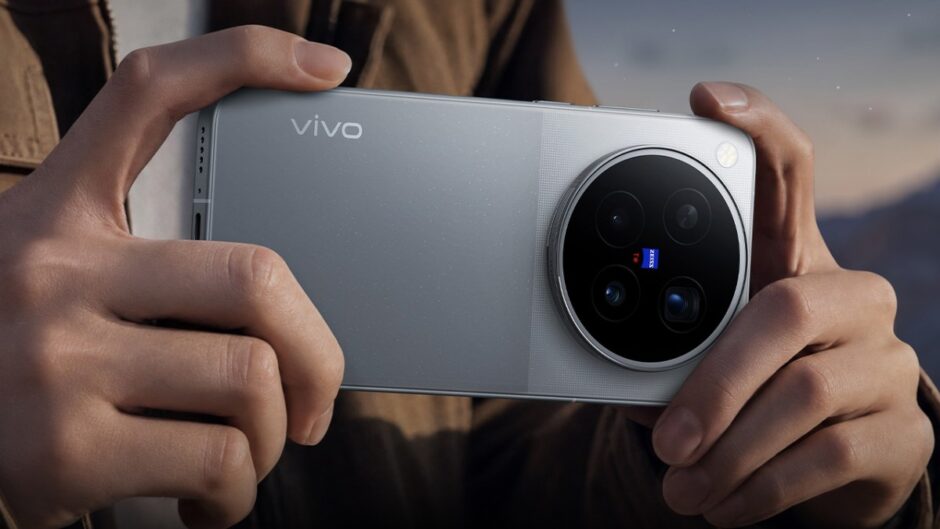
The X500 Pro uses the same main camera but offers 1.5-degree OIS. Both phones also feature dedicated telephoto cameras for long-range shots. However, their telephoto hardware is different. The X500 Pro Max gets an 85mm equivalent 200MP periscope telephoto camera. It uses Samsung’s ISOCELL HP0 sensor with a 1/1.4-inch sensor size. The camera also features CIPA 7.0 pro-grade stabilization.
The X500 Pro instead uses an 85mm equivalent 64MP telephoto camera. It features a custom vivo and Sony LYTIA 610 sensor with a 1/2.0-inch size. Its OIS capabilities match those of the Pro Max. Both Pro models also support the optional 400mm Zeiss Telephoto Extender Gen 2 Ultra. They share a 15mm equivalent 50MP ultrawide camera. This camera uses Samsung’s ISOCELL JN5 sensor with a 1/2.75-inch size.
The standard X500 takes a different approach to its camera setup. It has a 23mm equivalent 50MP main camera using the LYTIA 828 sensor. The sensor measures 1/1.28-inch and is paired with a 72mm equivalent 64MP telephoto.
The X500 also includes a 50MP ultrawide camera. It uses Samsung’s ISOCELL JN1 sensor. This gives the standard model a capable triple-camera setup despite its lower position. Video recording is another major feature across the Pro models. Both X500 Pro phones can record 4K video at 240fps. This enables cinematic slow-motion footage at a high frame rate.
The X500 Pro Max also supports 8K video recording at 30fps. Both Pro models can capture 10-bit video with 422 encoding. They also support ACES, the Academy Color Encoding System, for color management. Display specifications are also shared between the two Pro models. Both feature LTPO AMOLED panels with 2K resolution and a 144Hz refresh rate. The X500 Pro has a smaller 6.36-inch display.
The X500 Pro Max comes with a larger 6.85-inch panel. Both screens are supplied by BOE and use the Q11 display technology. They can reach up to 4,500 nits of peak brightness. The standard X500 sits between the two Pro models in display size. It has a 6.59-inch AMOLED panel with 2K resolution and a 144Hz refresh rate. Its peak brightness reaches 4,000 nits.
Battery capacity varies across the three phones. The X500 Pro Max packs an 8,000mAh silicon-carbon battery. The X500 Pro uses a 6,510mAh cell, while the X500 gets a 7,500mAh battery. All three models support 90W wired charging and 40W wireless charging. They also carry IP68 and IP69 ratings for ingress protection. Software is handled by OriginOS 7, which is based on Android 17.
The vivo X500 comes in white, gray, and black finishes. Its 12GB RAM and 256GB storage version starts at CNY 5,499 ($821). The X500 Pro and Pro Max are offered in white, gray, black, and orange. The X500 Pro starts at CNY 6,499 ($970). Meanwhile, the X500 Pro Max starts at CNY 6,999 ($1,045). Open sales in China will begin on September 24.
Vivo has not yet announced plans for a global launch. The company has also not shared international pricing for the X500 series.