Android fragmentation remains a stubborn problem for Google in 2026. The latest distribution figures reveal a striking gap. Android 11, released back in 2020, still powers roughly 10.5% of active devices. Meanwhile, Android 17, the latest version, sits at just 1%.
That means a six-year-old operating system has roughly ten times more users. This ratio paints a clear picture of the update challenge. Google has struggled with fragmentation for over a decade now. These numbers suggest the problem has barely improved.
Android 16 has become the most widely used version recently. However, it holds just a quarter of the total market. Android 15 follows closely behind at a comparable share. Notably, Android 13 still commands nearly 12% of devices.
Essentially, no single Android version dominates the ecosystem clearly. Instead, users spread across half a dozen major versions. Older releases refuse to fade away as newer ones arrive. Consequently, developers must support a wide range simultaneously.

API Distribution
| Platform Version | API | Distribution |
|---|---|---|
| Android 5.1 (Lollipop) | 22 | 0.2% |
| Android 6 (Marshmallow) | 23 | 0.3% |
| Android 7 (Nougat) | 24 | 0.2% |
| Android 7.1 (Nougat) | 25 | 0.2% |
| Android 8 (Oreo) | 26 | 0.5% |
| Android 8.1 (Oreo) | 27 | 1.5% |
| Android 9 (Pie) | 28 | 3.1% |
| Android 10 (Q) | 29 | 5.7% |
| Android 11 (R) | 30 | 10.5% |
| Android 12 (S) | 31 | 9.6% |
| Android 13 (T) | 33 | 11.8% |
| Android 14 (U) | 34 | 15.3% |
| Android 15 (V) | 35 | 14.7% |
| Android 16 (B) | 36 | 25.4% |
| Android 17 (C) | 37 | 0.9% |
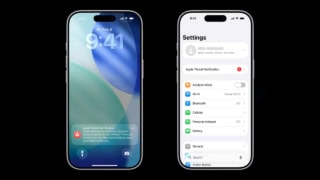
The contrast with Apple’s ecosystem proves particularly unflattering. Around 15% of Apple mobile users already run iOS 27. Nearly half use a variant of iOS 26 underneath that. Therefore, Apple concentrates most users on just two versions.
The underlying reason for this disparity is structural entirely. Apple develops its hardware and software under one roof. Consequently, it controls exactly when updates reach every device. Google faces a fundamentally different distribution challenge.
When Google releases a new Android version, it goes to partners first. Those device manufacturers then customize it with their own overlays, and the process burns significant time before updates reach users. By the time a customized version ships, some customers have moved on.
Carrier approval adds another layer of delay on top, which is why some regions face longer waits than others. Budget devices often receive updates last, if at all. Ultimately, fragmentation creates real security concerns too. Users on older versions miss critical security patches entirely. They also lack access to newer privacy features and protections.