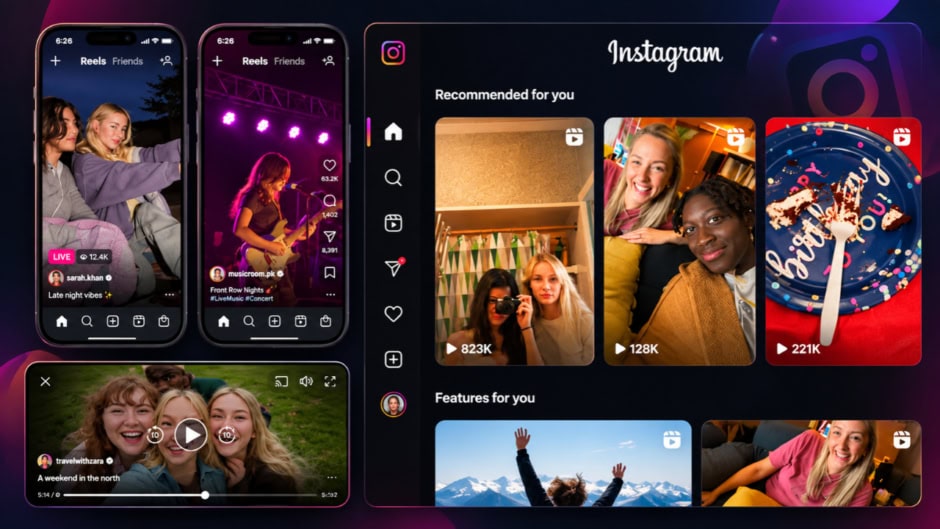
Instagram is throwing serious money at creators to post longer videos. Reportedly, some creators have received offers as high as $500,000 for a single long-form post. Others received deals in the $50,000 range. All the payments target Meta’s new “Features” product, which allows videos of up to 90 minutes.
Here’s a glimpse into an offer that has been sent to several creators for a total of $300,000 over six months:
- Creators would be required to post new, never-before-seen short-form video content to Instagram as reels.
- Over the course of six months, creators would post at least 10 new reels on their Instagram accounts each month.
- This content must be exclusive to Instagram for three months.
- Videos must be at least 15 seconds and no longer than three minutes.
- Creators must post 25% more on Instagram reels than on their next-largest short-form-video platform.
- They must share two of the reels a month as an IG story.
The catch is that Meta has done exactly this before. And it did not end well.
Instagram launched its Features option just last week. It lets creators post videos far longer than the typical Reels format. However, the product faces an obvious problem from day one: YouTube already pays creators reliably through its Partner Program for this exact type of content. Without a comparable revenue-sharing model, Instagram cannot give creators a financial reason to switch.
Instagram chief Adam Mosseri acknowledged that gap openly. He wrote on Threads that “the economics matter a ton.” Additionally, he said his team is exploring multiple options to help long-form creators earn sustainably. However, those sustainable options do not exist yet. In the meantime, one-off payments fill the gap.
View on Threads
Meta confirmed the approach without disclosing specifics. TechJuice has also learnt that a spokesperson told Business Insider the company is “funding Features content directly with some creators.” Furthermore, Meta said it is “excited to see the content going live.”
The problem is that this playbook has a track record, and it is not encouraging. In 2021, Meta announced it would pay $1 billion to creators in 2022. Much of that money targeted IGTV, the company’s previous long-form video product. Despite the spending, user interest never materialized. By early 2022, Meta shut down the separate IGTV app entirely.
The economics explain why these promotions fail to create lasting change. According to analysis by VidIQ, YouTube’s ad revenue share pays creators between $1 and $10 per 1,000 long-form views. By contrast, Instagram monetization from views alone is “effectively zero” without an attached brand deal. Creators with over a million followers earn roughly $50,000 monthly on YouTube. On Instagram, that same creator earns between $5,000 and $15,000.
That gap makes one-off payments a bandage, not a solution. They generate a spike of content around the promotion. However, they rarely spark sustained posting or viewing habits. Other platforms have learned the same lesson. Earlier this year, X offered $175,000 for a Grok-generated video project. The promotion came and went without lasting impact.
For Pakistani creators weighing where to invest their time, the math remains clear. YouTube pays consistently through ads. Instagram pays sporadically through brand deals and now occasional direct funding. Until Meta builds a real revenue-share model for long-form content, Features will struggle to pull creators away from YouTube in any permanent way.