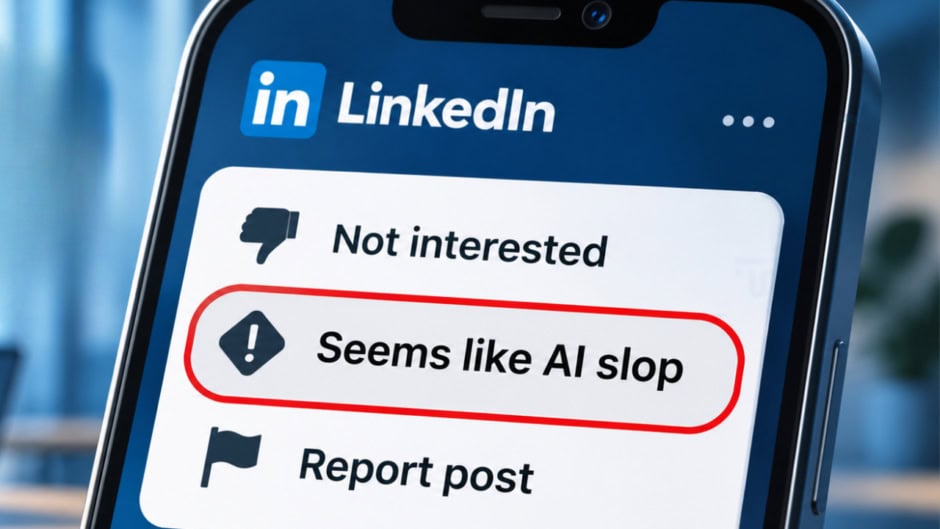
LinkedIn updated its comment detection and ranking systems to push AI-generated comments down in feeds. On November 15, Chief Product Officer Hari Srinivasan announced the changes as the latest step in the platform’s fight against AI slop. As a result, early testing already shows a 20%+ drop in views for flagged slop comments.
Specifically, the platform added new classifiers that evaluate comment relevance and flag suspected AI-generated replies. However, these classifiers do not delete comments outright. Instead, they demote them in the default “most relevant” ranking view. Additionally, LinkedIn updated its notification system to alert creators only about high-quality comments. Consequently, AI-generated replies no longer trigger alerts alongside genuine responses.
This approach reflects a deliberate choice. Rather than removing content, LinkedIn targets visibility. Suspected AI comments still exist on the platform. However, fewer people see them, and creators receive fewer interruptions from them.
Furthermore, the update builds on months of anti-slop measures. In August, LinkedIn became the first major social platform to add an AI slop reporting button. Within three weeks, over one million users tapped it. That volume confirmed the scale of the problem. Around the same time, LinkedIn also rebranded its own AI post enhancement tool as a “proofreader.” In doing so, the platform drew a clear line between acceptable AI use and slop. Meanwhile, LinkedIn expanded identity verification and cracked down on engagement pods as part of its broader integrity push.
The motivation extends beyond user complaints, however. AI chatbots like ChatGPT and Perplexity now cite LinkedIn in their responses. They rely on professional identity signals, engagement data, and creator history as trust markers. Similarly, Reddit benefits from crowd-sourced upvotes. If AI slop erodes those signals, LinkedIn risks losing its role as a top source for AI-powered search tools.
In contrast, other platforms face a harder version of this problem. Meta, X, and TikTok all invest heavily in generative AI features. As a result, cracking down on AI content contradicts their commercial incentives. LinkedIn avoids that tension because its value comes from professional authenticity, not AI-generated engagement volume.