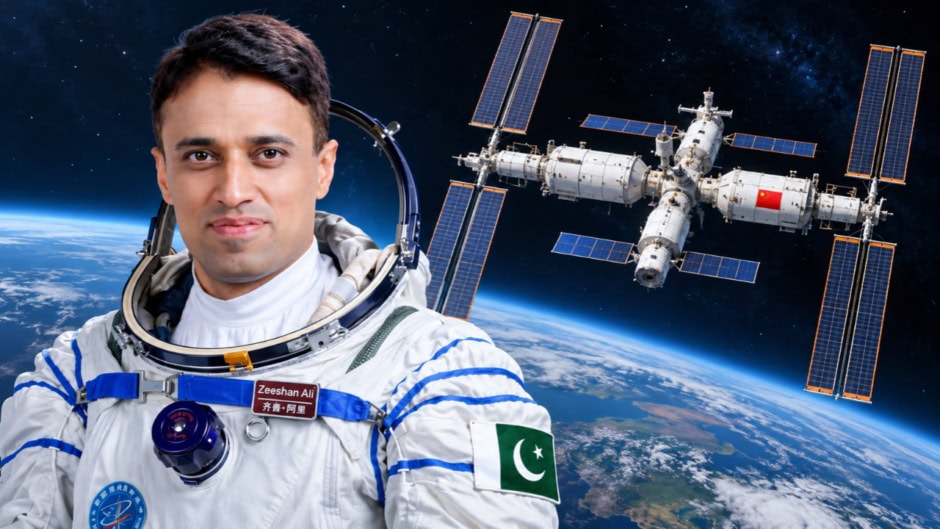
Pakistan’s first astronaut is not just flying to space. He trained for months at the Astronaut Center of China in Beijing to survive, operate, and conduct science aboard one of the most advanced orbital platforms ever built.
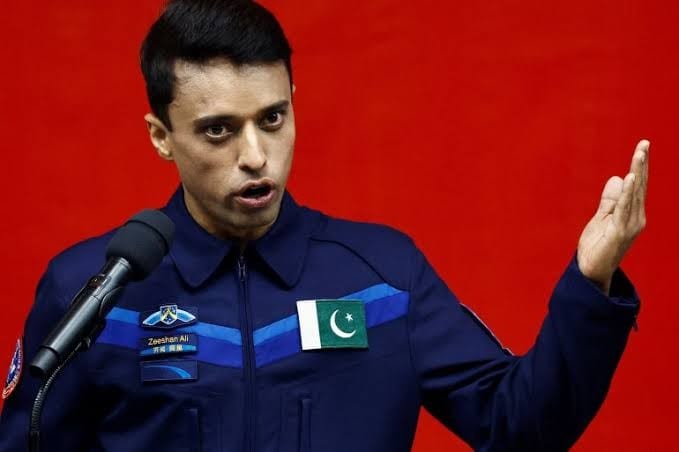
The training program covered far more than basic spaceflight readiness. Both candidates, Muhammad Zeeshan Ali and Khurram Daud, completed full pre-launch and ascent simulations alongside their Chinese counterparts starting in April 2026. They trained on autonomous emergency return procedures, cabin integration drills, and entry and exit protocols for the Shenzhou spacecraft. However, Ali is the only astronaut that left for Tiangong this morning.
The astronaut is not, however, the first Pakistani national to reach space. In October 2023, Monaco-based polar adventurer Namira Salim flew on Virgin Galactic’s Galactic 04 mission, a commercial suborbital flight she paid $200,000 for after purchasing her ticket in 2006. Suborbital flights reach outer space but do not achieve the orbital velocity needed to remain in orbit around Earth. This mission is fundamentally different because it places a Pakistani astronaut in sustained orbit aboard a crewed space station for the first time.
Beyond launch preparation, the pilot also studied all three modules of the Tiangong station. These include the Tianhe core module, the Wentian laboratory, and the Mengtian experiment module. The taikonauts’ coursework covered environmental control and life support systems, assembly emergency handling, and failure response procedures. On top of that, Ali had to learn Mandarin, since Chinese is the operational language aboard Tiangong.
Once aboard, the Pakistani astronaut will serve as a payload specialist responsible for running science experiments designed and pre-tested by SUPARCO in Pakistan. The station orbits approximately 390 km above Earth at an inclination of 41.5 degrees to the equator. It completes roughly 16 orbits every day, with each orbit taking about 90 to 93 minutes.
The mission itself is tightly choreographed. After launching from the Jiuquan Satellite Launch Centre in the Gobi Desert, the Shenzhou-24 spacecraft will take approximately 3.5 to 4 hours to dock with Tiangong. The Pakistani astronaut will spend about one week on the station before returning to Earth aboard a different spacecraft, Shenzhou-23, which has been docked at Tiangong since May. That landing is planned for November 30.
Meanwhile, one member of the Shenzhou-23 crew will stay behind for an extended stay, becoming the first Chinese astronaut to spend a full year in orbit. CMSA was expected to reveal the final crew selection at a media briefing at Jiuquan on November 24.
This mission marks three firsts at once: the first Pakistani in space, the first foreign national aboard Tiangong, and the first joint flight of Chinese and foreign astronauts in the history of China’s crewed space program.