Android’s share of the global smartphone market fell to a record low in Q3 2026. Meanwhile, Apple’s iOS gained ground as iPhone sales remained strong despite rising prices. According to Counterpoint Research, global smartphone sales declined 16% year-over-year during the quarter. The ongoing memory supply crisis hit budget smartphones particularly hard. It also pushed prices higher across premium devices.
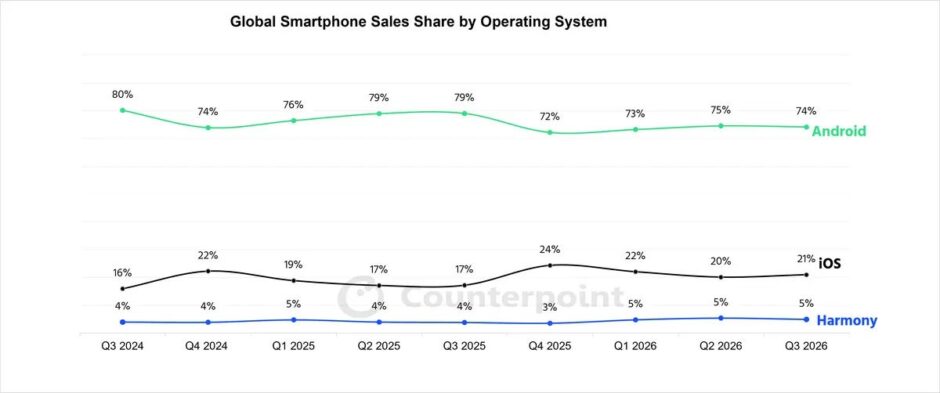
Android held 74% of the global market, down from 79% in Q3 2025. This marked its lowest-ever share for the third quarter. Its wide presence across different price segments also made it more vulnerable to the market slowdown.
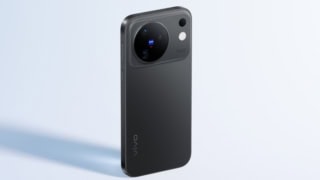
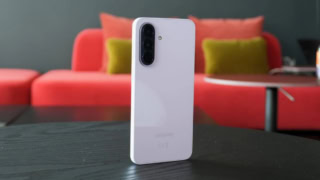
However, new flagship launches helped limit the decline. Devices from Oppo, vivo, and Xiaomi attracted buyers. Samsung’s latest foldable phones also supported Android sales during the quarter. Apple’s iOS moved in the opposite direction, reaching a record 21% global share. That’s up from 17% in the same quarter last year. Counterpoint estimates that iPhone sales increased 2% year-over-year.
The iPhone 18 Pro series reportedly performed better than the previous iPhone 17 Pro lineup. Moreover, demand remained strong despite price increases across Apple’s smartphone range. In the US, iOS held a 54% market share, compared to 55% a year earlier. India recorded an 8% share, remaining unchanged from Q3 2025.
Huawei’s HarmonyOS maintained its 5% share of the global smartphone market. However, its performance in China stood out during the quarter. The operating system increased its share in the country to 22%, up from 17% last year.
Huawei also recorded 12% year-over-year sales growth in Mainland China. This came as the overall Chinese smartphone market declined 10%. The figures highlight Huawei’s continued growth in its home market.
However, Counterpoint expects recent price increases to create some challenges. Huawei raised prices across several products in September. These changes could slow its momentum in the coming quarter. The next quarter will show whether Huawei can maintain its growth. Meanwhile, Apple’s gains and Android’s declining share reflect changing conditions across the global smartphone market.