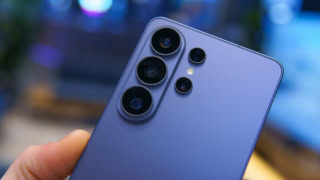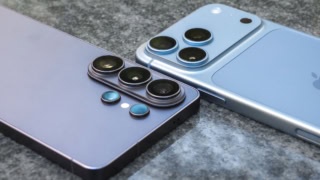
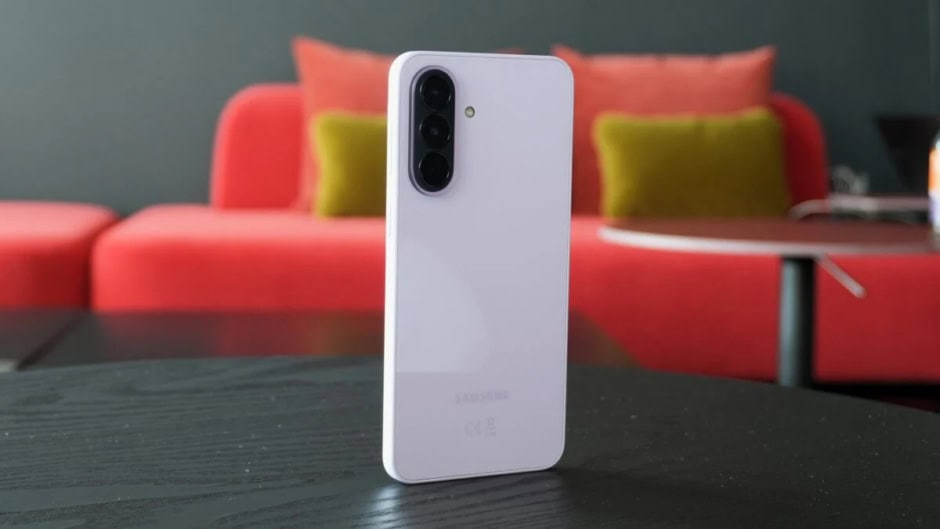
Samsung appears to be moving closer to completing the Galaxy A38, its next mid-range smartphone. The device could arrive in early 2027, following the Galaxy A37’s launch in March. The company released its predecessor in April.
The Galaxy A38 has now appeared in the Geekbench online database. It carries the model number SM-A386B, which identifies it as the global variant. The listing also reveals several details about its hardware and software.
According to the benchmark, the Galaxy A38 is powered by MediaTek’s Dimensity 7500 chipset. The tested prototype features 6GB of RAM, although Samsung could offer additional memory options. For comparison, the Galaxy A37 was available with 6GB, 8GB, and 12GB RAM configurations.
The device scored 928 in single-core performance and 2,687 in multi-core tests. These results were recorded using Geekbench 7.1.0 for Android. Moreover, the listing suggests that the phone will run Android 17 with Samsung’s One UI 9 interface.
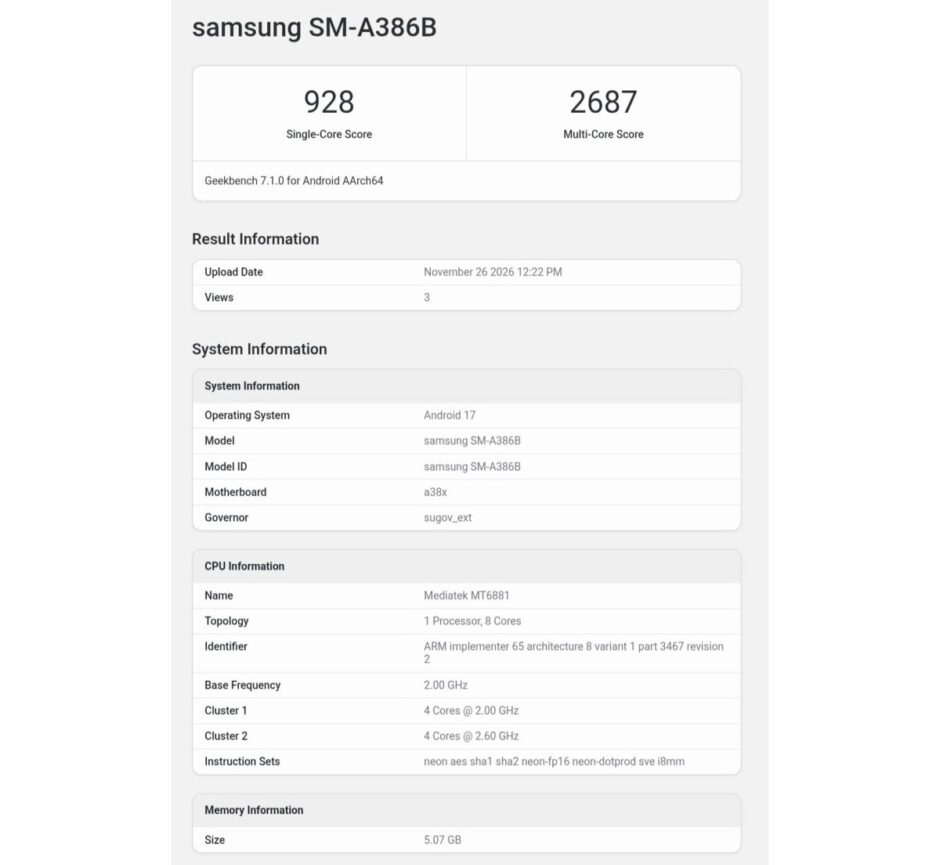
Interestingly, Samsung is switching chipset suppliers for this generation. The Galaxy A37 uses the Exynos 1480, while its successor will reportedly feature MediaTek silicon. This marks a notable hardware change for the upcoming mid-range model.
However, the chipset is not the only reported change. A recent leak suggests the Galaxy A38 could receive a downgrade to its main camera sensor. The phone is expected to retain a 50MP main camera but use Sony’s smaller 1/1.95-inch IMX882 sensor.
In comparison, the Galaxy A37 features Sony’s 1/1.56-inch IMX906 sensor. Although both cameras offer the same resolution, the smaller sensor could affect image quality, particularly in low-light conditions. Samsung may be making this change to control production costs amid the ongoing RAM crisis.
On the other hand, the Galaxy A38 could bring a noticeable battery upgrade. According to the same reports, it will feature a 6,000mAh battery. That represents a 20% increase over its predecessor. Samsung has yet to confirm the Galaxy A38’s specifications or launch plans. More details should emerge as the device moves closer to its expected early 2027 release.