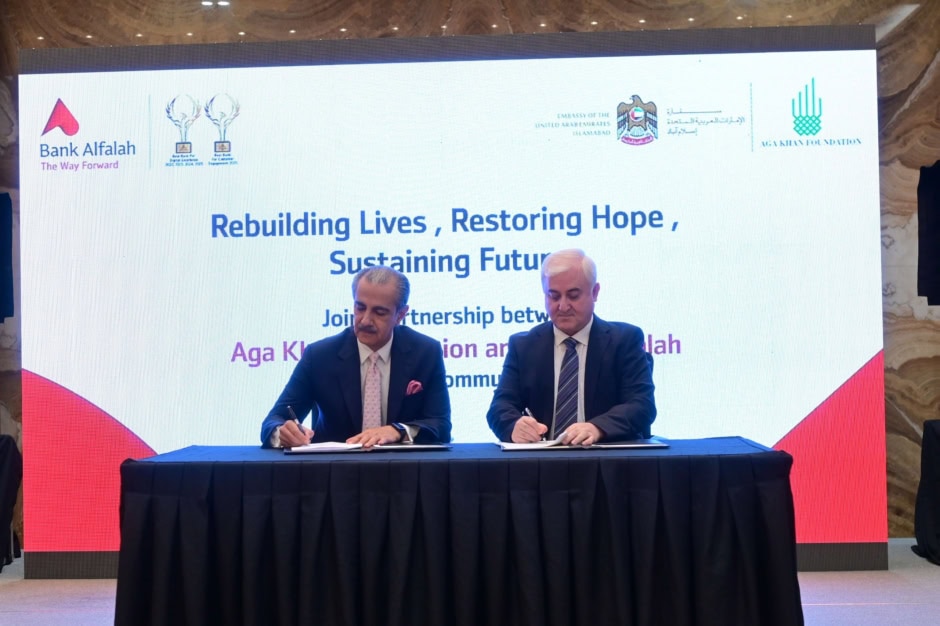
The Aga Khan Foundation Pakistan, in partnership with Bank Alfalah, has launched a rehabilitation programme aimed at restoring critical infrastructure and strengthening resilience in flood-affected communities across Gilgit-Baltistan.
The initiative will be implemented in collaboration with Aga Khan Agency for Habitat, Focus Humanitarian Assistance, and Aga Khan Rural Support Programme following the devastating monsoon floods of August 2025.
The launch event was attended by UAE Ambassador to Pakistan Salem Mohammed Alzaabi, senior leadership from Bank Alfalah and Aga Khan institutions, as well as representatives from development partners including the Asian Development Bank, Global Affairs Canada, the European Union, and Concern Worldwide.
According to officials, the programme will focus on restoring drinking water supply systems, rehabilitating irrigation channels, constructing flood protection infrastructure, and replenishing emergency shelter stocks in affected areas.
The project carries a total budget of Rs. 57.05 million, including a Rs. 50 million grant from Bank Alfalah and Rs. 7.05 million contributed by the Aga Khan Foundation Pakistan.
The rehabilitation initiative is expected to directly benefit more than 10,600 individuals and indirectly support nearly 13,000 people across Gilgit, Ghizer, and Hunza districts.
Key interventions include rebuilding damaged water supply schemes to restore access to safe drinking water, reconstruction of irrigation channels to revive agricultural livelihoods, and development of flood mitigation structures to protect vulnerable settlements from future disasters.
Officials said emergency winterized tents will also be replenished to improve disaster preparedness in high-risk valleys.
Bank Alfalah President and CEO Atif Bajwa said the partnership reflects the bank’s commitment to responsible banking and meaningful community investment by supporting flood-affected communities.
Meanwhile, the Aga Khan Foundation Pakistan said the initiative aims not only to rebuild damaged infrastructure but also to strengthen the long-term resilience of communities against future climate-related disasters.