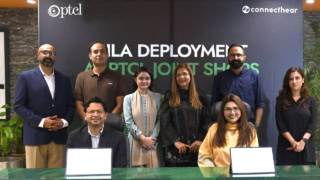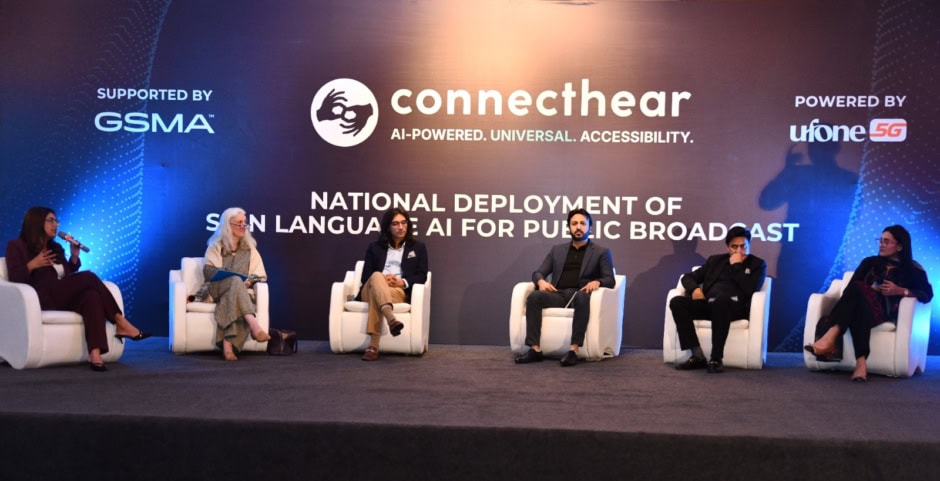
South Asia’s leading assistive technology startup, ConnectHear, marked another major milestone by hosting the “National Deployment of Sign Language AI for Public Broadcast” in collaboration with GSMA and Ufone at the Islamabad Serena Hotel. The event brought together key stakeholders from government, telecom, UN agencies, and the humanitarian sector to advance partnerships for accessible communication for the Deaf community at a national level.
The event also served as the closing ceremony of ConnectHear’s GSMA-supported Early Warning AI initiative, SUNO, showcasing key achievements while launching its next phase of nationwide deployment. The initiative represents a significant step forward, building on earlier deployments of SUNO in partnership with Ufone and moving from pilot implementations to scalable, integrated solutions for public communication systems.
During its pilot phase, SUNO reached nearly 2,000 beneficiaries across more than 10 disaster-affected districts in Sindh, delivering critical emergency information in sign language to Deaf communities, even in low-bandwidth environments. With its newly announced integration into the ConnectHear virtual interpretation app, SUNO will now extend its reach to over 50,000 users, significantly expanding access to inclusive early warning and disaster communication.
In Pakistan, where over 1.35 million people with disabling hearing loss face increased risks during disasters, and more than 27 million people have been displaced since 2008, this initiative highlights the urgent need for inclusive communication systems.
British High Commissioner Jane Marriott, CMG, OBE, said, “SUNO is a powerful example of how inclusive, locally led, and AI-driven solutions can strengthen disaster preparedness and ensure people with disabilities have equal access to life-saving early warning information. The UK is proud to back innovations that leave no one behind, including the 10 million Deaf and hard of hearing individuals across Pakistan who have the potential to benefit from this technology.”
Kimberly Brown, Head of Mobile for Humanitarian Innovation, highlighted the significance of the initiative, stating, “The GSMA Innovation Fund for Humanitarian Challenges exists to support solutions that move beyond pilots to deliver real, scalable impact, and ConnectHear’s work reflects this ambition.” She added, “With the national rollout of SUNO, AI-powered sign language broadcasts and low-bandwidth innovations can ensure Deaf communities receive timely, life-saving information during emergencies, setting a global benchmark for accessibility.”
Syed Atif Raza, Chief Commercial Officer, PTCL and Ufone, emphasized, “Technology must go beyond connectivity to enable access and inclusion for underserved segments. ” Ufone leverages its digital expertise and nationwide footprint to ensure critical information reaches everyone, especially persons with disabilities, and that initiatives like SUNO are helping build an inclusive digital ecosystem where no one is left behind.”
Arhum Ishtiaq, Co-Founder, ConnectHear, shared, “What we are building is truly innovative, not just in creating accessibility but in making AI itself accessible.” With SUNO and our broader AI technologies, we are doing something for the first time, ensuring that Deaf communities are included in systems that were never designed for them. Our goal is to continue building technology where both the digital and physical world become fully accessible for Deaf communities through ConnectHear’s AI-driven solutions.”
The event featured a live demonstration of AI-powered sign language broadcast technology, key impact results, and reflections from partners, including Ufone, HANDS, and DeafReach, among the leading organizations working in humanitarian response and Deaf education in Pakistan.
More importantly, the convening focused on the future of AI-powered accessibility, exploring how such solutions can be integrated across national broadcasting systems, disaster response frameworks, and public communication channels to ensure that Deaf communities are not left behind.