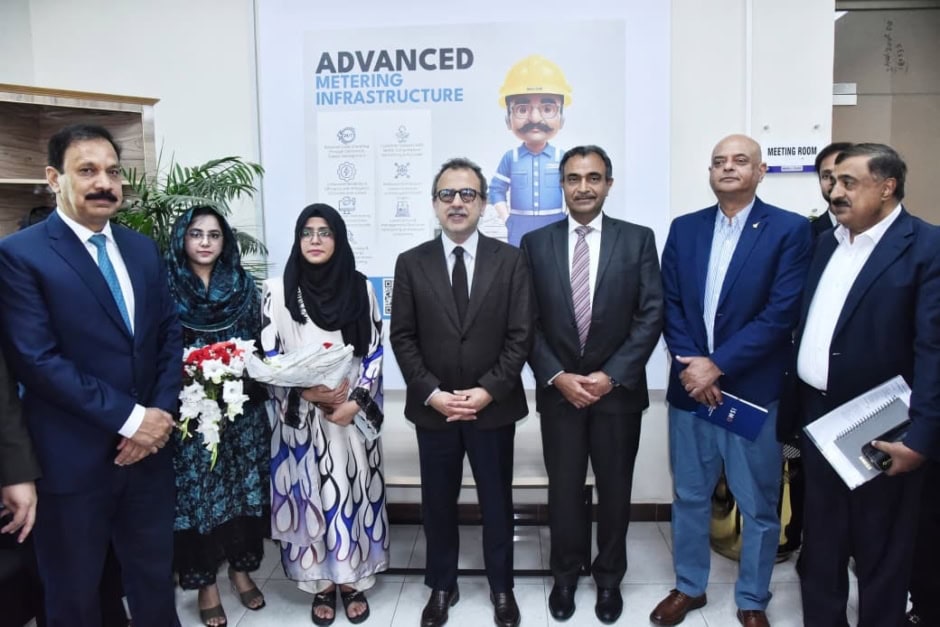
Federal Minister for Power Sardar Awais Ahmed Khan Leghari has announced that nearly 25% of consumers of Islamabad Electric Supply Company have been equipped with Advanced Metering Infrastructure (AMI) meters, marking a major step toward modernizing Pakistan’s power sector.
During his visit to the IESCO AMI Control Center, the minister said around 1.1 to 1.2 million smart meters have already been installed and are being actively monitored. He highlighted that AMI meters are helping tackle overbilling issues and reducing human intervention, thereby improving transparency in the billing system.
He noted that these meters come with built-in net metering functionality and do not require replacement, making them future-ready. Consumers can also monitor their electricity usage through mobile applications and conveniently pay bills via digital platforms like One Link.
The minister emphasized that real-time monitoring of over a million meters reflects the government’s commitment to a technology-driven and transparent energy system, aligned with the vision of Muhammad Shehbaz Sharif to improve public service delivery.
He added that in the coming months, particularly after June, consumers will gain greater clarity on billing and system operations, with many billing-related issues already being addressed within the current network.
The government also plans to expand the initiative nationwide in phases, with a new program to install over 10 million AMI meters expected to launch soon. Priority will be given to digitizing single-phase meters to enhance user convenience.
Officials briefing the minister said the system plays a key role in curbing electricity theft through alarms and event detection, while also reducing the costs associated with disconnection and reconnection. It further enables better decision-making through data analytics and improves overall operational efficiency.
During the visit, the minister observed live operations at the AMI Control Center, where data such as voltage, electricity consumption, and other parameters are monitored in real time. The system allows for quick fault detection and timely resolution, ultimately improving reliability and service delivery for consumers.