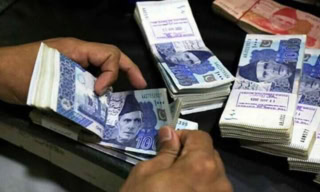
Pakistan’s stock market ended the week almost flat as investors remained cautious amid the ongoing IMF review, geopolitical tensions and elevated international oil prices. The KSE-100 Index closed at 170,765 points, down 0.1% week-on-week from 170,885 points.
Trading activity increased significantly during the week. Average daily volume reached 1.2 billion shares, up 107.7% week-on-week, according to AKD Securities. Arif Habib Limited reported average daily volume of 670.2 million shares, while average traded value increased 7.7% to $80.7 million.
Investor sentiment remained sensitive to developments in the US-Iran conflict and IMF review. The IMF mission is conducting technical discussions in Karachi and is scheduled to begin formal policy-level talks in Islamabad on September 28. Progress in the review could become an important market trigger in the coming sessions.
Oil prices also remained a key concern for investors. Brent crude settled around $104.9 per barrel, up 1% week-on-week. Developments involving Saudi Arabia’s energy infrastructure and discussions over the reopening of the Strait of Hormuz continued to influence global energy markets.
Domestic economic indicators provided some support. State Bank of Pakistan foreign exchange reserves increased by $11 million week-on-week to $21.4 billion as of September 18, while total liquid reserves reached $26.8 billion. The rupee also strengthened slightly against the US dollar, appreciating 0.03% to Rs277.16.
Meanwhile, domestic fuel prices declined during the week, with high-speed diesel falling Rs12.8 to Rs412 per litre and motor spirit decreasing Rs1.5 to Rs389 per litre.
On the sectoral front, fertilizer stocks made the largest positive contribution to the KSE-100, adding 171 points. Exploration and production companies contributed 120 points, followed by oil marketing companies with 100 points and refineries with 89 points. Banks recorded the largest negative contribution, pulling 366 points from the index.
Among individual stocks, EFERT contributed 151 points to the index, while HBL, ATRL, PSO and PPL added 94, 76, 73 and 69 points, respectively. PSEL was the biggest drag, reducing the index by 158 points, followed by MCB, NBP, SYS and K-Electric.
The market continued to trade at relatively low valuations. AKD Securities reported a forward price-to-earnings ratio of 7.2 times and projected the KSE-100 at 263,800 points by December 2026. Arif Habib Limited calculated the market’s P/E ratio at 7.6 times and dividend yield at 6.6%.
Going forward, market activity is expected to remain sensitive to the outcome and progress of the IMF review, developments in US-Iran talks and movements in global oil prices. Lower oil prices following any improvement in regional tensions could also affect investor sentiment.