Meta has launched a sweeping suite of anti-scam tools, digital literacy programs and partnerships targeted at protecting older adults from online fraud across its services including WhatsApp, Messenger, Instagram and Facebook.
The initiative comes amid growing losses by seniors. According to the Federal Bureau of Investigation, internet users aged 60 and older reported a combined $4.8 billion in scam losses in 2024 alone.
What’s New: Platform Wide Protections and Educational Tools
Meta’s latest measures include:
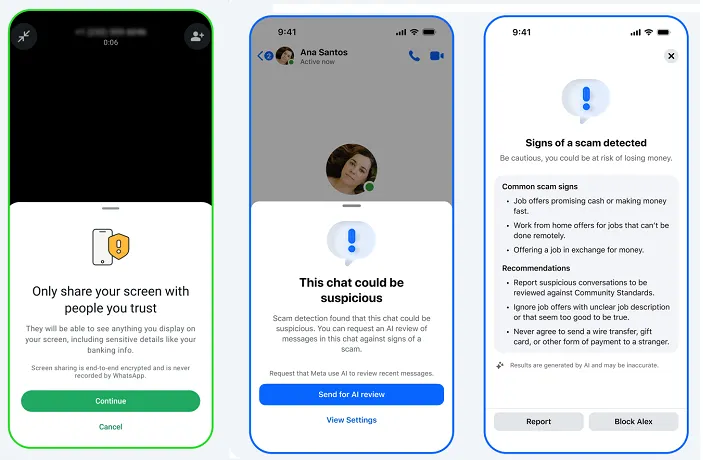
- On WhatsApp, a warning triggers when a user attempts to share their screen with an unknown contact during a video call, a tactic often used to harvest sensitive information.
- Messenger is piloting AI powered scam detection. If a new contact sends a suspicious message, the user can opt to send recent chat history for review and will receive guidance on blocking or reporting.
- Across Facebook and Instagram, Meta is advancing Passkey login support using fingerprint, face or PIN and enhancing Security Checkups to help older users monitor and strengthen account settings.
- Globally, Meta is scaling education campaigns including India’s “Scams Se Bacho” initiative and senior specific digital literacy workshops under the Saksham Senior program.
Meta reports it has disrupted approximately eight million scam linked accounts and removed over twenty one thousand pages impersonating legitimate customer service across its platforms in the first half of 2025.
Why Older Adults Are a Key Target
Meta’s research shows older users face disproportionate risk because of a mix of factors including evolving scam tactics, technical unfamiliarity, feelings of urgency or trust and cross platform threats. Scammers frequently pose as home remodel services, government benefits, debt relief schemes, crypto recovery services or fake support accounts for banks and travel agencies.
One common scenario is a website posing as a legitimate federal agency that prompts a senior to hand over banking credentials or “verify” funds allegedly lost in a prior scam. These layered schemes prey on older users’ trust and urgency.
Global Reach: Campaigns and Culture Tailored Education
Meta’s safety push is not limited to its U.S. base. In India, it works with the national Department of Telecommunications to roll out multilingual awareness videos and public space campaigns. In Europe, Meta has partnered with local creators to tailor content for older adults in Spain, the United Kingdom and Poland.
These efforts highlight the recognition that scam tactics vary by region and that prevention must incorporate cultural context and accessible education.
How Older Users and Their Families Can Stay Safe
Meta and cybersecurity experts recommend several best practices:
- Be cautious with unsolicited messages or calls and never share personal or financial information like account numbers or one time passwords.
- Pause and verify with a trusted person before acting since scammers often push urgency or secrecy.
- Use official customer service channels and avoid clicking on links from texts or emails. Do not respond to unsolicited outreach.
- Enable strong login controls like Passkeys, two factor authentication and regularly run security checkups.
- Families should help by reviewing loved ones’ account settings, recognising scam signs and keeping lines of communication open.
Meta’s platforms are under rising regulatory, reputational and security pressure to protect vulnerable user groups. With older adults continuing to face large scale financial losses in cyberspace, the stakes are high. Meta’s investment in education, detection and collaboration recognises that technological defences alone are not enough.