Several major international financial institutions have shown interest in financing the 1,800km Karachi-Peshawar Main Line-1 (ML-1) railway project, whose estimated cost has been revised down to $6.68-6.80 billion following the withdrawal of Chinese financing.
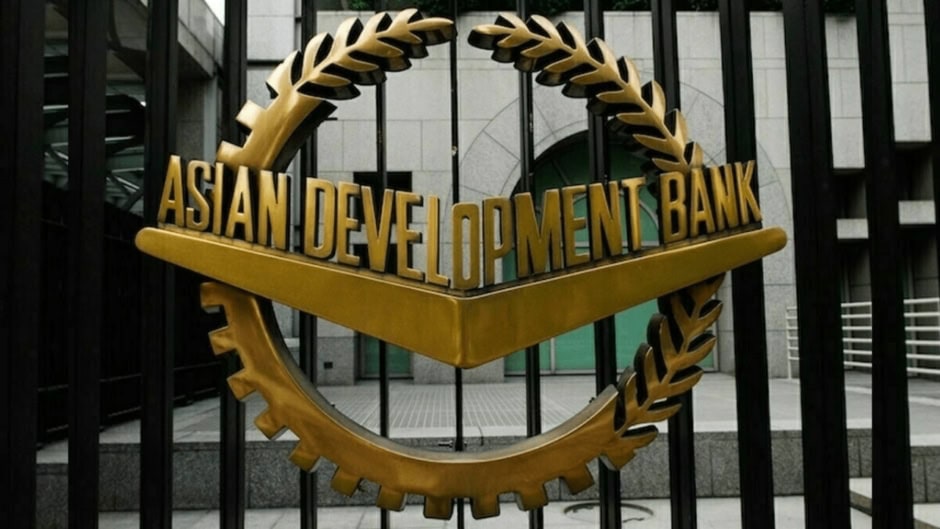
The Economic Affairs Division (EAD) briefed the National Assembly Standing Committee on EAD, chaired by Mirza Ikhtiyar Baig, that the Asian Development Bank (ADB) is being considered as the lead financing institution for the project.
Co-financing commitments have come from the Asian Infrastructure Investment Bank (AIIB) and the World Bank, while the European Investment Bank, the Islamic Development Bank and the Japan International Cooperation Agency have also expressed interest, EAD Secretary Humair Karim told the panel.
The revised cost marks a significant reduction from the earlier estimate of around $9 billion.
Officials said the project design had been re-evaluated to identify gaps and incorporate improvements, and that ML-1 now extends beyond the rehabilitation and upgradation of railway infrastructure to include institutional and operational reforms aimed at improving the efficiency, sustainability and service delivery of Pakistan Railways.
The committee was told that the ML-1 infrastructure is being designed to support train speeds of up to 160 kilometres per hour, although operations are presently planned at up to 120 kilometres per hour. Construction is expected to take about three years to complete.
Members raised concerns over the proposed operational speed, urging that the project make full use of modern railway technologies and international standards. The committee stressed that infrastructure and operational parameters should be aligned to enable speeds of 160 kilometres per hour wherever technically and economically feasible, rather than limiting the benefits of the upgraded network.
On Karachi-related projects, the committee recommended a consultative meeting of federal and provincial ministries and departments to address major development and infrastructure schemes in Karachi and other parts of Sindh, resolve inter-departmental and financing bottlenecks, and expedite implementation.
The panel voiced serious concern over the progress and completion timeline of the K-IV water supply project, which is now expected to be completed by April 2029. Members noted that Karachi currently requires more than 1,200 million gallons of water per day, a figure expected to rise substantially by 2029-30 amid population growth and urban expansion.
The committee was also informed that a desalination plant developed earlier had been found technically unsuitable by Nespak. It called for a thorough review of all technical, financial and implementation aspects of the K-IV project and recommended that it be taken up comprehensively under a steering committee at the Ministry of Planning and Development, with participation from all relevant federal and provincial stakeholders, to address Karachi’s water requirements and ensure timely completion.
Separately, the Special Investment Facilitation Council (SIFC) informed the committee that the prime minister had directed that stalled and delayed projects involving the UAE and other countries be actively pursued and brought to implementation through enhanced coordination.